Category Archives: Reprints

Make Yer Scenes Meet, 1886

The following article first appeared in the 1886 edition of The Cornhill Magazine.

Formerly the scenic artist was strictly a scene painter, and his work was simply to cover canvas with beautiful and effective pictures. To this class belonged Grieve and Telbin, and Stanfeld, who later became a Royal Academician. The large bold style required for scenery is a fine training, and at this moment it is easy to distinguish one of Telbin’s landscapes, so poetical and rich is the treatment. The artist of the Lyceum, Mr. Craven, is also remarkable for richness of colour, freedom of touch, and much grace and fancy.

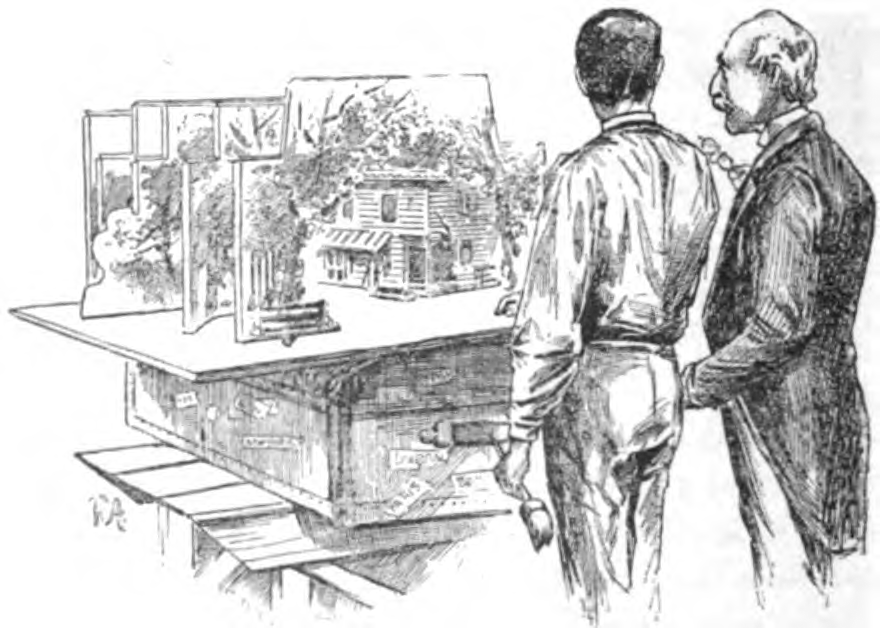
It is curious to visit the painting-room of this theatre, which is high up in the roof, when some great and costly piece is being got ready. Here on a table we find a small model stage, like a toy theatre, but which is carefully made to scale, with all the entrances, &c., marked. The artist first paints his little scenes on cardboard, cuts out the doors, windows, &c. exactly as he intends it to be on the real boards below. He has, besides, large plans of the stage, done to measure, on which can be arranged all the portable structures in their exact position. Now arrives the clever manager, who is possessed of much suggestive taste. The little scene is set for him—it suits—or he may suggest some more brilliant and effective idea.

Meanwhile assistants are busy at the canvas hung on the walls, with rules six feet long, ruling the  perspective lines in black, or getting in the rough colours. Of course, only a portion of the scene can be painted at a time, as the room is a low one. In the great foreign theatres the canvas can be raised or lowered through a slit in the floor, or the wall made high enough, as at Drury Lane, to take in the whole scene.

But in these times the scene builder has taken the place of the scene painter. Houses, bridges, porches, streets even, are all constructed in the carpenter’s shop. There is now no system for scenery; all that the stage manager requires is that his stage should be a perfectly clear, open, and unencumbered space on which he can launch his army of men to drag on and build up these great structures.

Formerly there were grooves for the scenes to slide in. At the sound of a whistle the scene was drawn away right and left, and we saw the grooves let down on hinges, and in which the new scene was to slide. All this is rococo and old-fashioned. In some of the older theatres one has often seen the two halves of a scene driven from right to left, the two men in their shirt-sleeves who moved them being quite visible, until the halves met in the middle with a sharp crack. Occasionally there used to be an imperfect joining, when, according to the old story, a fellow in the gallery called out, ‘We don’t expect no grammar here, but yer might make yer scenes meet.’

Smith, Elder, & Co., ed. “The Scenic World.” Cornhill Magazine 1886: 283-85. Google Books. Web. 23 Feb. 2016.
The Scenic World, 1886

The following article first appeared in the 1886 edition of The Cornhill Magazine.

The Scenic World

[F]ifty years ago, scenery decorations and properties were all of the rudest kind… Much of the extraordinary change that has taken place within twenty years is owing to the resources of science being applied to the stage. This is illustrated by the progress made in lighting… It is difficult to conceive the contrast to all this in Garrick’s day, when the stage was lit, not by footlights, but by four large chandeliers, which hung over the heads of the players. This was a rational system, for the faces were effectively lit up, and the scenery left dim and indistinct. But then these were the old foolish times when nobody cared for scenery, but for the play only and the actors.

Then any stuff would do for dresses—the coarsest was most effective—for there was but little light to see the texture. In Macready’s dress in ‘Virginius,’ now in Mr. Irving’s possession, the armour was of pasteboard covered with tinfoil, and the dagger of wood. There was a scarf of red serge, a linen tunic and sandals, &c. The whole could not have cost a couple of pounds. But a rich dress would have been wasted, and now the searching rays would display the poverty of material. Hence the introduction of rich and costly stuffs which makes the actress’s bill for dress now as high as that of a lady of fashion in the season. Hence those superb plushes and velvets of many tints, the brocades, the rare ornaments.

In the pantomimes we see whole bands of young ladies with their helmets, shields, and breastplates—no longer of pasteboard—made of a brilliantly polished silvery metal which reflects the bright rays of the limelight. This metal is costly enough, and these suits of armour cost a good deal. Stage jewellery now is a regular manufacture, and though many actresses wear real diamonds, it need not be said that the mimic stones are more effective. Sham furniture looks more like furniture on the stage than the finest that could be ordered from Maple’s. It would take too long to expound this, but in illustration it may be said that at the Théâtre Français there is a property clock for a boudoir elegantly painted and made of papier-maché, and which cost five or six hundred francs…

Nowadays there are regular costumiers, and when a play is brought out a contract is made with the person who makes and hires out the dresses at a fixed charge, and takes them back at the close of the season. They are then hired again to inferior theatres in town or country. This system is particularly adopted in the case of pantomimes, when some hundreds of dresses are required, which it would be quite too costly a business to buy outright for only a few weeks’ use. At the end of the season they are purchased, with the pantomime itself, scenery and properties, for some provincial theatre. They thus return again and again to the costumier’s store, and can be finally used for fancy balls, private theatricals, &c.

Smith, Elder, & Co., ed. “The Scenic World.” Cornhill Magazine 1886: 281-83. Google Books. Web. 23 Feb. 2016.
Producing a Play in 1893

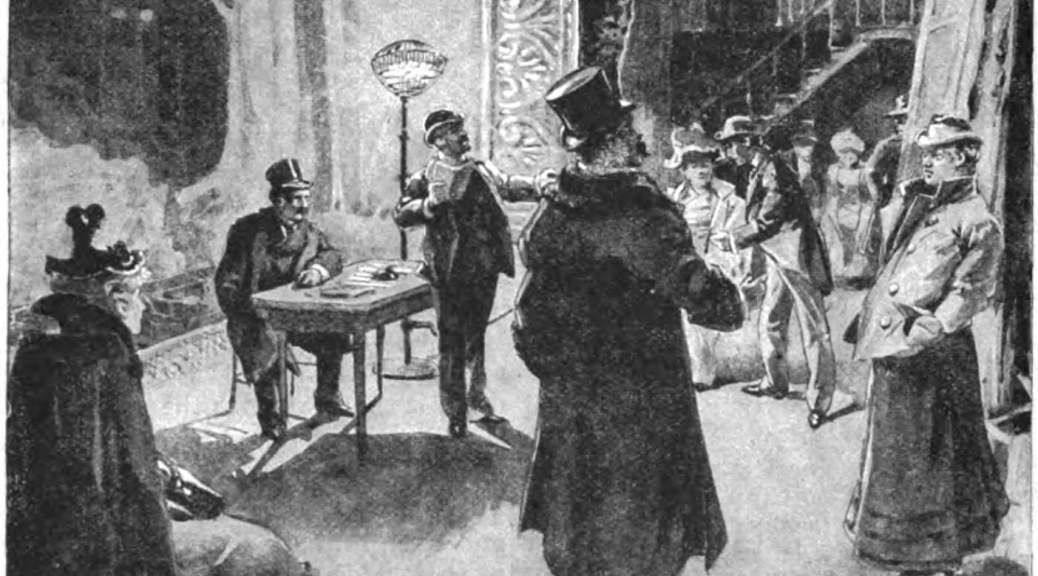
Last month, I shared some words and images about props from an 1893 magazine article titled “How a Play is Produced”. The article has a number of other great images showing the construction and rehearsal of a new play.

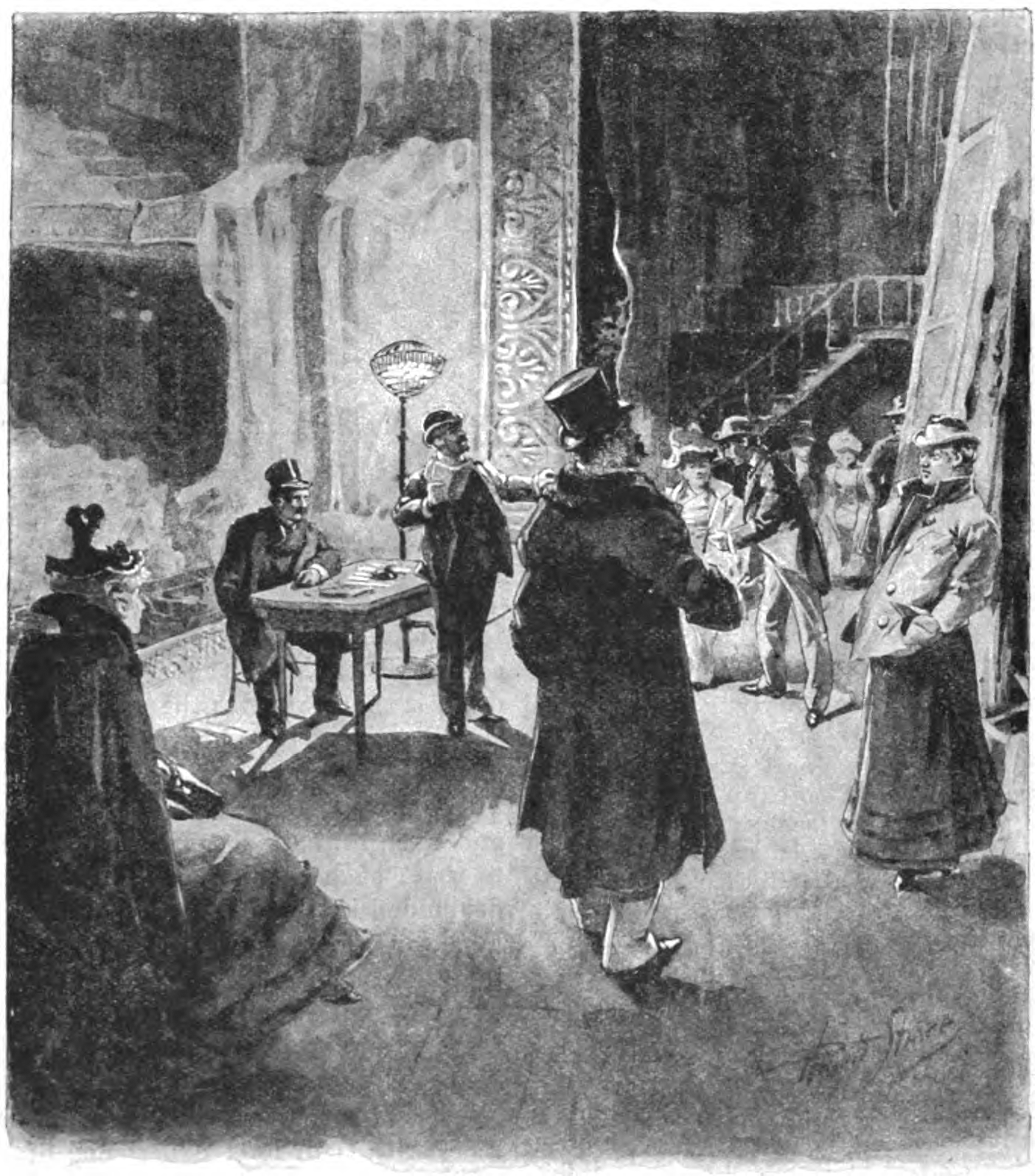
Stage Entrance
Stage Entrance
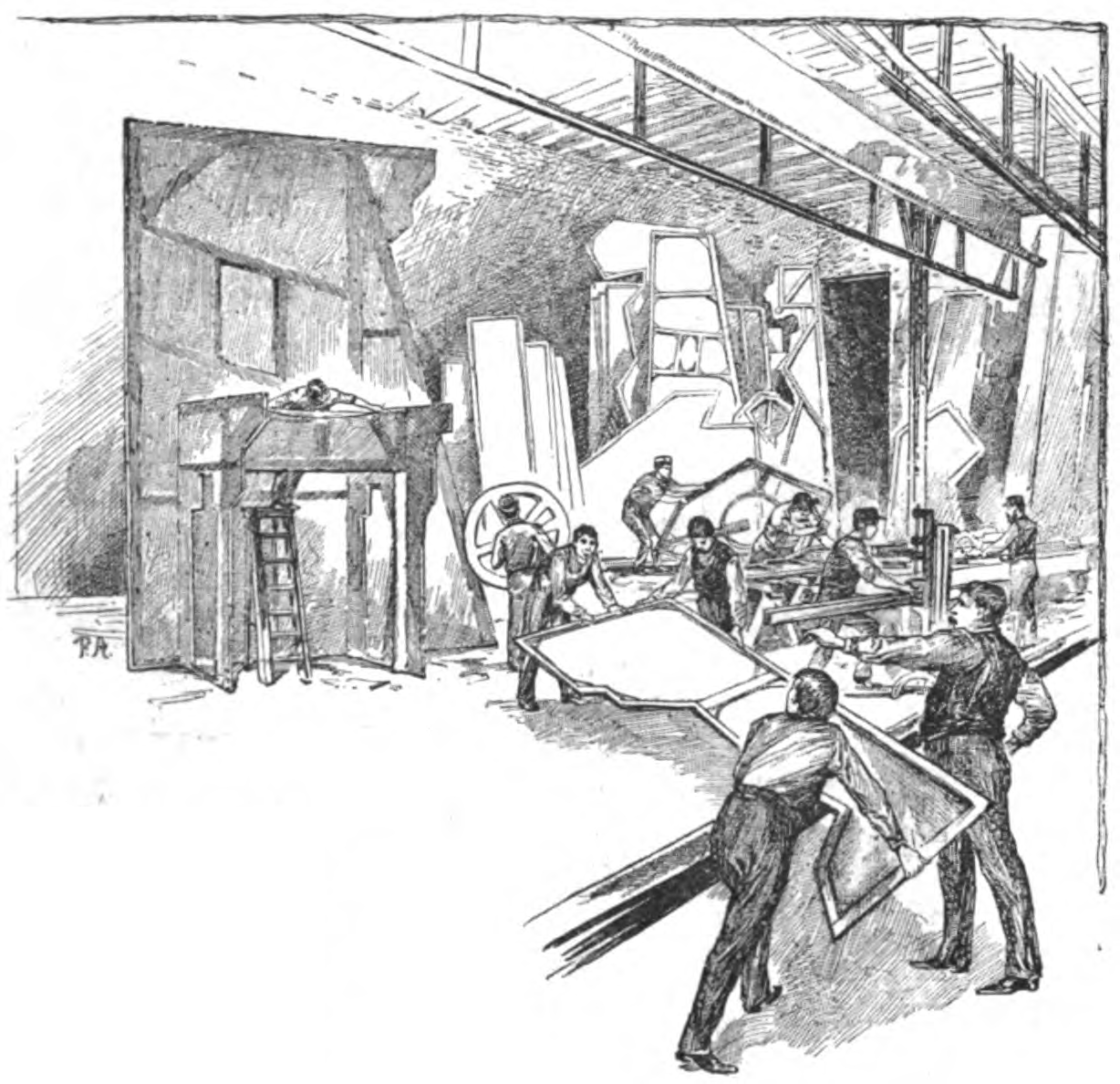
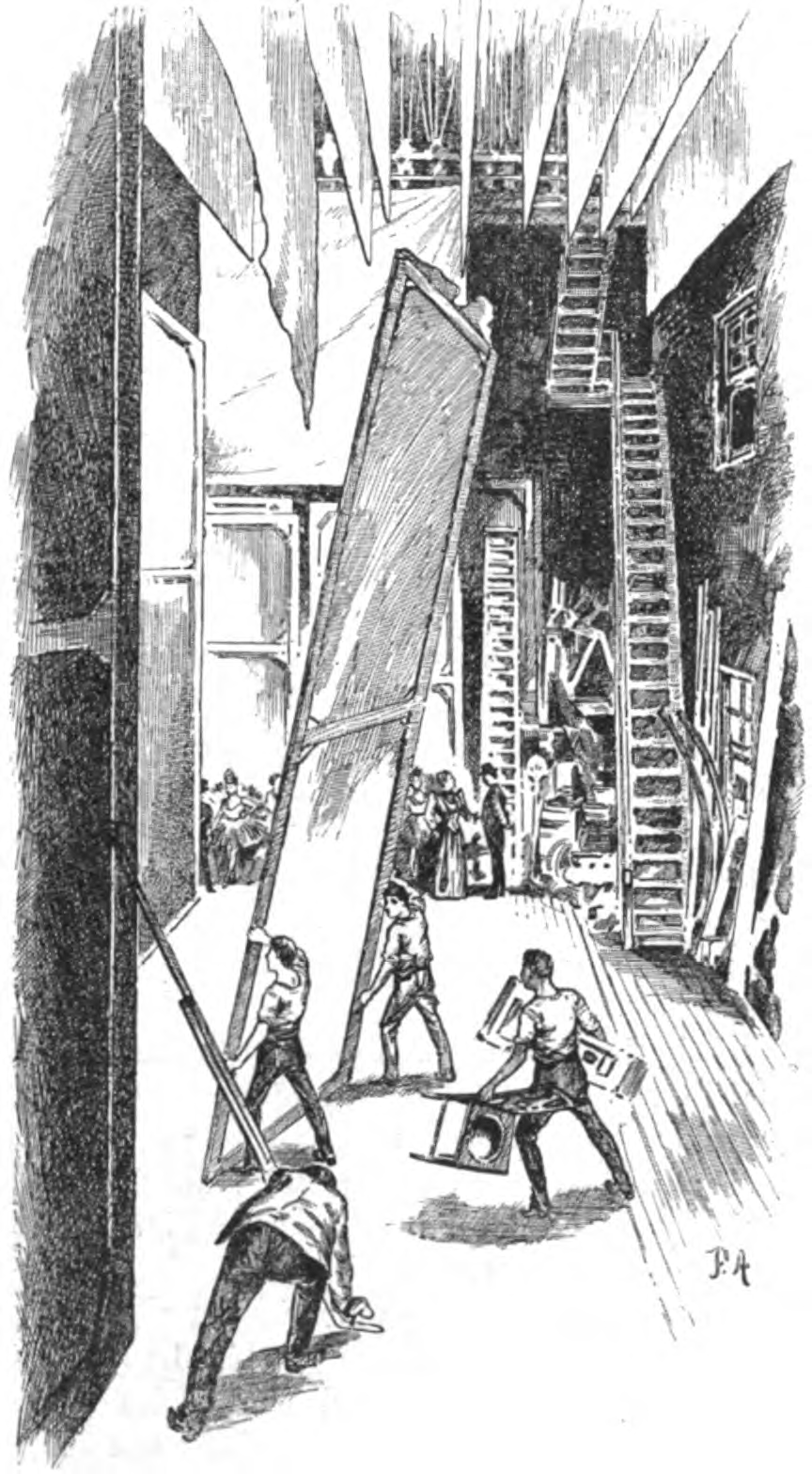
Constructing Scenes
Constructing Scenes
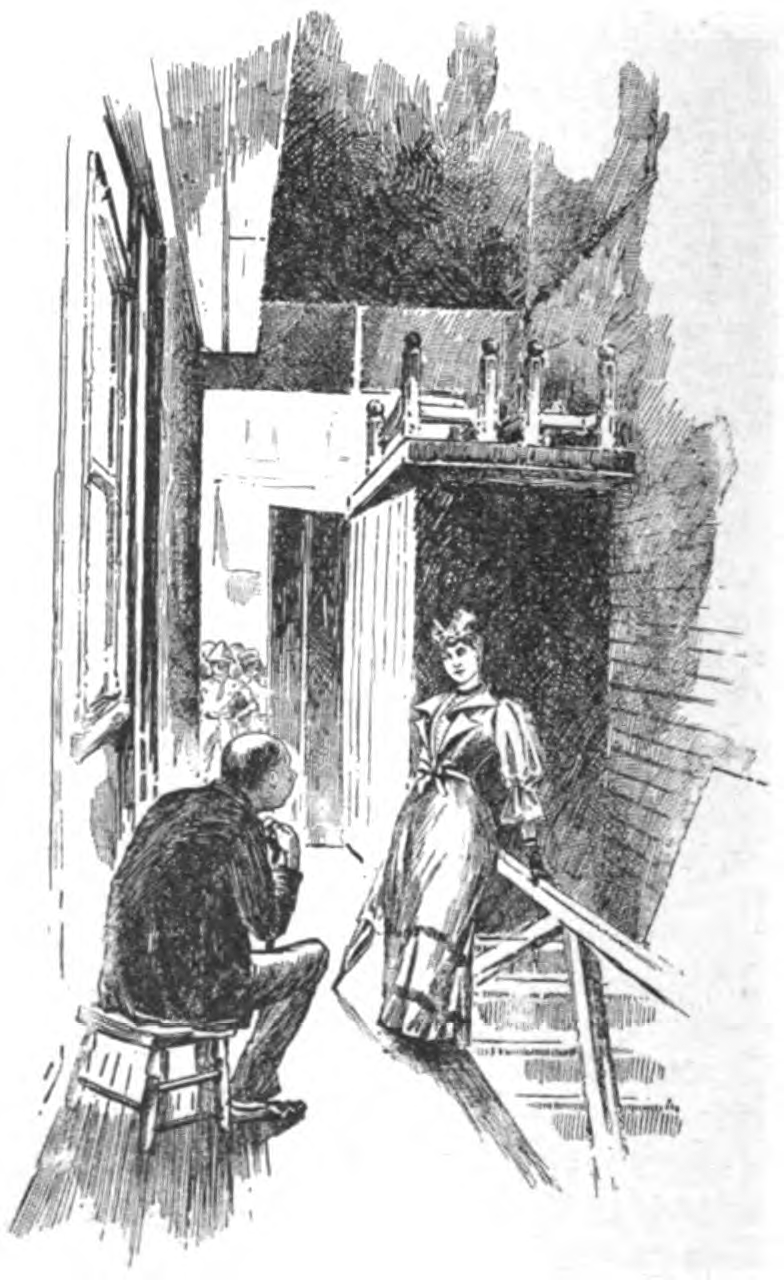
A Rehearsal
A Rehearsal
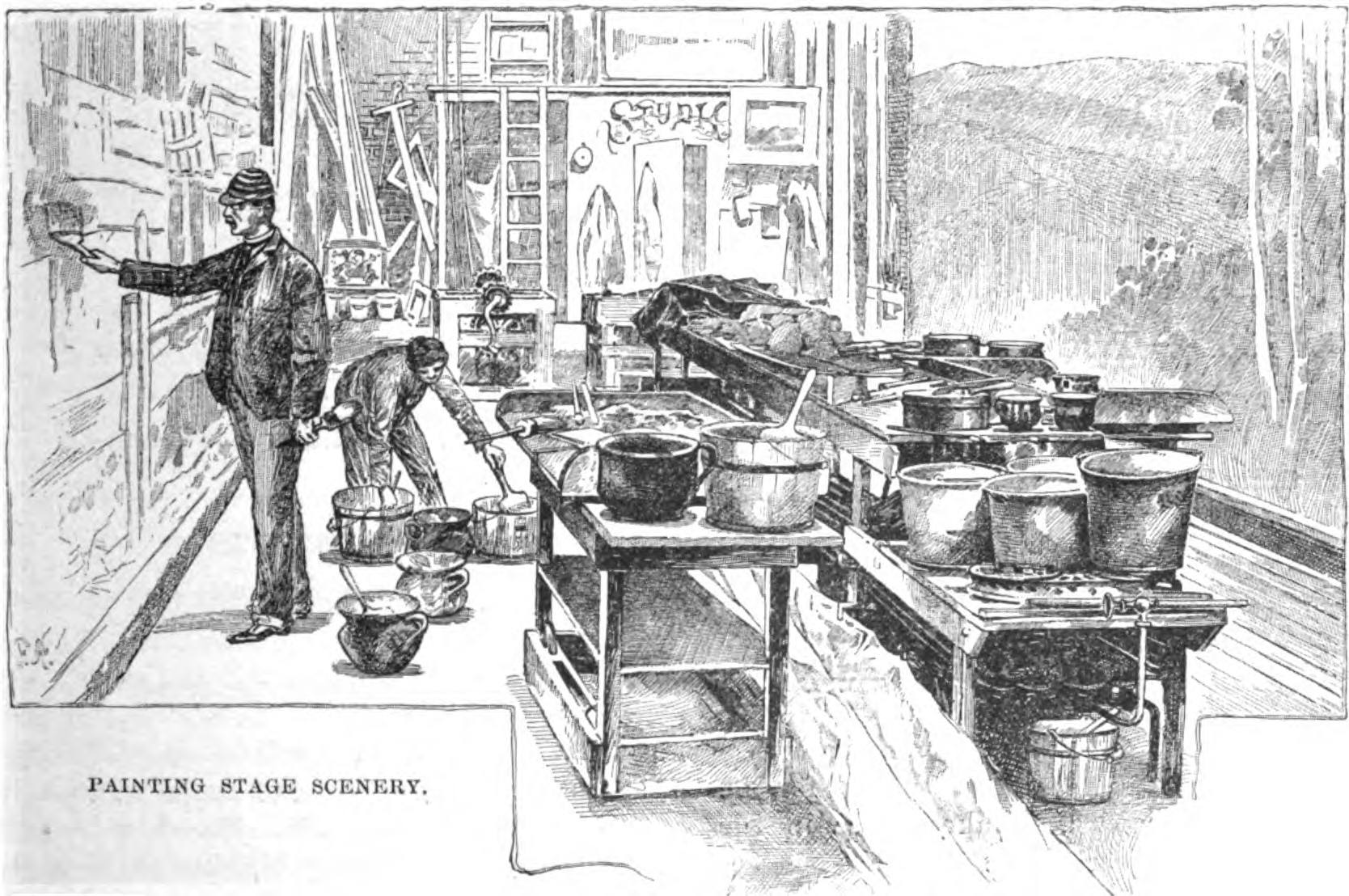
Painting Stage Scenery

The description of the scenic artist is enlightening:

Each stock theatre has at least one scenic artist attached to it. It is the duty of the scenic artist to paint the scenery for each new production, or touch up old scenery for a revival. He has a large studio up in the “flies,” and it is there that the work is done. Directly the manager decides on the play he will produce he sends for the scenic artist, explains the scene of each act, and asks what there is “upstairs” that will do. Sometimes the manager will do the best he can with old scenery, and instruct the scene painter to alter and touch it up. At other times he will decide on having brand-new scenery for each act. In the latter case the scene painter receives the order to prepare models of each act, the style being left largely to the taste of the artist; and if the models are approved of they are given to the stage carpenter, who, with his ten or twenty assistants, reproduces them on the scale required. When this work is finished by the carpenters the painter steps in once more and sets to work on the decoration.

Setting a Scene
Setting a Scene
Model of a Scene
Model of a Scene
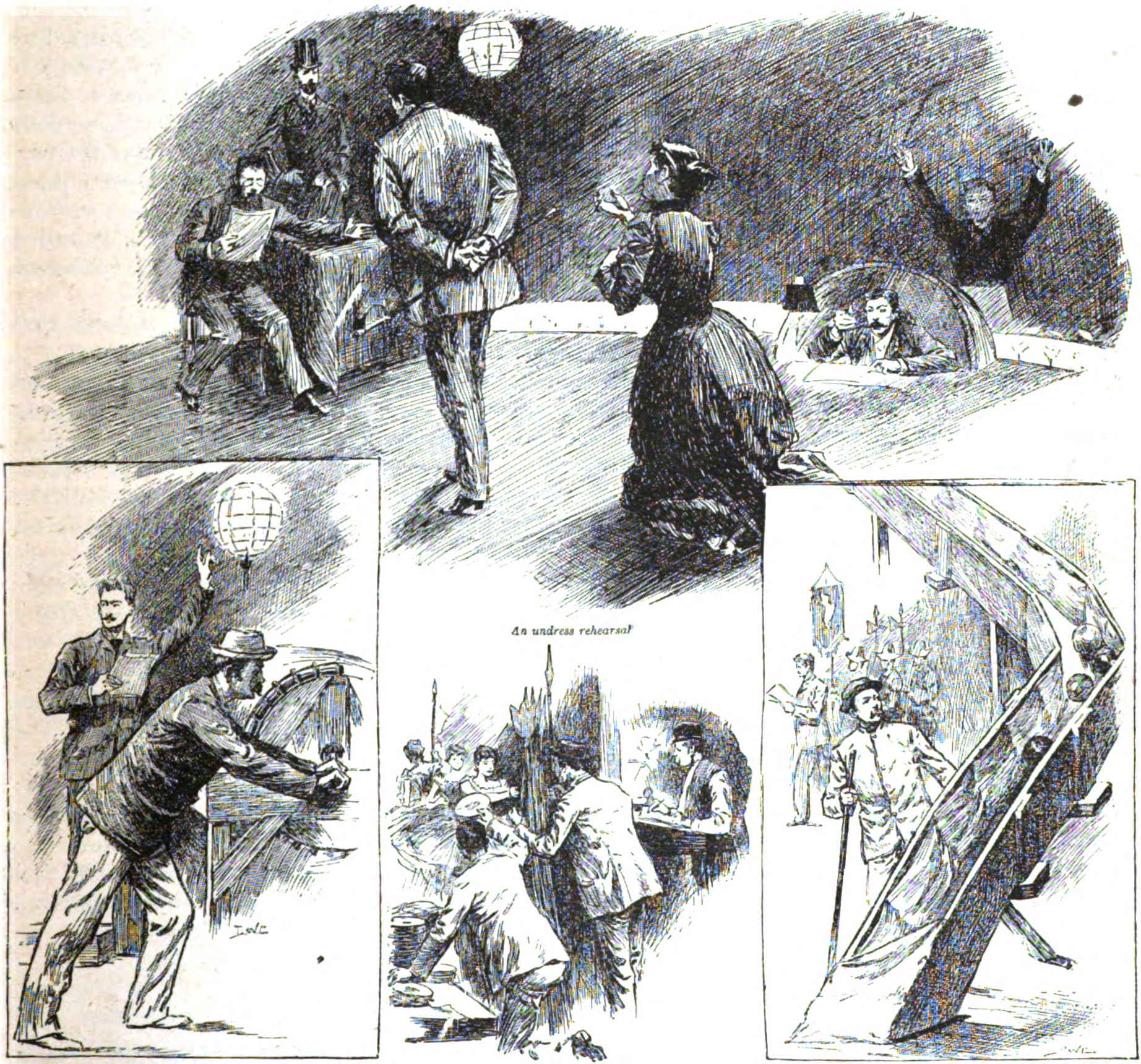
Scenes Behind the Scenes

The final image above shows a collage of scenes. On top is “an undress rehearsal”. Below is a wind machine, distributing the props, and a thunder apparatus.

Source: Hornblow, Arthur. “How a Play Is Produced.” Popular Monthly 1893: 614-22. Google Books. Web. 6 Jan. 2016.

Property Plot from 1893

I came across an article titled “How a Play is Produced” in the 1893 collection of Popular Monthly magazines. It has some wonderful illustrations and useful information that I might post at some point in the future, but I first wanted to share a few of the prop-related items from the article.

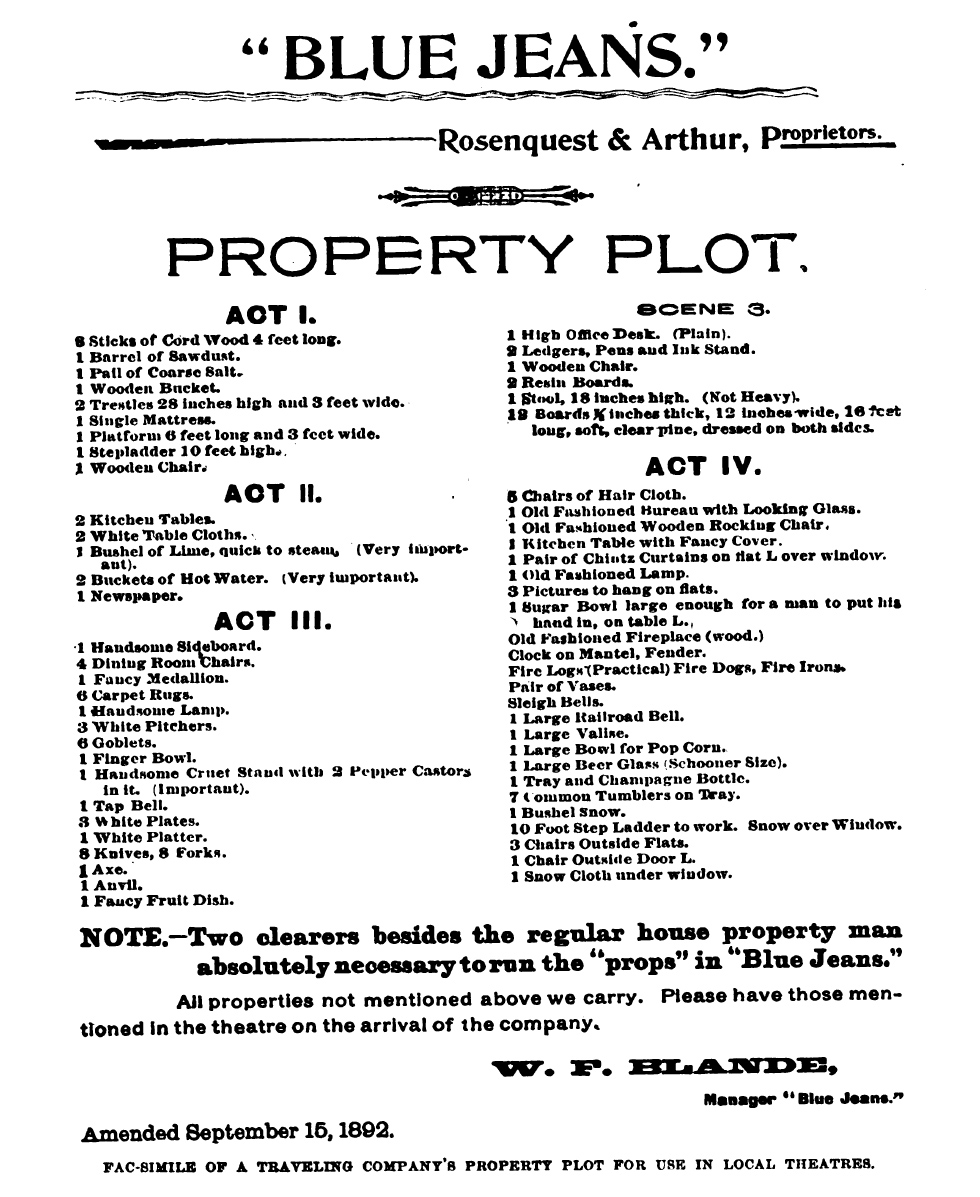
First up is a facsimile of a property plot sent out to theaters from a traveling production of Blue Jeans.

Property Plot, 1892
Property Plot, 1892

The article also has a fine description of the props master at the time (almost exclusively men at this time):

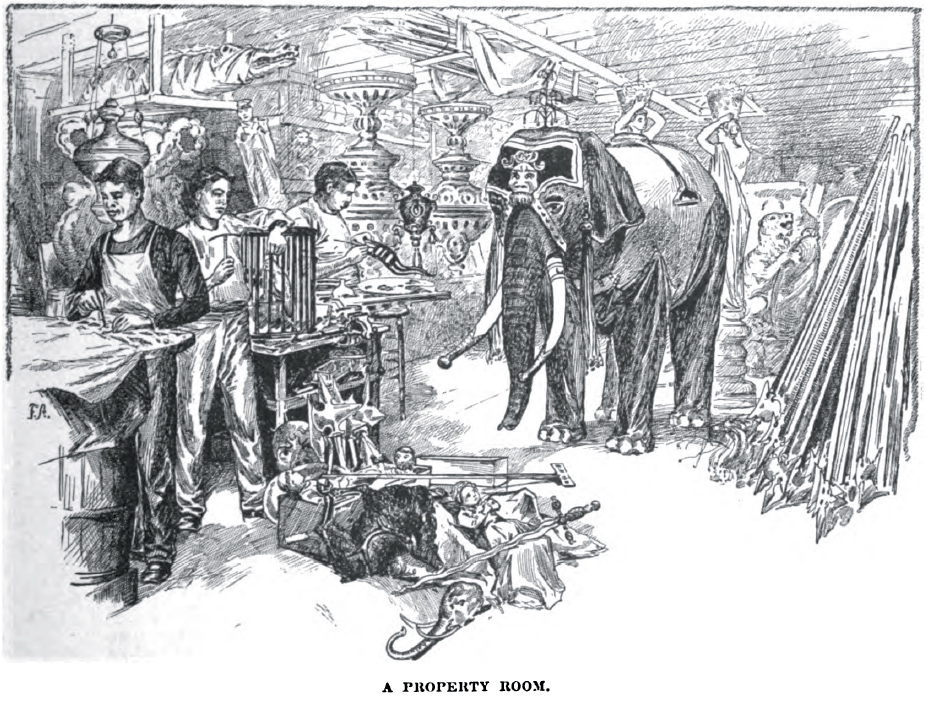
The “property” man is another important individual, and has several assistants. His work consists in taking charge of and providing all the movable articles used in the play, such as furniture, carpets, clocks, costumes, guns, umbrellas, books, newspapers, plates, glasses and eatables. These last are usually of the customary property quality, i.e., papier-maché, and the “property man” is the culinary artist who manufactures them. It is no uncommon thing, on inquiring for the “property man” in a theatre, to be told that he is upstairs “making a chicken.”

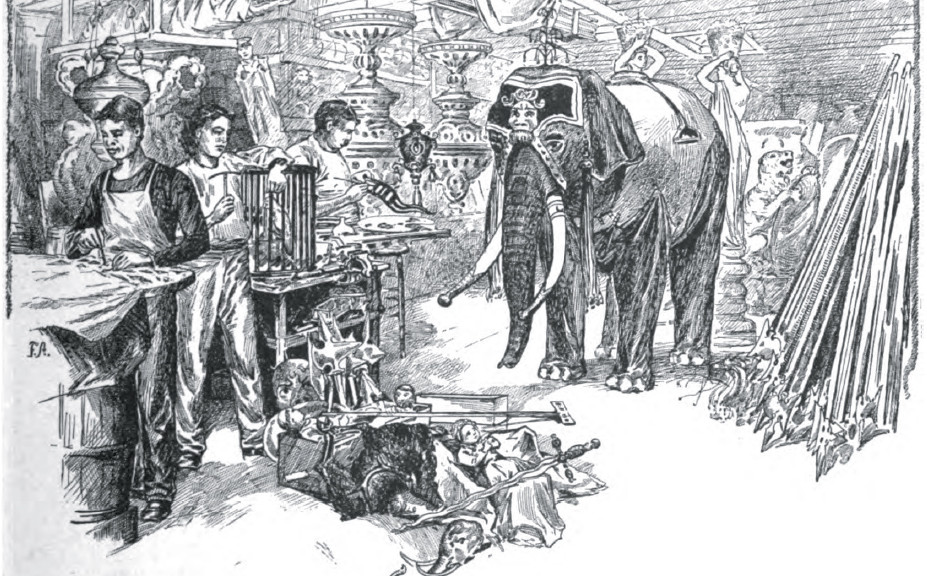
Finally, we have this wonderful illustration of a property room:

A property room, 1893

Source: Hornblow, Arthur. “How a Play Is Produced.” Popular Monthly 1893: 614-22. Google Books. Web. 6 Jan. 2016.

Bossing the World part 3, 1921

The following is the conclusion of an article which came from the 1921 collected edition of “Our Paper,” put out by the Massachusetts Reformatory. The first part and second part were previously posted:

Bossing the World

by John B. Wallace

This is only a sample of the painstaking care with which pictures in the larger studios are filmed. It explains why so many persons who have been abroad have been fooled into exclaiming, “Why, I know that was taken in France, because I have been on that very spot,” when in reality, the “scene was shot” in California. The pictures are made with such careful attention to detail that directors and property men who know every trick of the trade are often imposed upon.

The research department is the prop that Wells leans upon in times of doubt. Three persons are employed who do nothing but look up the proper costuming and settings for scenes laid in times other than the present. In addition to a large library maintained by the studio they have the Public Library of Los Angeles to fall back upon, as well as several splendid private collections of millionaire book fanciers.

Other departments that come under Mr. Wells’ supervision are the large repair shops. In the drapery department curtains and draperies are constantly being altered, cut and repaired. Furniture is revarnished, repaired and reupholstered. In the pottery department antique vases are duplicated in cheaper materials and the bric-a-brac that is to be smashed in comedy and battle scenes is made out of plaster of paris. Costumes require a large force of seamstresses to make and alter. The electrical department requires a large force of electricians and expert mechanics are employed in the upkeep of the motor trucks and automobiles.

Wallace, John B. “Bossing the World.” Our Paper. Vol. 38. N.p.: Massachusetts Refomatory, 1921. 153. Google Books. Web. 24 Nov. 2015