Category Archives: Reprints

Picture Producers Buy Goods on Army Scale, 1926

The following article comes from a 1926 issue of The Washington Post:

Culver City, Calif., Sept. 25 (By A.P.) — A speck of radium or a refrigerating plant capable of freezing a lake are all in a day’s work for the motion picture property man when he goes shopping.

The purchasing department of the Metro-Goldwyn-Mayer shows both items on the list of supplies for pictures, the radium playing a part in one film while the ice plant prepared an artificial lake for a winter scene in another.

This picture producing plant buys in army quantities—200,000 gallons of paint, 4,000,000 feet of lumber, 10,000 sacks of plaster, and tons of explosives being included in its annual purchases. A mill was chartered to weave plaids for a Scottish army in the filming of “Annie Laurie.”

Furniture is bought in carload lots and virtually every make of automobile is found in the transportation department.

From these wholesale purchases, the versatile property man turns to buying flower bulbs, a dust pan or an old oil lamp.

The studio bought a fox terrier puppy for one picture and the same day a pullman car for another.

The diversity of the products over which the movie dollars are spread is shown by the fact that 22,000 purchasing orders issued by Metro-Goldwyn-Mayer in one year were for 100,000 different commodities.

Originally published in The Washington Post, September 26 1926, pg M8.
Prop Drawings from the Shakespeare Rare Print Collection

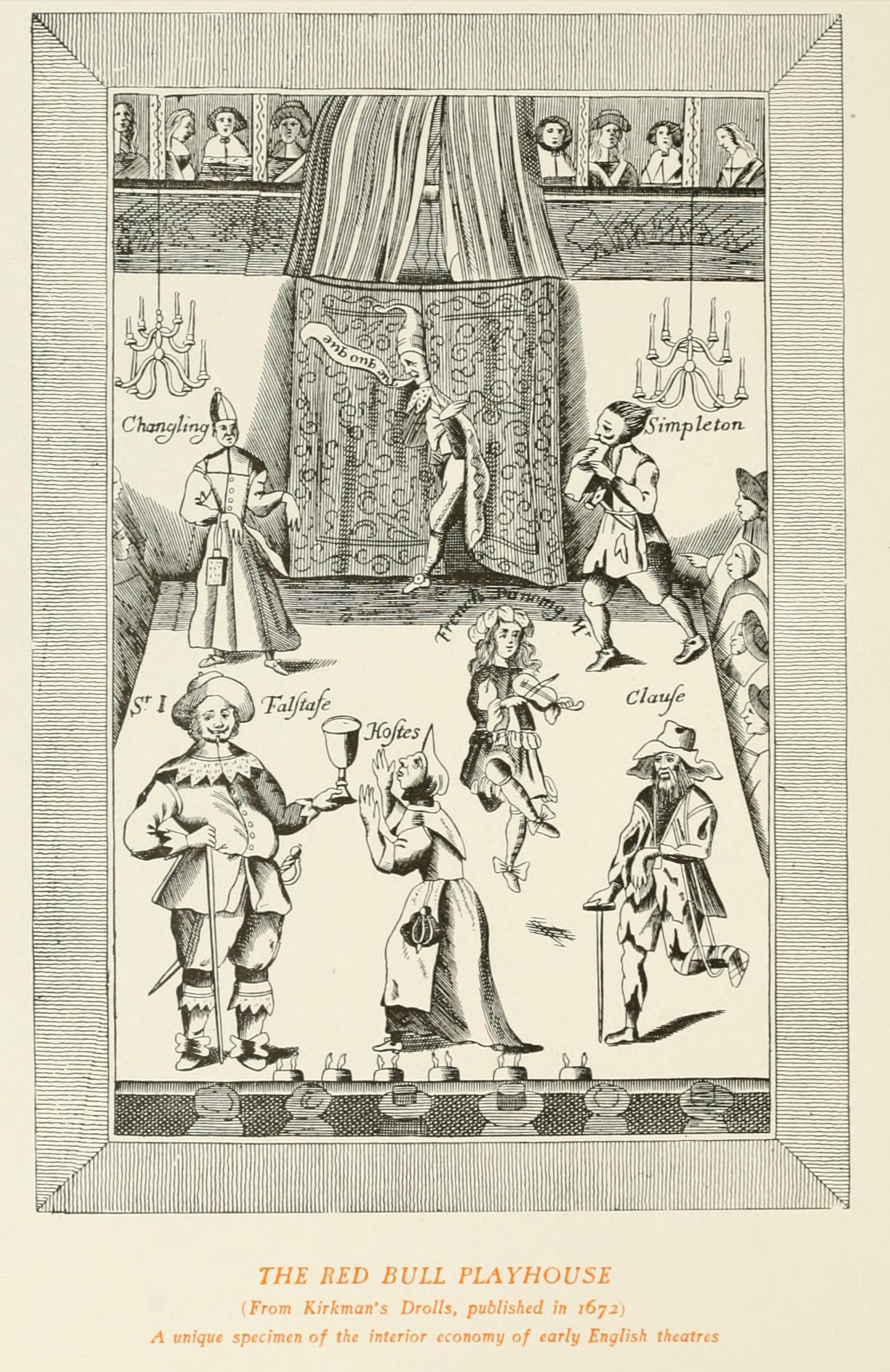
I came across some interesting prop-related illustrations in  a series of books called The Shakespeare Rare Print Collection, which was published back in 1900. The first shows a performance in progress on the stage of the Red Bull Playhouse circa 1672. I’m not really sure this is a Shakespeare play, since the drawing was made during the Restoration Theatre period well after his death.

Red Bull Playhouse
Red Bull Playhouse

You can see some minimal hand props, like a cup and a lantern, as well as plenty of swords and musical instruments. The picture shows a complete lack of furniture though, as well as any sort of scenic element.

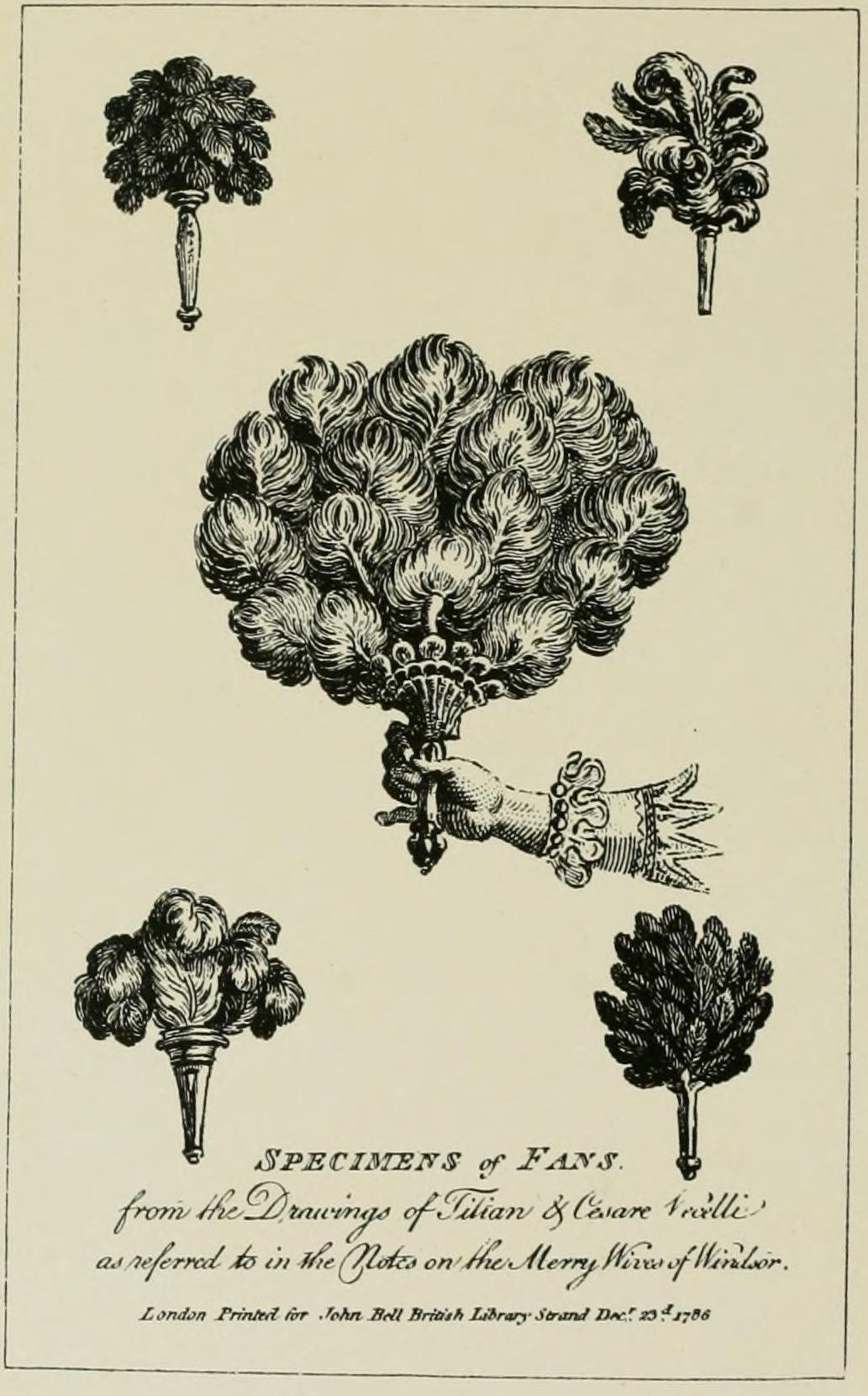
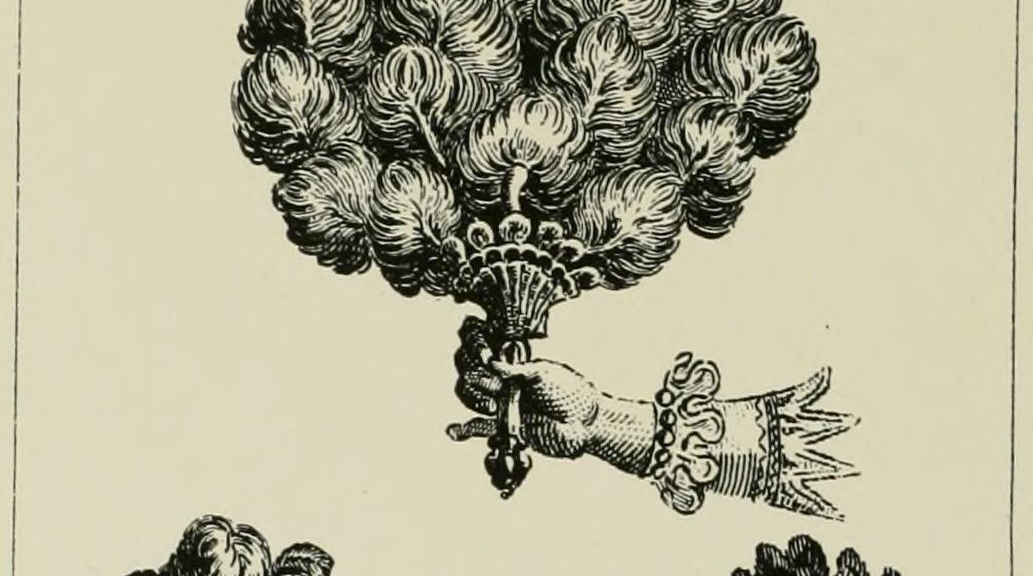
The other illustration shows specimens of fans “as referred to in the notes on the Merry Wives of Windsor.”

Specimens of Fans
Specimens of Fans

This drawing was made in 1786. It is fascinating how much variation there is in such a seemingly simple hand prop.

Backstage at Booth’s Theatre in 1870

The following illustrations are taken from an 1870 book about the backstage areas of Edwin Booth’s theatre in New York City.

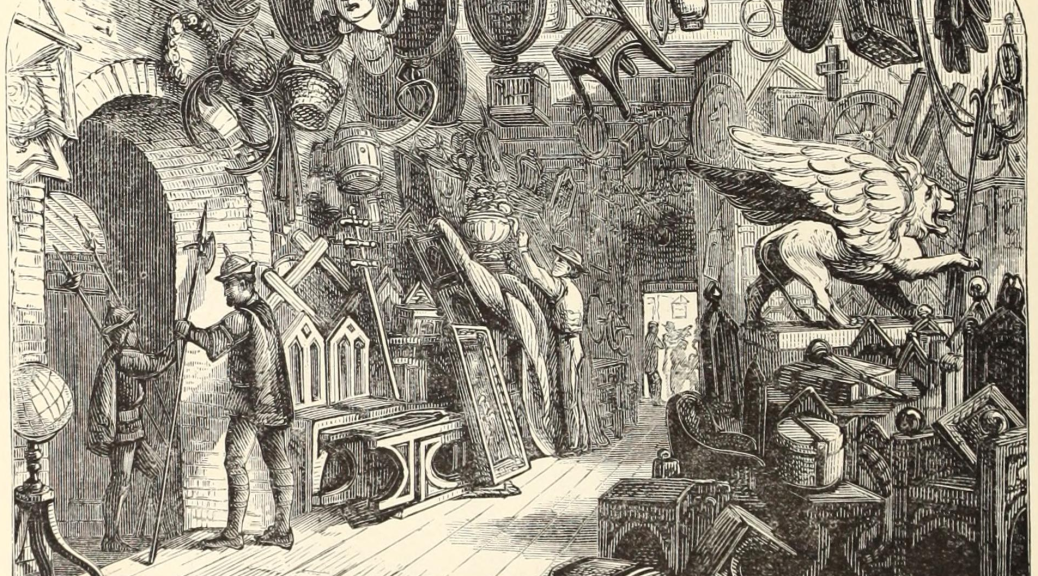
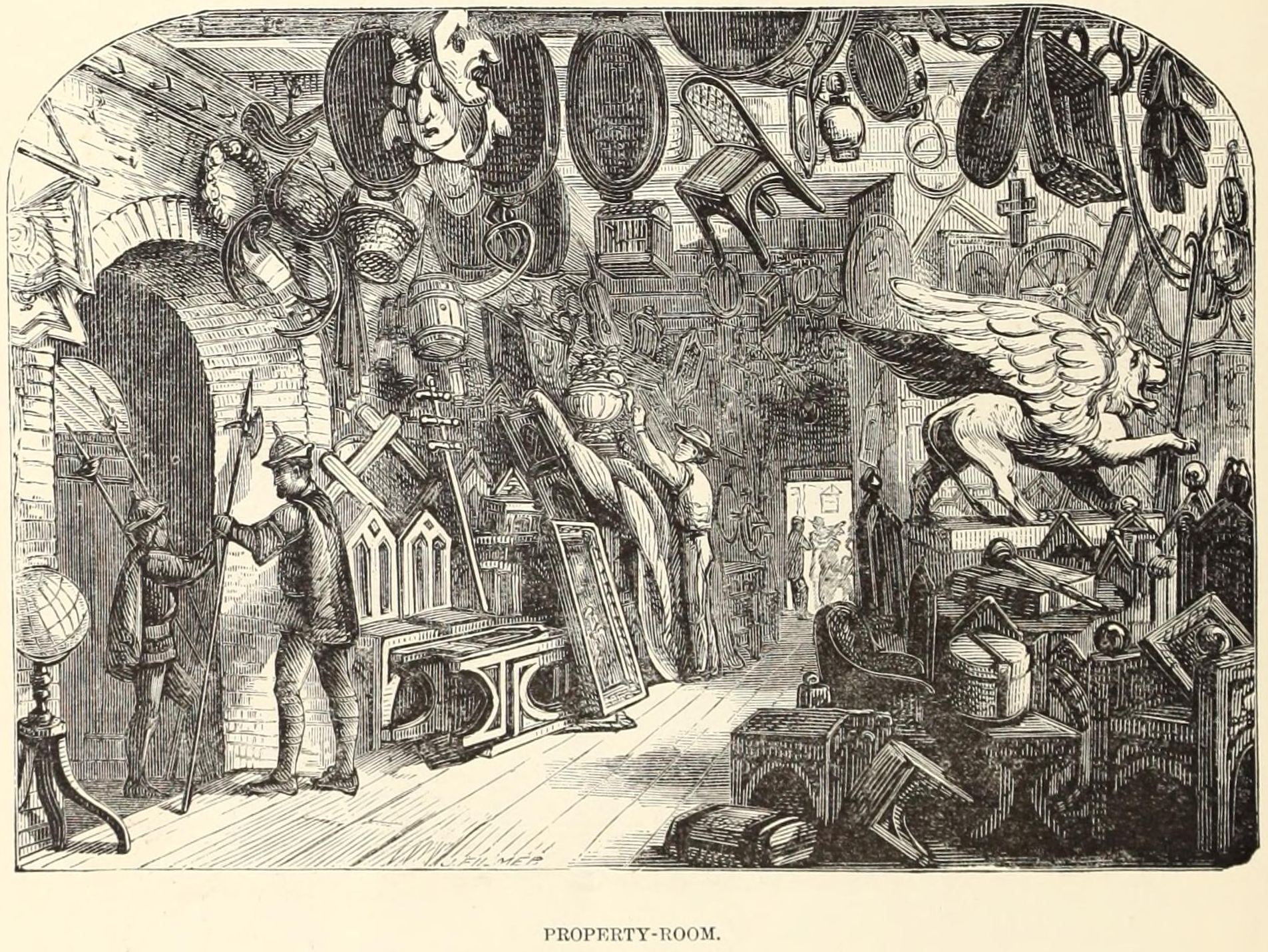
Property Room
Property Room

The book has this to say about the property room and adjoining armory:

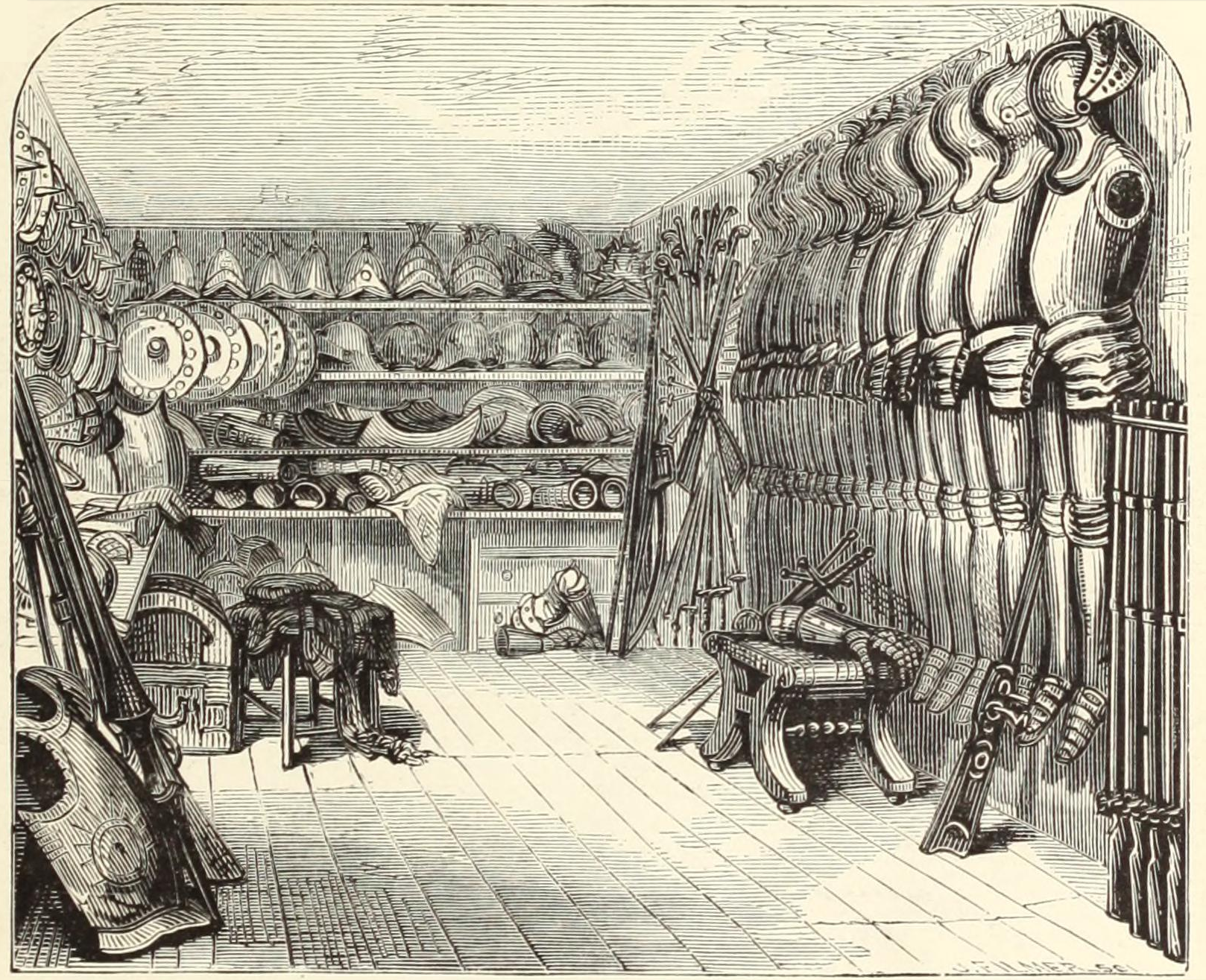
The “property room” gathers within its fold a marvellous curiosity-shop; helmets and tiaras, mitres and swords, crowns and masks, gyves and chains; furniture of the past and of to-day, “cheek by jowl;” griffins and globes, biers and beer-cups, coffins and thrones; decorations for the garden, the boudoir, the palace; furniture for the salon or the hovel—a multitude of things, in fact, more numerous than can readily be catalogued. The “armory”, if not a collection of such strange things, is interesting, and looks as if we were wandering through some ancient tower or castle rather than “behind the scenes” at a theatre.

Armory
Armory

Because the illustrations are so charming, I thought I would show a few more.

Scene-Painters' Room
Scene-Painters’ Room

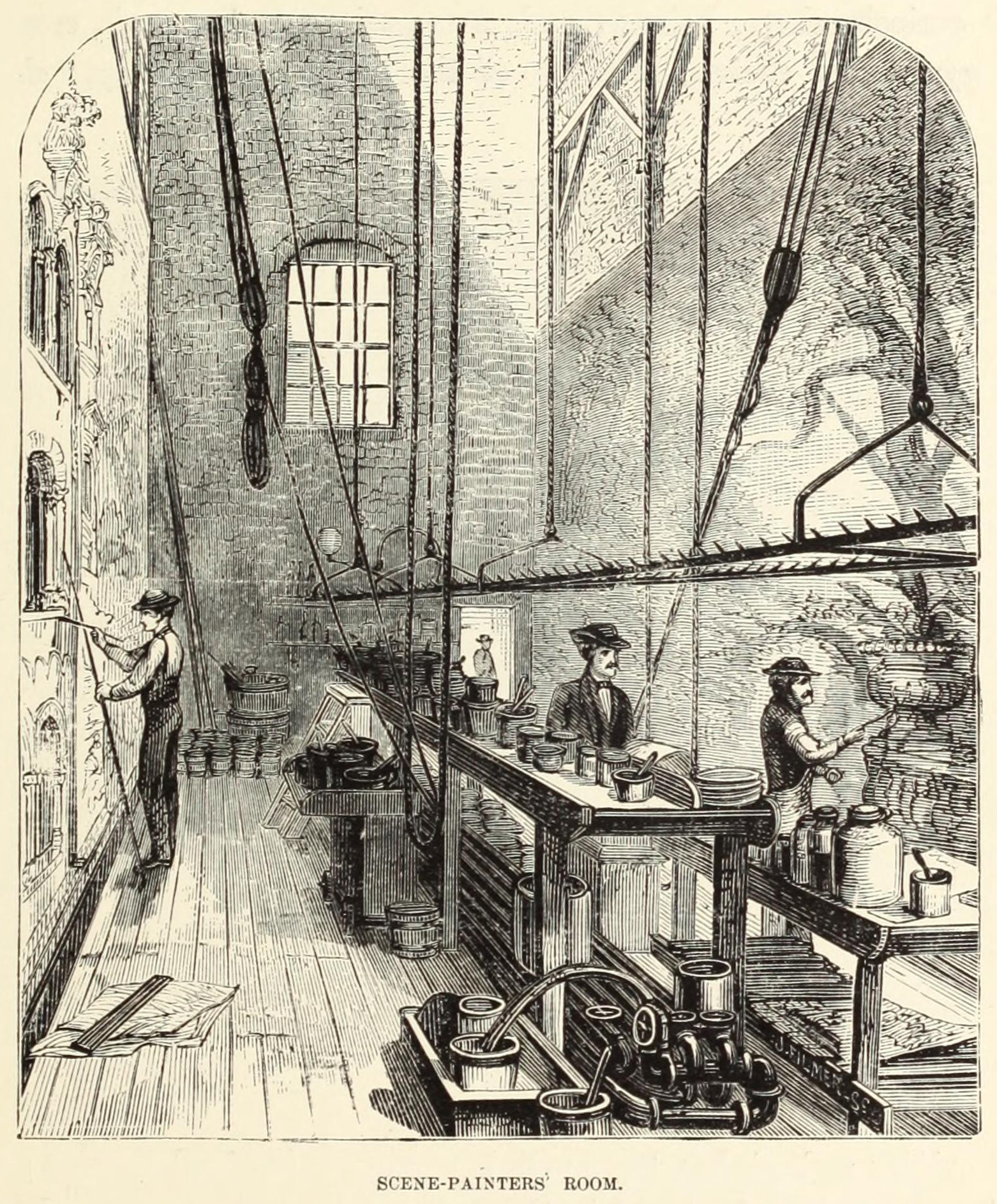
The book also does the great service of giving the names of all the backstage workers at that time:

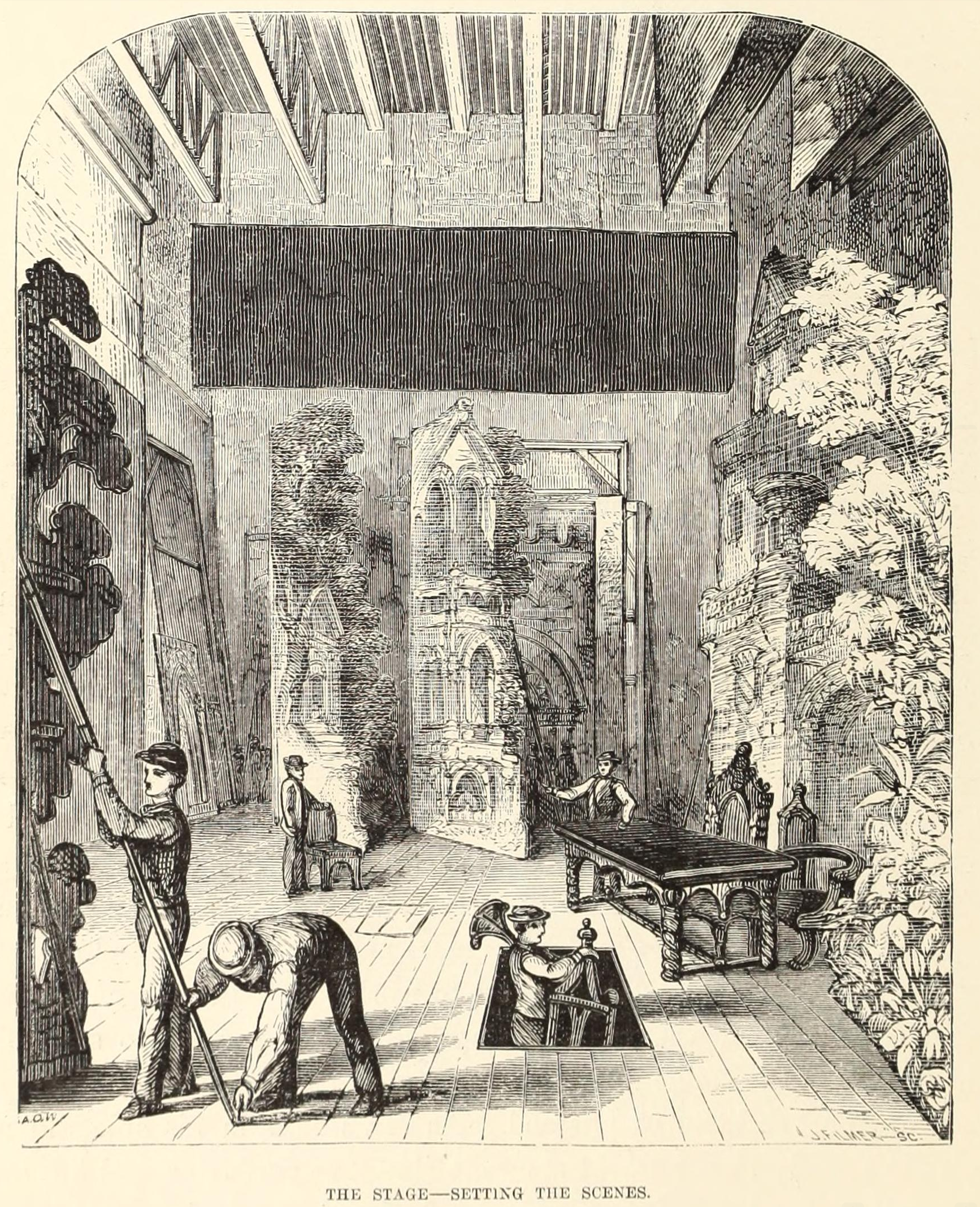
We must give large credit for all the complete features of this theatre to Mr. J. L. Peake whose inventive talent constructed the machinery; to Mr. Withan, whose skilful pencil gives us pictures of such rare beauty; to Mr. Deuel, whose tase and research provide all those many accessories of furniture and properties, so often necessary to give illusion to the scene; to Mr. Joyce, who reproduces with historical accuracy the costumes of bygone periods; to Mr. Dunn, the carpenter, without whom the play were naught; and to Mr. Kelsey, engineer, whose care and watchfulness contribute to our safety and comfort.

The stage - setting the scenes
The stage – setting the scenes

The property man’s full name is James P. Deuel.

Originally published in Booth’s Theatre. Behind the Scenes. Illustrated, by OB Bunce. Reproduced from Appletons’ Journal. New York: Henry L. Hinton, 1870.


Armadillos on Stage, 1947

The following is a Letter to the Editor which appeared in a 1947 issue of Life Magazine:

Sirs:

Concerning your recent article on armadillos (LIFE, Oct. 6), we feverishly urge any readers entertaining notions of employing such a creature for theatrical purposes that it is not a good thing.

One of our more romantic prop women assured us that for our Youngstown Players production of The Royal Family an armadillo would be very fetching lugged across the stage in the third act. The critter arrived and was snugly ensconced in an orange crate by the furnace. Several times it disappeared and was discovered perched among the coals…

On opening night he was whisked across the stage so quickly that it was impossible for the audience to divine whether what we had in the gaily colored birdcage was an armadillo or George Jean Nathan. Several in the audience asked where we got a seal so small. When we brightly informed them it was an armadillo and did they know what an armadillo was, they said no and they didn’t want to know. It looked, they said, vomitous. After the first performance, to our delight, it up and died…

James Priddy, Youngstown, Ohio.

Originally printed in Life, October 27, 1947, pg 22, 25.

The Versatile Property Man, Unrecognized Genius of the Stage, 1913

The following article is from a 1913 issue of The Sun.

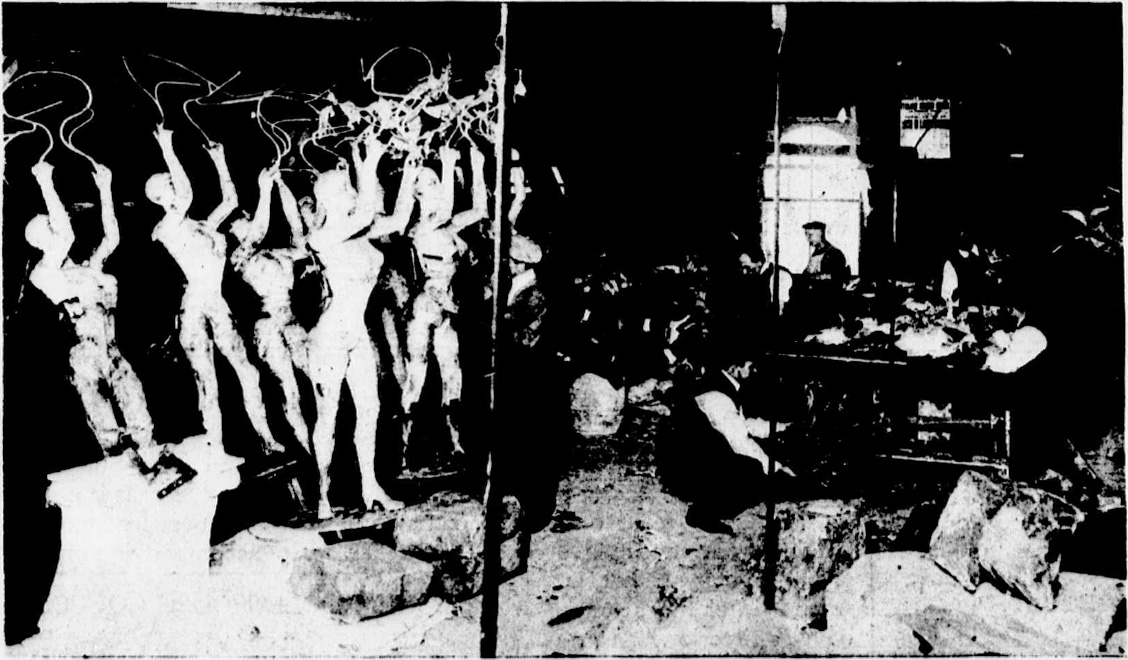
In modern stage affairs property men have risen to heights of artistry little dreamed of a few years ago, when the men handling what are known as the “properties” of a theatrical production were regarded as little more than unskilled labor. Nowadays the property man is expected to possess the skill of a sculptor as well as that of a portrait painter. In transporting the massive musical extravaganza entitled “Hop o’ My Thumb” from the Drury Lane Theatre in London to the Manhattan Opera House in this city a number of feminine figures were damaged. Since they comprised an important feature of an elaborate scene called the Garden of Statues the work of repair would necessarily have to be done in a masterly manner. The property men were called in and given instructions. An arm was missing on one figure, a leg on another and some had large holes torn in various portions of the form. One may well imagine that such a task would properly belong to a sculptor or an artist of ability; but not so in theatrical affairs. It is the duty of the property man and he must do it in a creditable manner, or be succeeded by one who can do so. Accompanying is a scene showing the property men working on the figures and making trick doves, the latter so constructed as to give every appearance of flying-just another of the manifold and difficult tasks assigned to the unrecognized genius known as the property man.

Property Men are Sculptors, Too

“Hop o’ My Thumb” is quite the largest theatrical production that has ever been imported from the Drury Lane Theatre. When “The Whip” was brought over last year it was thought the limit had been reached, as that production filled to overflowing the hold of one of the largest ocean vessels; but this year’s Drury Lane offering exceeds “The Whip” by nearly fifty extra large truck loads of scenic equipment. As the title indicates, the production is based on the fairy story by that name. Rehearsals have been in progress for several weeks and a crew of more than 100 men have been busy night and day preparing the stage of the Manhattan Opera House for the spectacle. This is no mean task, since some of the elaborate stage effects have made it necessary to practically rebuild the stage of the theatre from pit to fly gallery. When Oscar Hammerstein erected the Manhattan Opera House it was generally though that there was sufficient space in the big building for the largest kind of theatrical operations, but it would appear that the London managers have contrived a performance that will tax to the extreme limit the resources of the Hammerstein playhouse. While there is ample room for the rehearsals of the chorus and principals of the company the ballet of 150 had to seek quarters at the Seventy-first Regiment Armory, where for the past three weeks Ballet Mistress Maud Crompton, from the London Drury Lane Theatre, has been instructing the little army in what is promised to be a ballet of rare novelty and beauty. In the meantime, under the eaves of the roof and over the great auditorium of the theatre, another army of property men and wardrobe mistresses are busy in their part of the preparations. Originally published in The Sun, November 23, 1913, section 4, page 16.