Since I’m juggling four shows simultaneously at the moment, I figured I’d let the rest of the internet do the talking.
Woodworks Library – Over 175 complete and free books on woodworking, and related topics such as furniture design, blacksmithing, upholstery, and carving. This should keep you busy for awhile.
S*P*A*M (The Society of Properties Artisan Managers) is a group of theatrical prop managers, directors, and educators throughout the United States. If there is a larger prop shop in a regional, non-profit, or university theater, chances are the prop master is a member of S*P*A*M.
Over the weekend, they relaunched their S*P*A*M website to include a lot of useful information about who they are and what they do. Readers of this site will be familiar with the Properties Director Handbook, which was written by Sandra Strawn (a member of S*P*A*M) and includes information and photographs from a variety of other S*P*A*M members. The PropPeople discussion forum is another resource that was initially set up by S*P*A*M members. And of course, yours truly is a member.
Of greatest interest for now is the list of props internships they provide. If you were interested in learning how to work in props through an internship, this is where you will find a shop. While there may be other companies who offer internships, you run the risk of working somewhere that uses interns as free labor and impart no educational value; working long hours for little pay in a theatrical setting is not the same as learning a craft. In addition, the companies in this list are the companies that are recognized throughout the country and will help you with future employment.
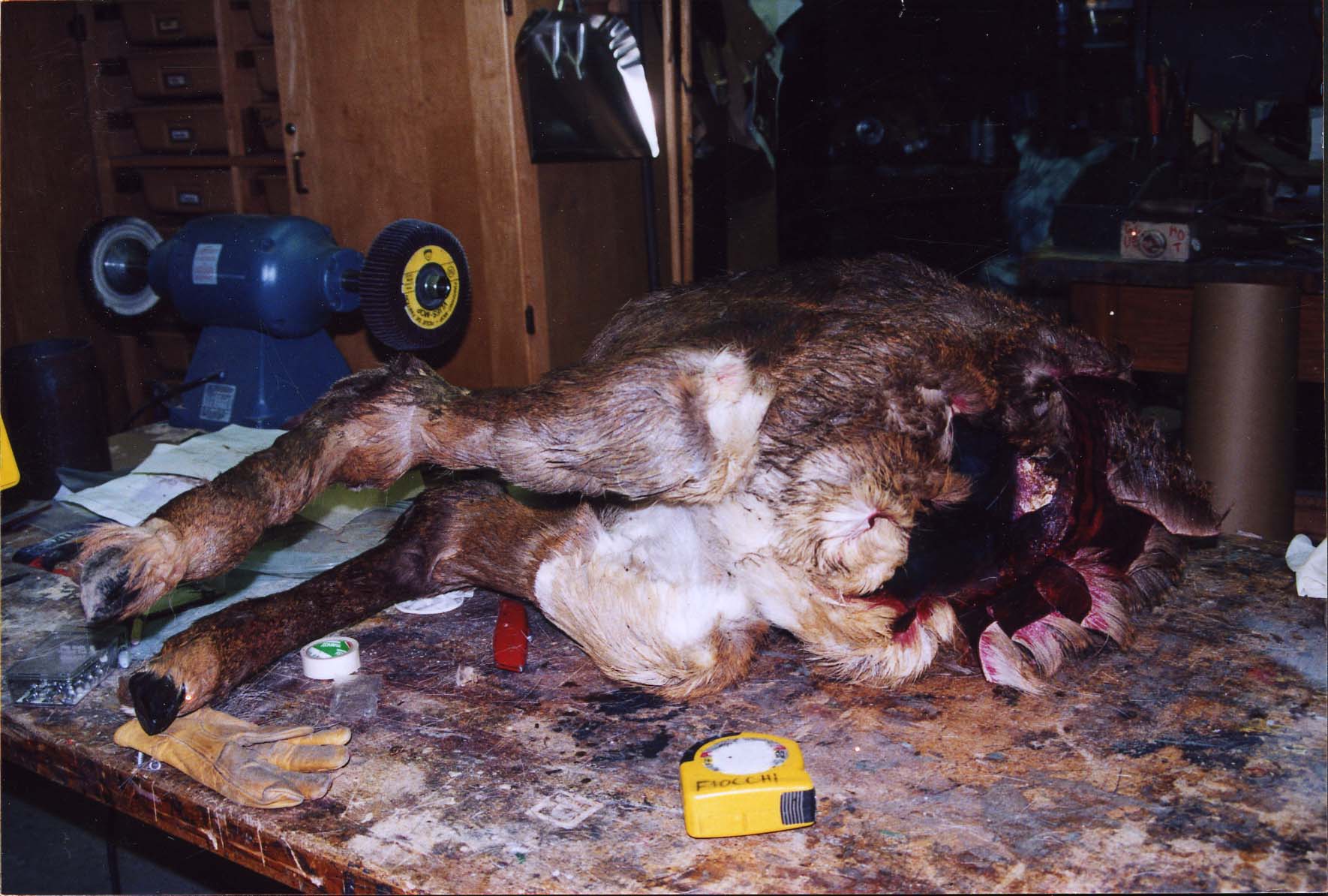
In a previous post, we saw a deer butt which Natalie had built several years ago make a reappearance in a current production of A Lie of the Mind. I asked her to share how she constructed it.
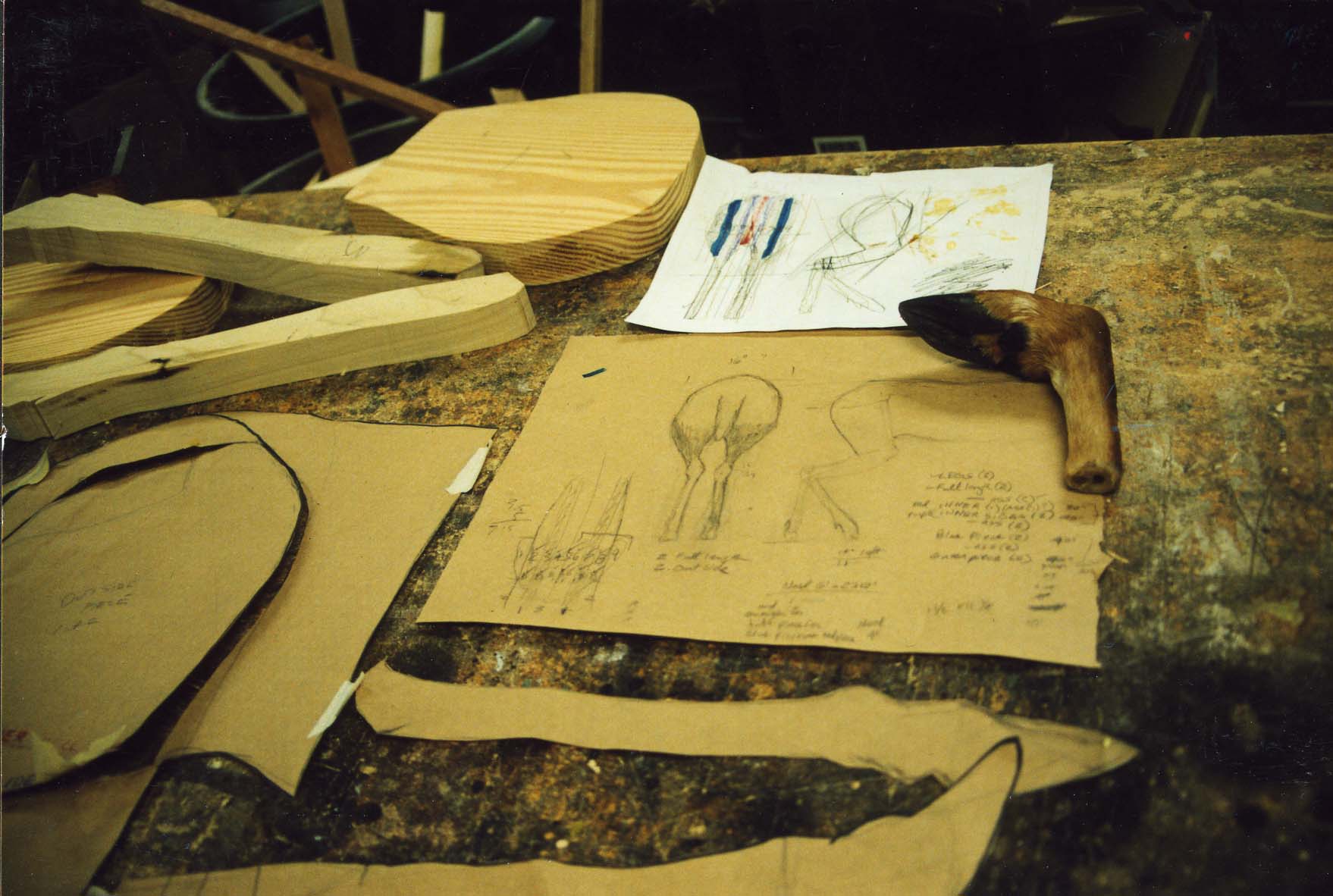
Drawing and deer hoof
She began with research and preparation. Without that, you can easily waste your time building something which is not quite right. She found a taxidermist who agreed to let her come to his shop and show her some techniques. She was able to make a series of detailed drawings to work from; she also scored the back half of a deer hide (as well as the foot pictured above). As you can imagine, with all the deer heads you see mounted in hunting lodges and man caves, there’s bound to be some left over rear parts.
Layup of solid wood pieces
She decided to construct it out of a solid chunk of wood for strength, durability, and realistic weight. With her drawings, she cut the wood into their rough shapes before gluing them up layer by layer.
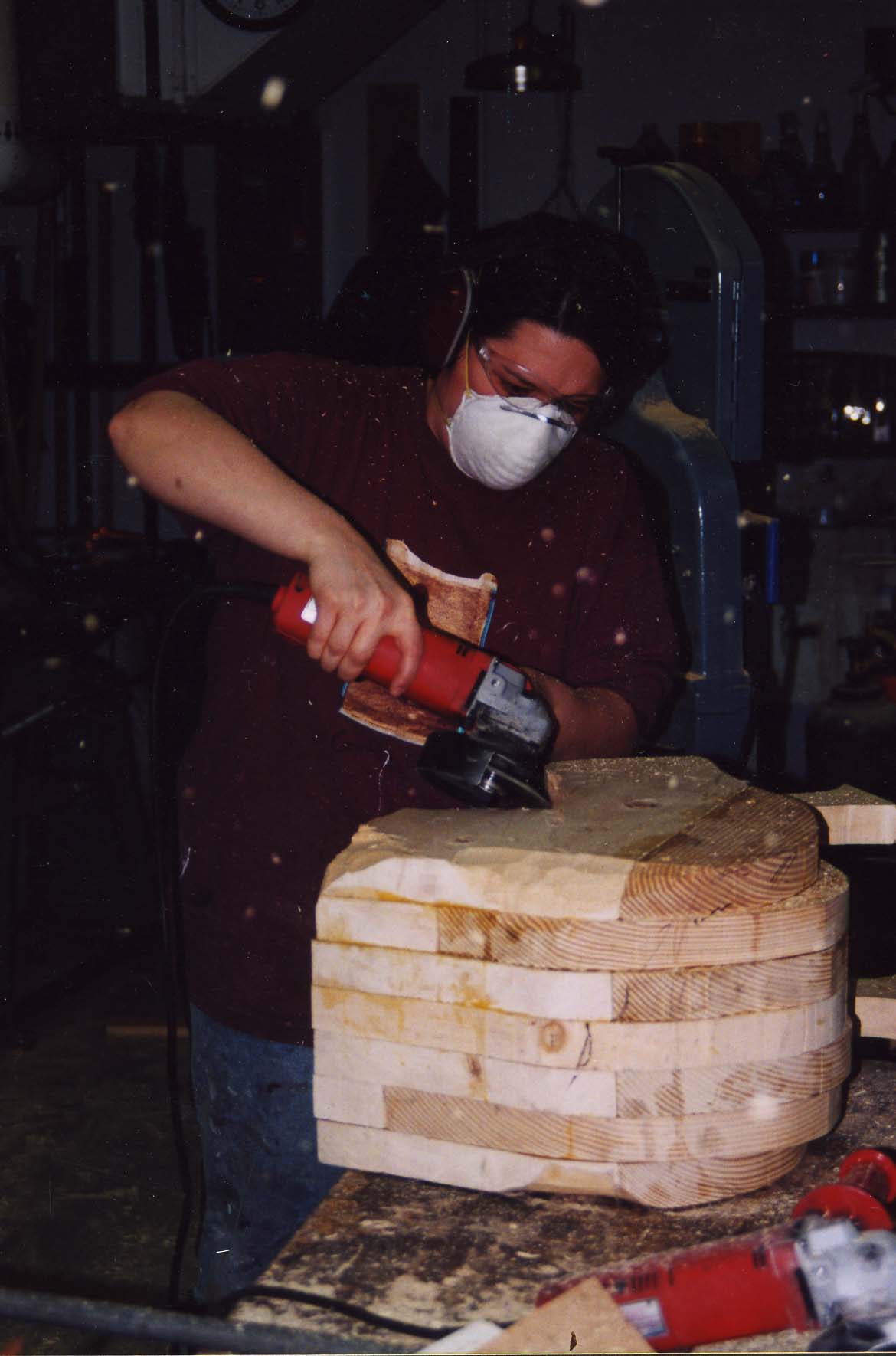
Cutting away at the wood
Once the form had dried together, she began rounding down all the edges to blend it into a seamless piece. She also carved in musculature for added realism; since it would be covered with a hide, she exaggerated the lines so they would still show through the thickness of the material.
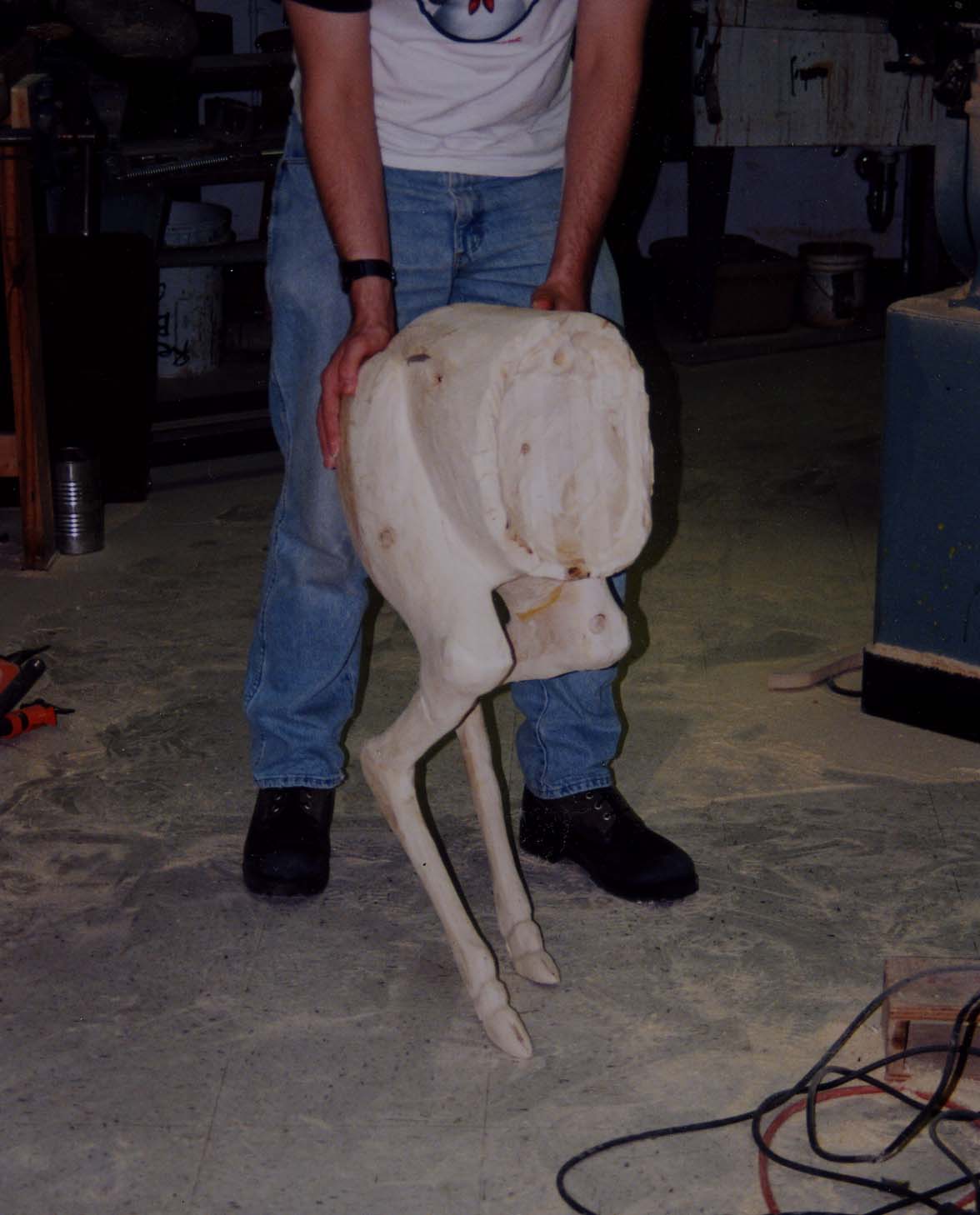
Completed wooden deer form
With the form completed, she tested it for strength. The legs are fairly skinny, so she added a bit of metal rods in the thinnest areas for reinforcement.
Painting the exposed parts of the deer
Natalie painted the hoofs and mangled parts because they would not be covered by fur. Again, the research and reference materials showed her exactly what it should look like. She had also spoke with the taxidermist about what colors would be showing on the exposed innards.
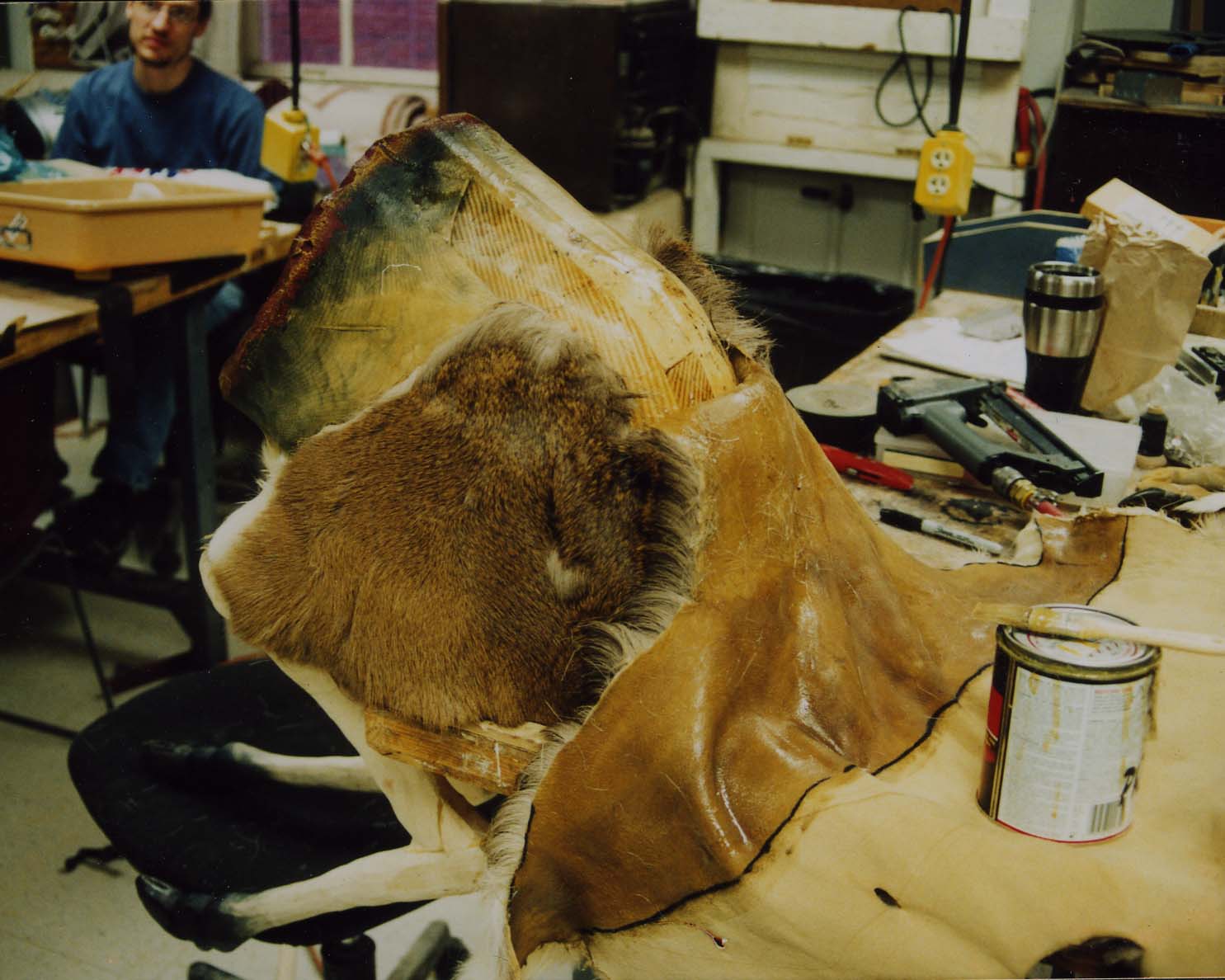
Attaching the deer hide
She began attaching the hide to the form using Barge. The hide came split down the bottom center so it was a flat piece. That meant it had a seam along the bottom and down each leg, which she had to treat carefully to keep it from becoming too prominent or noticeable.
Completed deer butt
With enough practice, you too can produce props as deer as this!
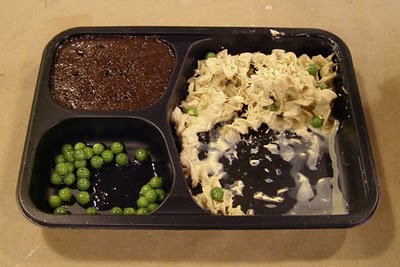
I would like to introduce you to the newest blog about props: Fake ‘n Bake. My friend, Anna Warren, details the projects she crafts and constructs at the Milwaukee Repertory Theater. She specializes in fake food craftsmanship and casting and molding. Her articles so far are well-documented and chock full of photographs.
A fake TV Dinner made by Anna Warren
The peas in that picture above? Mardi Gras beads. Check out the Fake ‘n Bake kitchen for how she made the rest. If you leave a comment there, tell her I sent you!
For those of you who are hip with this whole internet thing, I am on Twitter. You can follow me if you want. It’s not as focused on props as this blog, but I’ll occasionally throw up a link to something of interest to the props community. These are some sites I’ve tweetered about in the past:
Vintage Printables – A fascinating (and organized) collection of public domain artwork and graphics suitable for printing (and making paper props).
Craft Rooms and Organizing – An ongoing series showcasing the spaces of crafters. It’s a great inspiration for setting up work and storage spaces in tight quarters.
Photos of my Models – A photo gallery of Michael Paul Smith’s incredibly detailed models of a mid-century American town.
75 years of Band-Aid – A brief history of Band-Aid with a great gallery of their bandage packages throughout the years.
Louvre database – A (still incomplete) database of all the artworks in the Louvre museum.
So if you can’t stand missing out on future links like this, as well as my unparalleled humor, go ahead and check out my Twitter.
Making and finding props for theatre, film, and hobbies