Backstage and Now the Boss: ‘The Only Girl in the Building’ – The New York Times takes a look at Jennifer Diaz, the first female head carpenter in IATSE Local 1. Besides exploring her career, it is also a great look at the inner workings of the most famous stagehand union.
Behind the Scenes at the Guthrie for “Sense and Sensibility†– Twin Cities Live talks with Patricia Olive, the prop master at the Guthrie Theater and fellow S*P*A*M member. They also talk with Linus Vlatkovich, the props carpenter for the show, who has been at the Guthrie for 44 years.
Scare Trick or Treaters with a Pneumatic Moving Box – Make Magazine has this great little tutorial on using two syringes to make a pneumatic opening box. There’s no air compressors or electrical parts here, just cheap, simple trickery.
The History of Wine Containers: Featuring Guest Writer Emily Kate – Your play takes place in the past; what kind of container does your wine come in? Emily Kate looks at the history of how wine was stored. You don’t want to make the anachronistic mistake of using a box of Franzia in your Ancient Egyptian show.
Sine Curve Tutorial – Finally, Lost Art Press shows us how to draw a smooth sine curve, which is a little detail often found on period furniture.
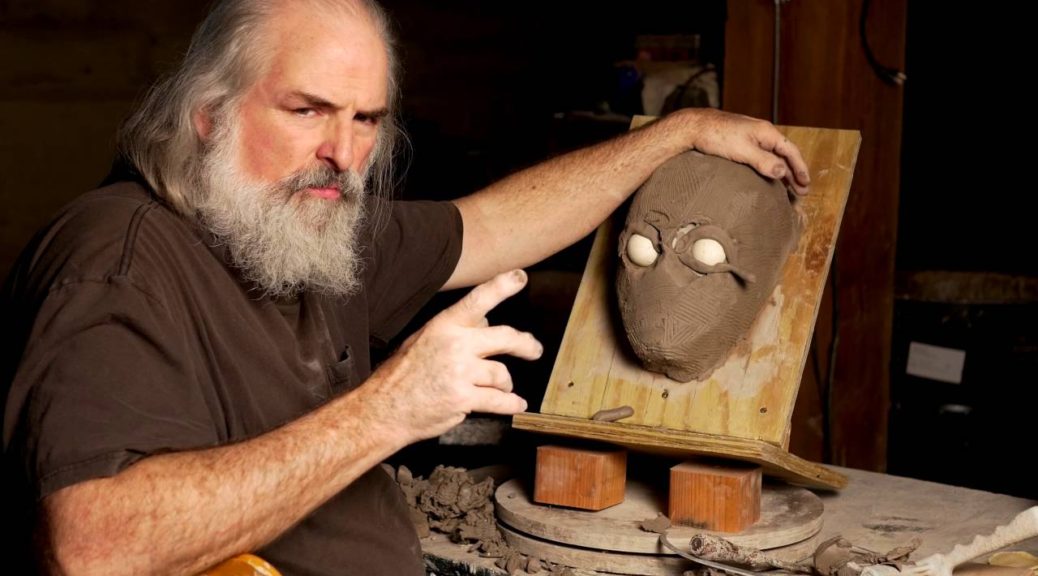
First Person Monster Blog with Shannon Shea – Shannon Shea is a well-known creature and effects artist who worked on films like Predator, Batman Returns, Terminator 2, and Jurassic Park. He has not updated his blog in a few years, but it has a treasure trove of stories and information if you are willing to dig through the archives.
Got bored, made electric shaver (handheld heatwire foam cutter) – Here is a short little tutorial about making a hot wire cutter run off of a 9V battery. Â I am not sure why you would want a hot wire cutter that is the same size as a knife blade, but here you go.
If your production is permitted to use live flame, a match can be one of the most frustrating props to get right. In real life, we barely notice when it takes a few attempts to light a match, but on stage, we want the match to light up on the first stroke. First we need to know about the two main types of matches: safety vs strike anywhere.
What is the difference between safety matches and strike-anywhere matches? A match requires a mix of chemicals in order to ignite, including phosphorus. On a strike-anywhere match, all the chemicals are contained in the head. On a safety match, the phosphorus is not on the match head, but rather on a special striking surface. It is only when you draw the match against that surface that you have the correct combination of ingredients. A strike-anywhere match can be lit against any surface with enough friction; a safety match needs a strike plate containing phosphorus.
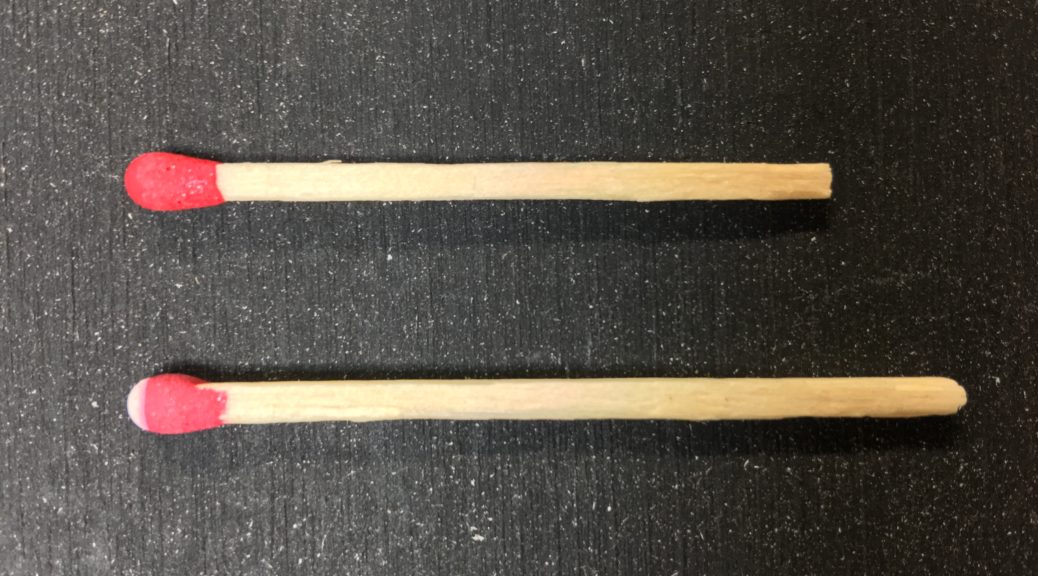
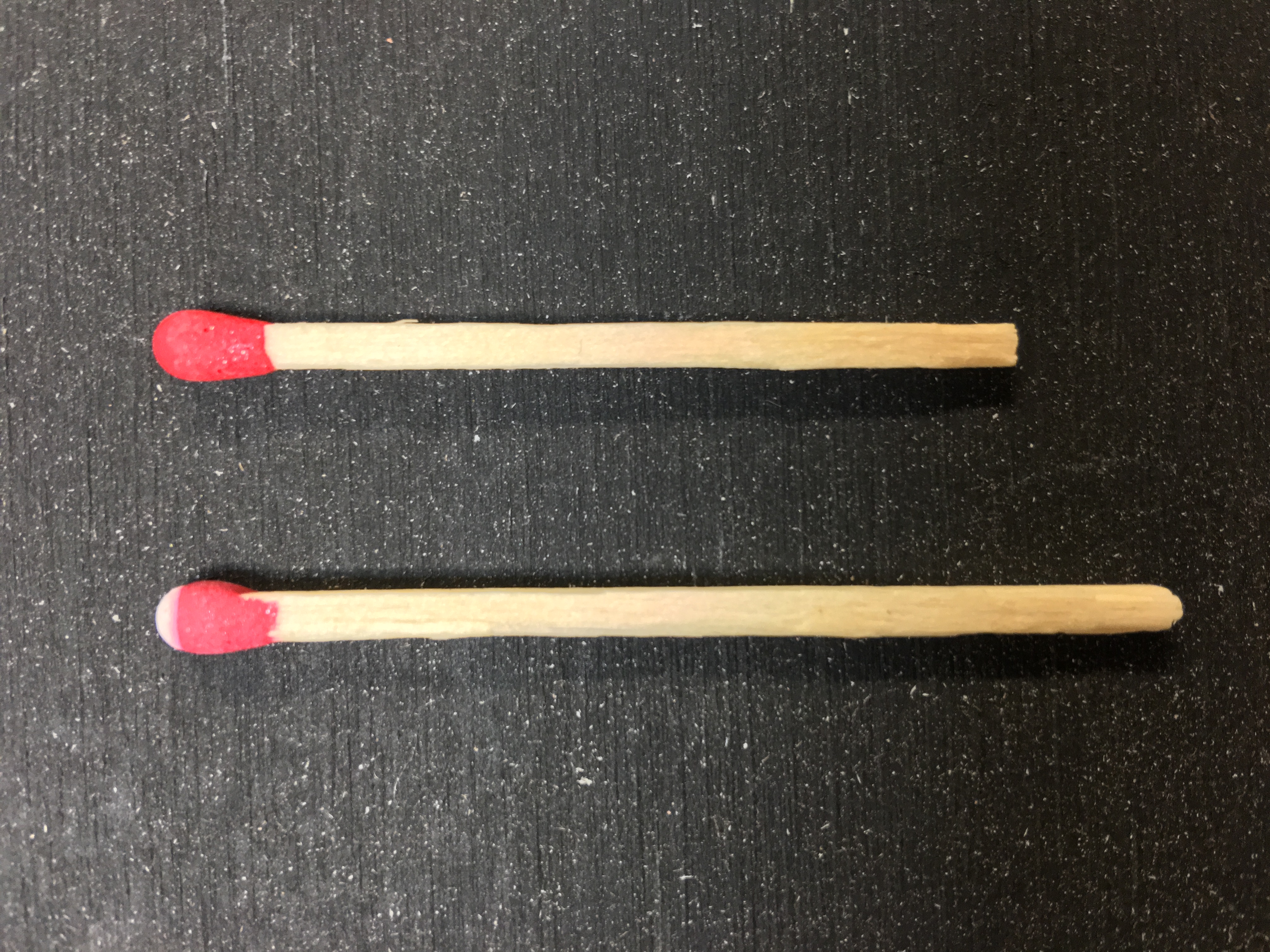
Safety match versus Strike Anywhere Match
The above picture shows the visual difference between the two. The head on a safety match (top) is a solid color; usually red or blue, though newer ones can be green. The head of a strike anywhere match is red with a white tip; the white tip is the phosphorus.
In theatre, we want consistency, and most productions opt for the strike-anywhere match. You can light it off of a sheet of sandpaper; I found 300 grit is pretty good. A lot of shows will tape small rectangles of sandpaper on various hard surfaces around the set so the actor can light the match wherever they are. With a safety match, the chemicals on the striking plate are consumable, so the matches get progressively harder to light unless you switch out a fresh strike plate every so often.
Using strike anywhere matches takes some foresight, since it has gotten nearly impossible to just run out to a store and buy them. You probably need to order them online. They are not difficult to find, but they may take a few days to ship because of regulations against sending them by air.
You can buy in bulk, though they tend to lose their effectiveness over time. For optimum storing, keep them in an airtight container or bag along with a pack of silica gel desiccant.
As far as the historical accuracy of matches, both types appeared at basically the same time. The nineteenth century saw a lot of change and evolution in matches. You can find a lot of information online, but be careful with what you read; many sites will have interesting trivia about matches, but will neglect to tell you which matches were widely used and which were expensive novelties.
Basic archetypal wood matches using white phosphorus were widely used between 1830 and 1890. Many nineteenth century match boxes did not contain a striking surface, but rather had a loose piece of sandpaper inside that one used to light it. They also needed to be kept in an airtight container, so you would not see piles of loose matches out in the open.
The strike anywhere match as we know it came around the beginning of the twentieth century, as the use of white phosphorus was banned around the world and alternatives were found.
Safety matches began appearing around the middle of the nineteenth century.
Besides keeping your matches dry and making sure you have the correct striking surface, the other way to help your actors light a match is to use matches with a larger head and a sturdy shaft. Kitchen matches will often use thicker wood for their body than “standard” matches. Camping matches are typically beefier too; however, if they are “windproof”, it will be harder to blow them out, which can be dangerous onstage. Fireplace matches have some of the biggest heads; their shafts can often be nine inches or longer, but you can cut them down to whatever length you need.
One final disclaimer: the use of live flame onstage should only be done when you have the approval of the venue and the local fire marshal. Many jurisdictions will not allow any fire at all, even a single match. You need to take all possible precautions, including having someone backstage on “fire watch”, standing ready with a fire extinguisher. Wherever the actor disposes of the match, whether an ashtray or other container, you should fill with a bit of water, non-flammable gel (like Vaseline), or sand. The proper flameproofing of all props, scenery, and costumes around the match is also vital.
How to Paint Foam Props to Look Rusty – Punished Props has a great video showing how to make flexible foam sheets (EVA, XLPE, craft foam, etc.) look all rusty.
Shortcuts to Good Design – Christopher Schwartz shows how he uses scrap wood and wire to quickly mock up a furniture design. He can check the proportions and scale from all angles before building anything too complicated.
Build Props and Costume Armor with Paper, Pepakura, and Bondo - Shawn Thorsson demonstrates how you can turn a digital model into a file to print out, cut, fold, and assemble into a three-dimensional prop. You can then stiffen it with polyester resin and Bondo.
The following first appeared in an issue of Theatre magazine in 1908:
by Mary Gay Humphreys
That for the most part virtue must be its own reward is the scene painter’s ethics of his own profession. When, as it sometimes happens, the curtain goes up on an empty stage, and the audience breaks into involuntary applause over the beauty of the scene, such are his crumbs of comfort, and he takes them thankfully.
His own standards are much higher than he is able to realize. In this respect there seems to be but little difference between his attitude and that of the painter regularly accredited to the Fine Arts. But at no previous period is his discouragement greater than at this moment, when to the man in the orchestra scenic productions seem to have profited so greatly by modern inventions and scientific developments, as that, for example, of the electric light. Nor on no other man has later managerial conditions borne more hardly.
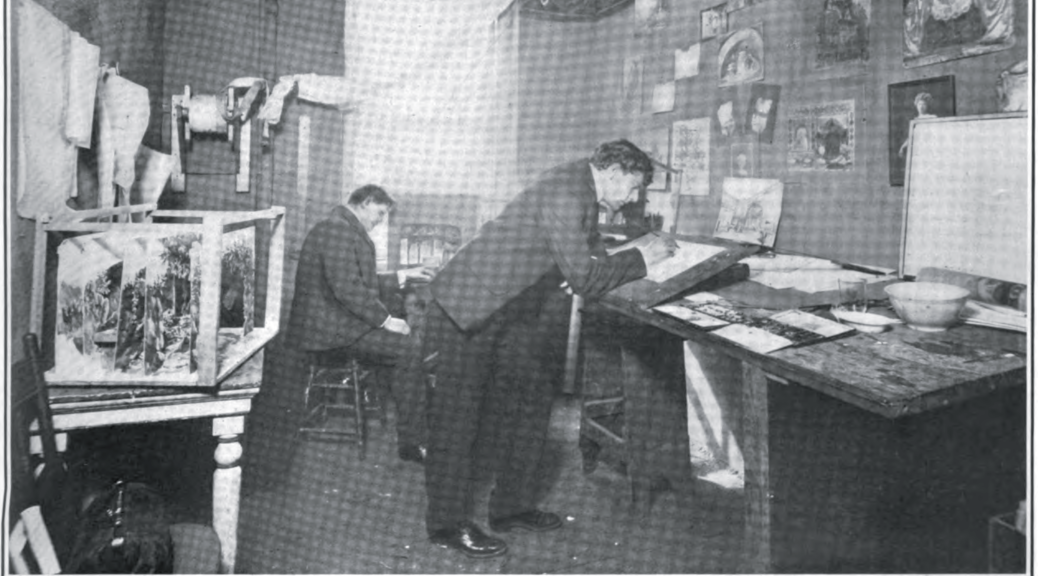
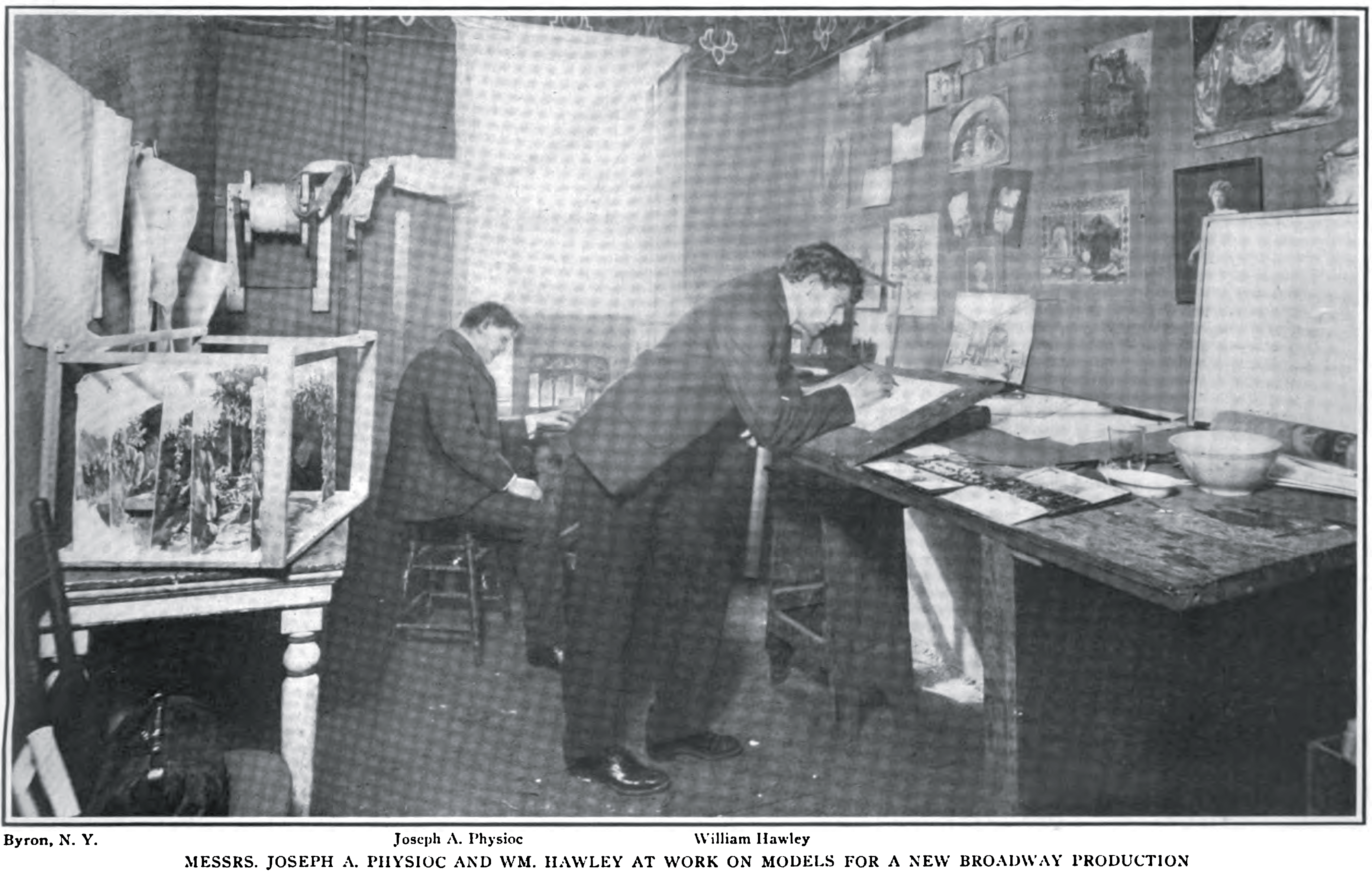
Physioc and Hawley
“There is no book that gives the history of scenic art. It would be too sad. It would tell only of disappointed hopes, of melancholy failures.”
This was said by Mr. Unitt in his interesting den at the Lyceum Theatre:
“Scene painting differs from the paintings known as among the Fine Arts only in degree. The principles are the same as in miniature painting. The only difference is you have forty feet of canvas. A portrait must resemble the subject more minutely than the scene resembles a situation, but that does not concern the principles involved. But, unhappily, to say that a picture represents scene painting is to make a disagreeable criticism.
“But it should be remembered that in painting, as the term goes, the artist does as he wishes; he consults no ends but his own. It is not so with the scene painter. His painting furnishes only the background, and this as a picture is likely to be thrown out of key because the other parts, of which he has no control, are not consistent with it. The lighting of the stage, for example, may not agree with the atmosphere the scene painter has given the scene. He also has to contend against costumes out of key, and as the living element of the picture is most prominent, the scene suffers.
“But nothing has tended to retard the development of scene painting as has the decay of the old stock companies. In those days the scene painter was part of the working staff of the theatre, and in daily intercourse with his principals. It took time, if you will remember, to produce such scenes as those in ‘The Amazons.’ This could be only accomplished by having a manager with artistic perceptions, and a staff that felt that pride and enthusiasm which must accompany good work.
“The method of production is now entirely different. The scene painter is not part of the theatrical staff. His is an employee of a firm. He is required to produce as rapidly as possible the scenery for perhaps twenty plays. The greater number of these will be failures, and others must be ready to take their place. This means a large plant and more rapid work. The scene painter cannot follow up his work; frequently he never sees it afterward. He has absolutely no opportunity for individuality, and naturally does not take the same interest as he did in that artistic atmosphere engendered when he was a member of the staff of a theatre.
“The conspicuous defect to-day in stage production is the lack of team work. The men who now control these matters are not distinguished for their keen artistic sense as was the manager in the old days. The commercial element, that has to be considered in view of the number of plays and possible failures, requires that the plays be put on as cheaply as possible. Suppose the scene painter attempts to carry his point and the play fails. He would probably have to listen to such comments as:
“‘Now, if you had put that girl on the fence and thrown a lot of color around her, the play would have gone far better. See?'”
Stage scenery and the men who paint it. M. G. Humphreys, il. Theatre 8: 203-4, v-vi, Aug 1908.
Making and finding props for theatre, film, and hobbies