You may have noticed I did not post much last week, and that this blog has become a little more sporadic over the past few months. Well, there is good reason for that. Last Thursday, my wife gave birth to our first son. It’s the best prop we’ve ever made.
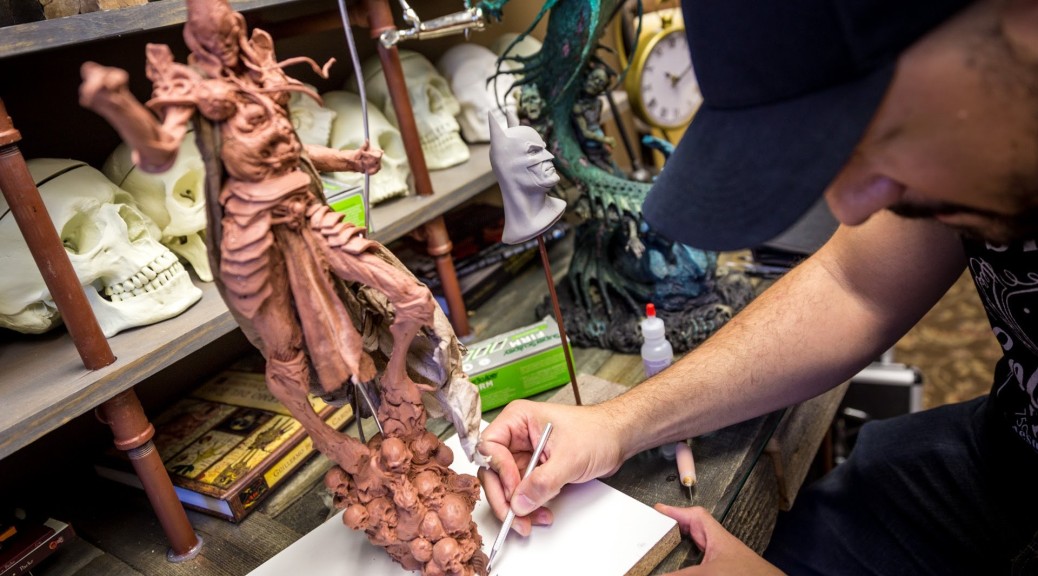
Harrison Krix is back with another great project, a life-sized shark gun from League of Legends. I don’t do the video games, so I don’t really know what that is, but it looks cool and lights up and opens its mouth.
Finally, here is an interesting piece called “Practical Effects Can’t Make a Comeback Because They Never Went Away“. While the article itself raises some good points, it also contains a fair amount of videos giving behind-the-scenes looks at the practical effects in various films from throughout the years.
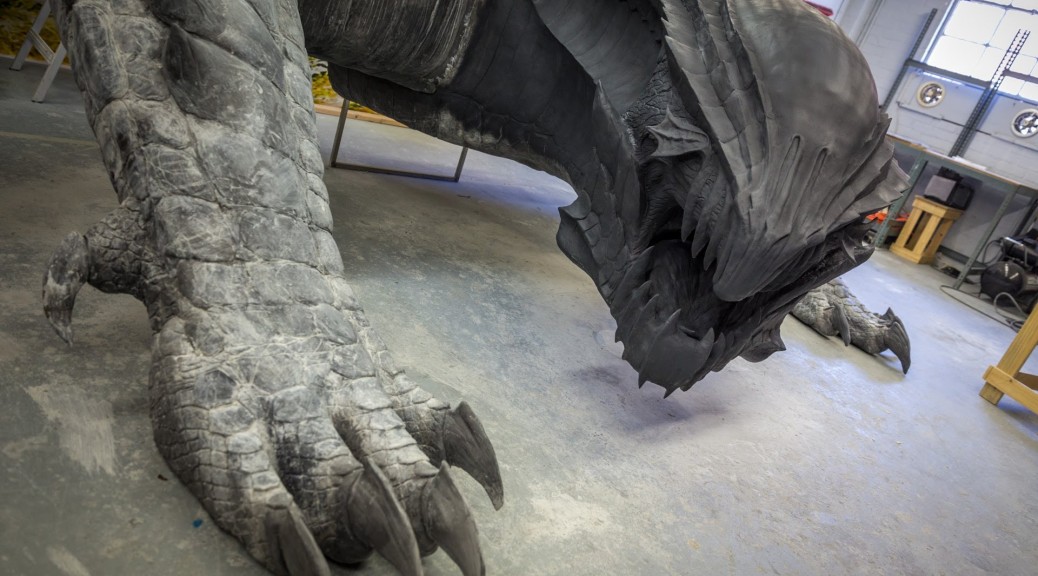
Here is a very cool video showing how Frank Ippolito made a life-sized dragon. Capcom wanted the front portion of one of their video game monsters for their booth at the E3 gaming conference, so they turned to sculptor and special effects artist Ippolito to make it happen. Tested shot this video, which shows all the stages of the build, from planning to creating the structure, and from sculpting the foam to coating it with a hard shell. If you ever wanted to create your own life-size dragon, this video is a good place to start.
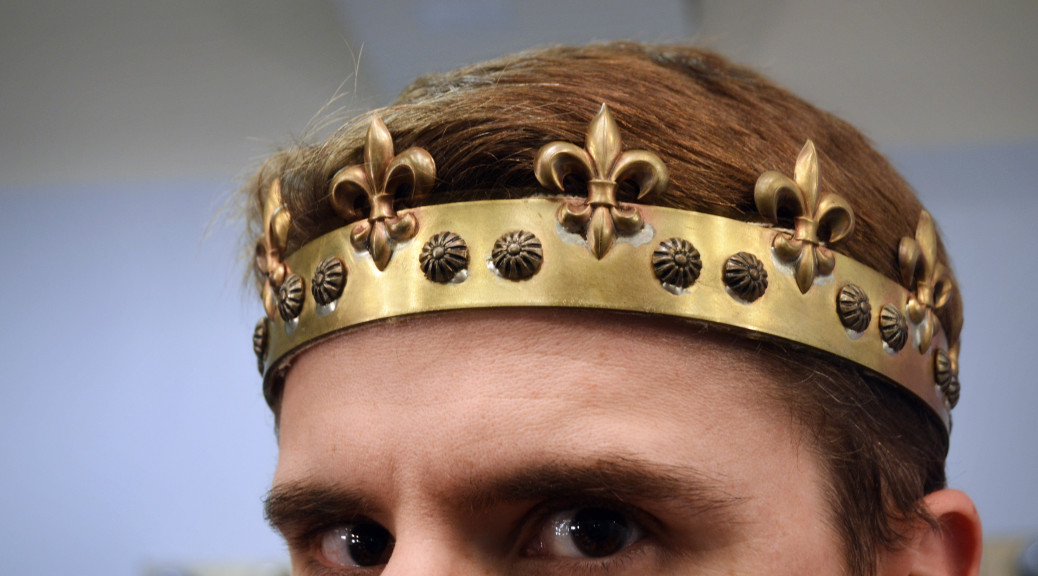
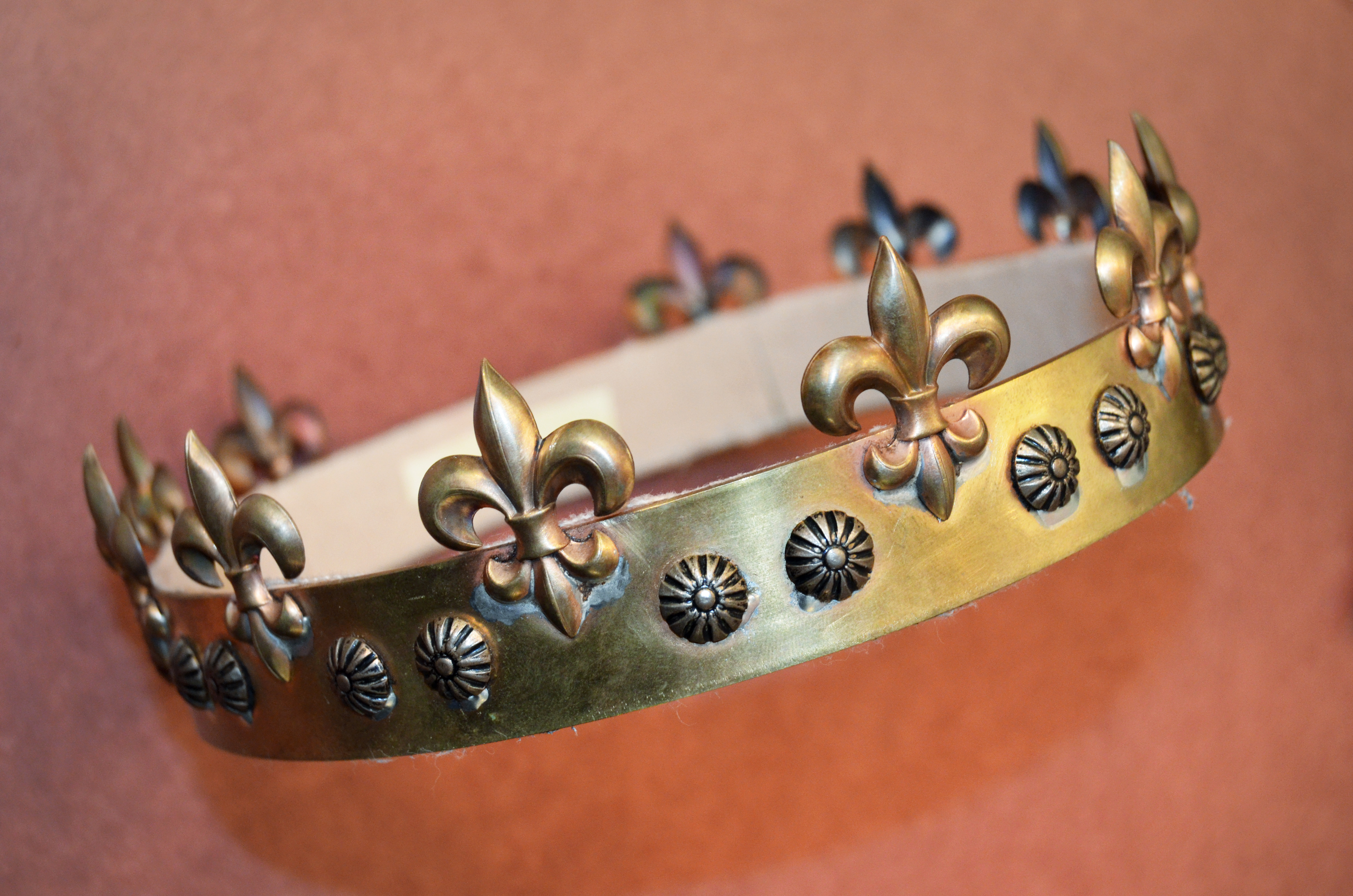
Our last show of the season at Triad Stage is All’s Well That Ends Well, a Shakespeare piece I had worked on before (you may recognize the cannon I built for the previous production at Shakespeare in the Park). There were no cannons this time around, but we did need a crown for the King of France. Since Shakespeare isn’t our typical shtick, we did not have any crowns in stock. I had to make one.
Brass bar
The base of the crown was a piece of one-inch wide brass bar that was 3/16″ thick. I ordered a long piece of it from McMaster Carr in case I messed up and had to make another one.
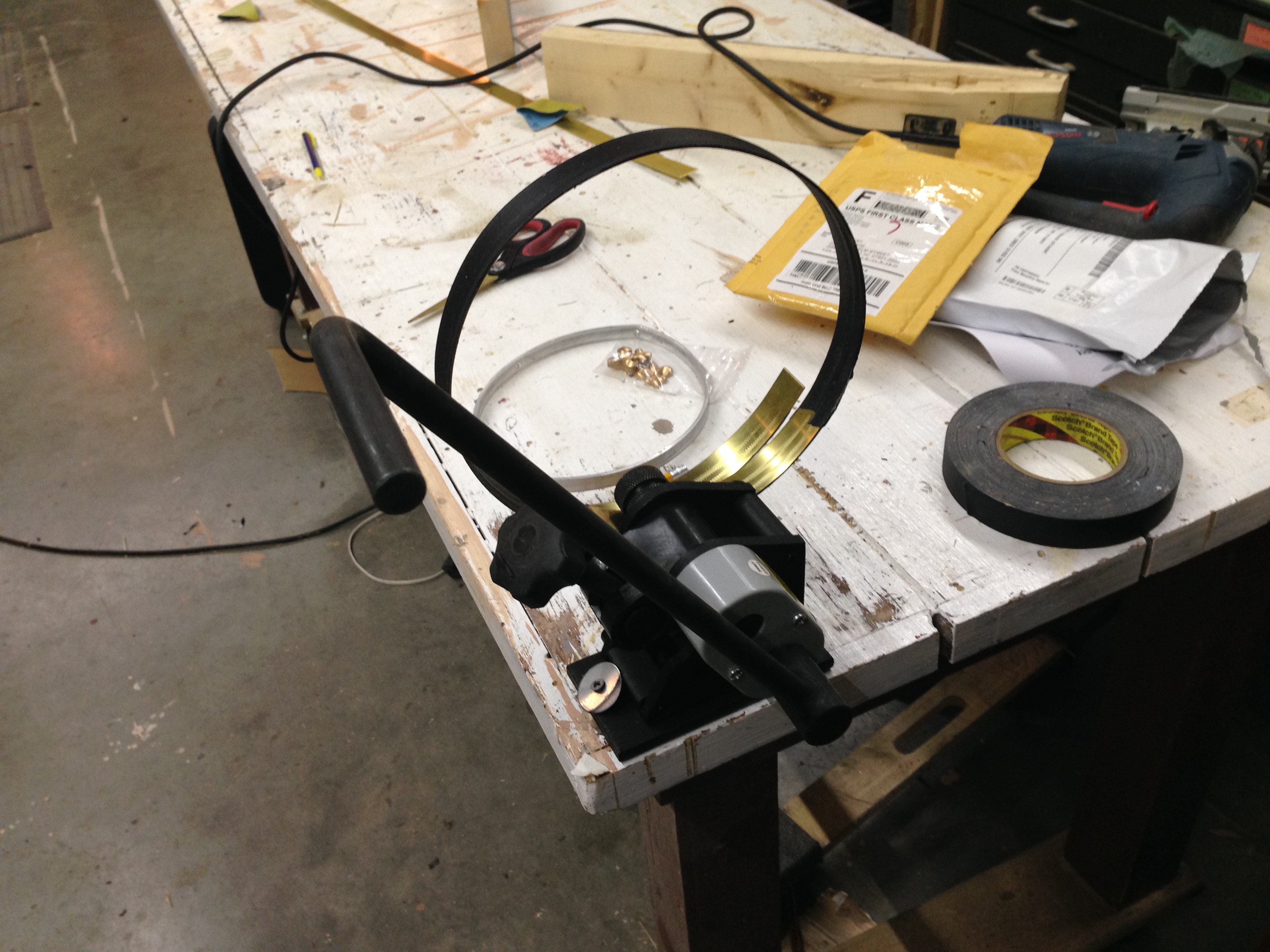
Ring bender
I ran it through a cheap little ring bender from Harbor Freight. It’s small, but it can handle metal up to an inch wide, so I was golden. I covered the brass bar in tape because the wheels on the bender marred up the soft metal. The bender made a nice circle, but since the crown was actually an oval, I had to do some shaping by hand to get it just right.
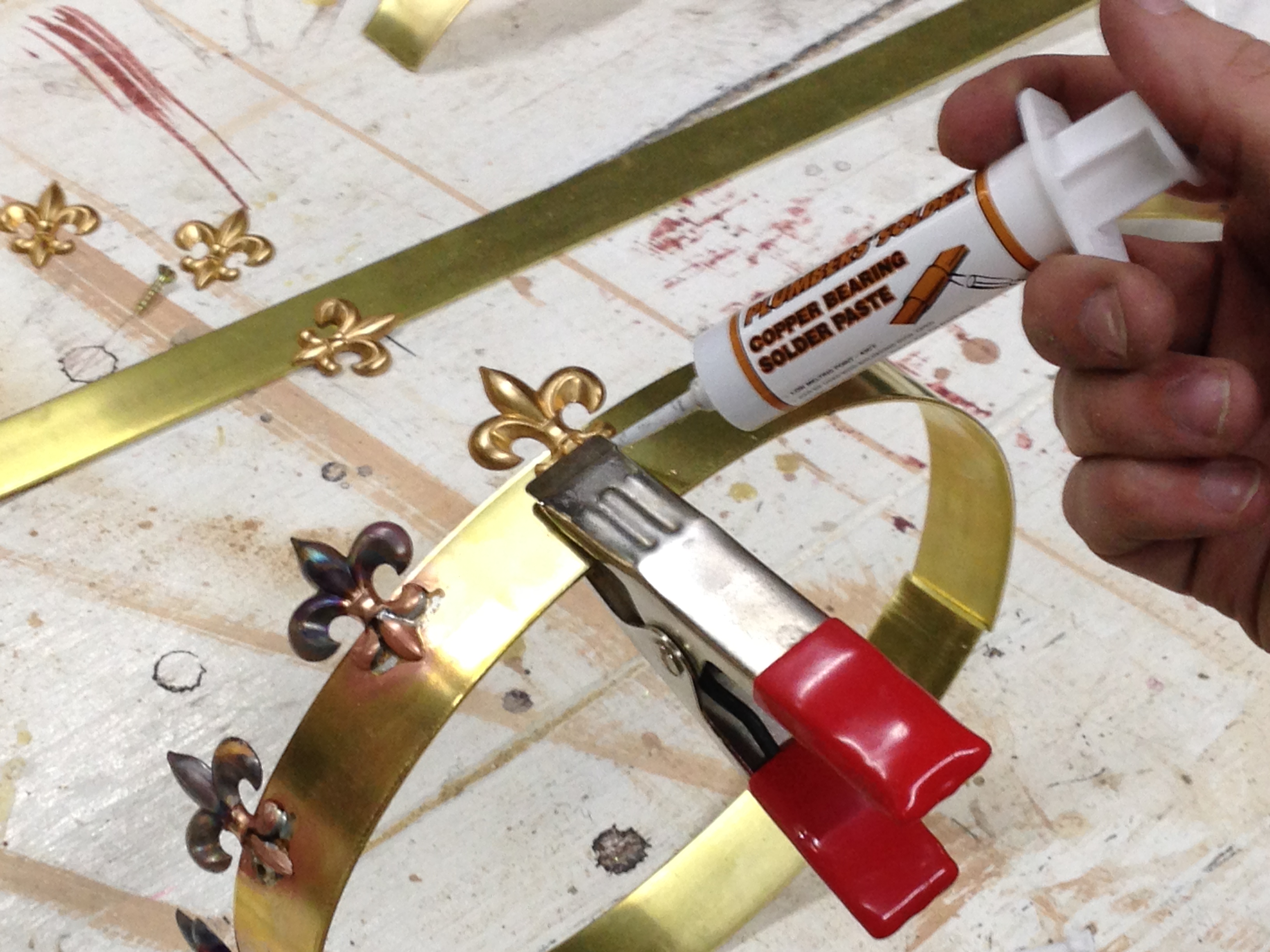
Solder paste
I had some stamped brass fleurs-de-lis which I needed to solder on. I discovered “solder paste”, which is a mixture of flux and powdered solder in a liquid form. You just squirt it into the joints you want to be soldered and then run a torch over it until it melts.
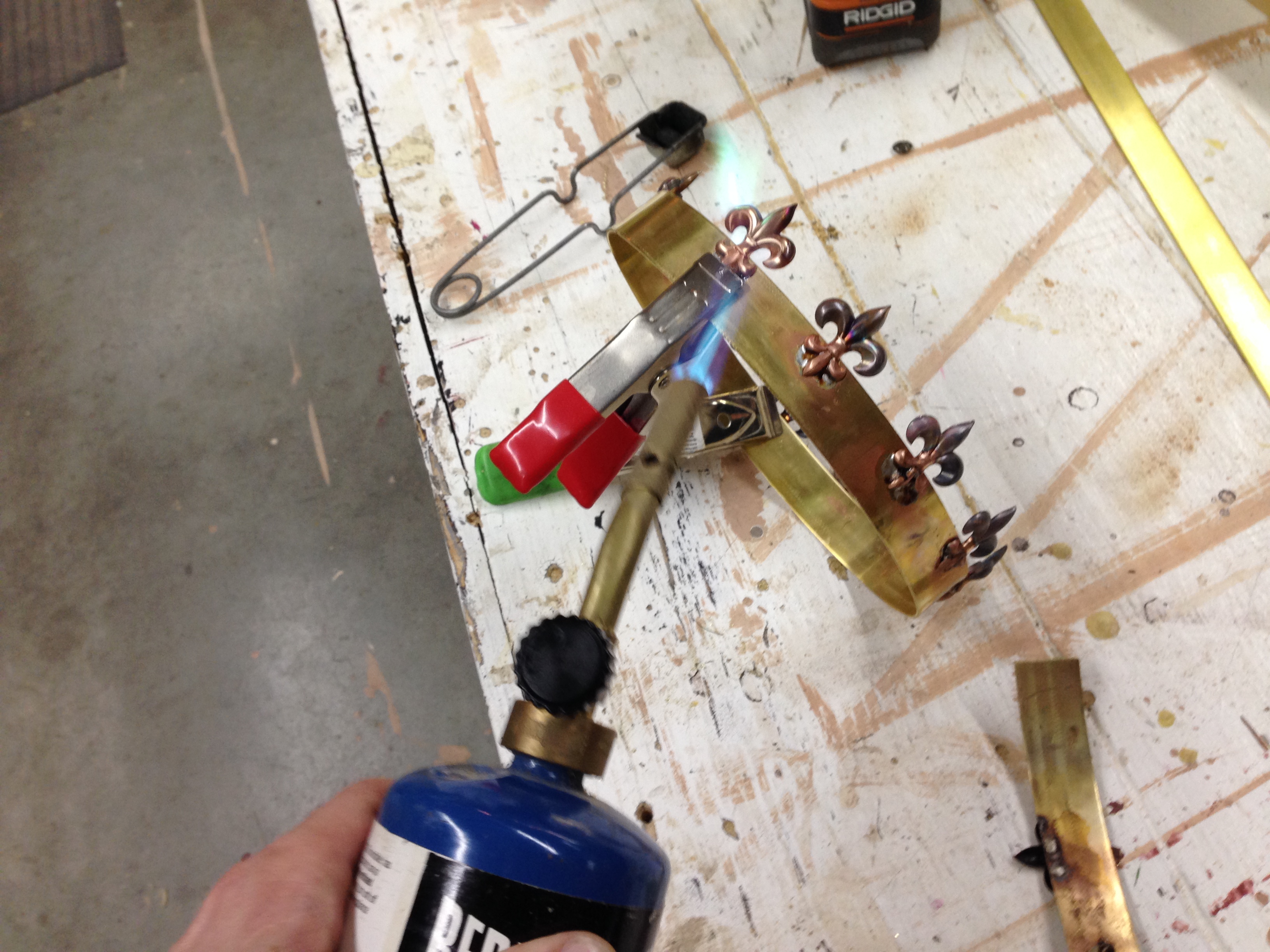
Soldering with a propane torch
Since the solder paste has a very low melting temperature, I could use a regular propane torch from any hardware store. Brass has a very low melting temperature, and since the fleurs-de-lis were very thin, I was worried that any kind of brazing or silver soldering would melt them before it melted the solder. The solder paste was a great solution.
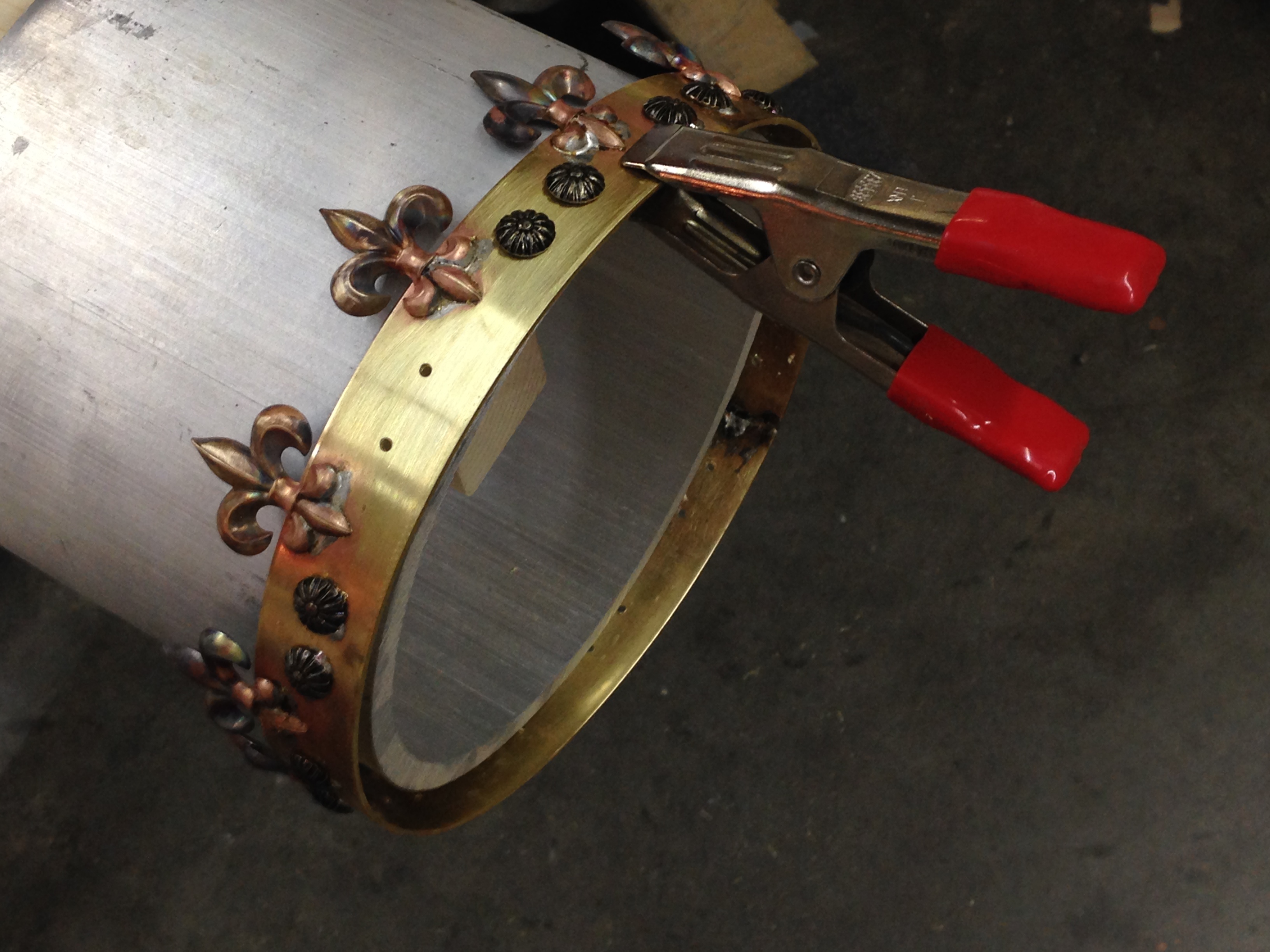
Upholstery tacks
Next I added some decorative upholstery tacks to the crown. I drilled some holes for the tack part to stick through. At first, I thought I could solder them on from the back, kind of like plug welding. That wasn’t working, so I just soldered them from the front. I was using this giant piece of aluminum tube as a heat sink so that the torch would not de-solder the pieces I had already soldered.
Moleskin Lining
I was able to remove all of the charring and discoloration with some #000 steel wool. I lined the inside of the crown with moleskin, a very thin but soft padding. You can find self-adhesive pads of it in any drugstore near the foot pads and shoe inserts.
King’s crown
I think you can get the solder paste in a copper or brass color; I was going to cover up all the silver bits of solder with some brass craft paint, but they didn’t show up once the crown was on stage. I think I look pretty good as a king.
Making and finding props for theatre, film, and hobbies