All posts by Eric Hart

Cannon Carriages

In previous posts, I showed off some foam cannon barrels I built and some giant champagne bottles I helped work on for the Santa Fe Opera. I also built the four carriages they rode around on.
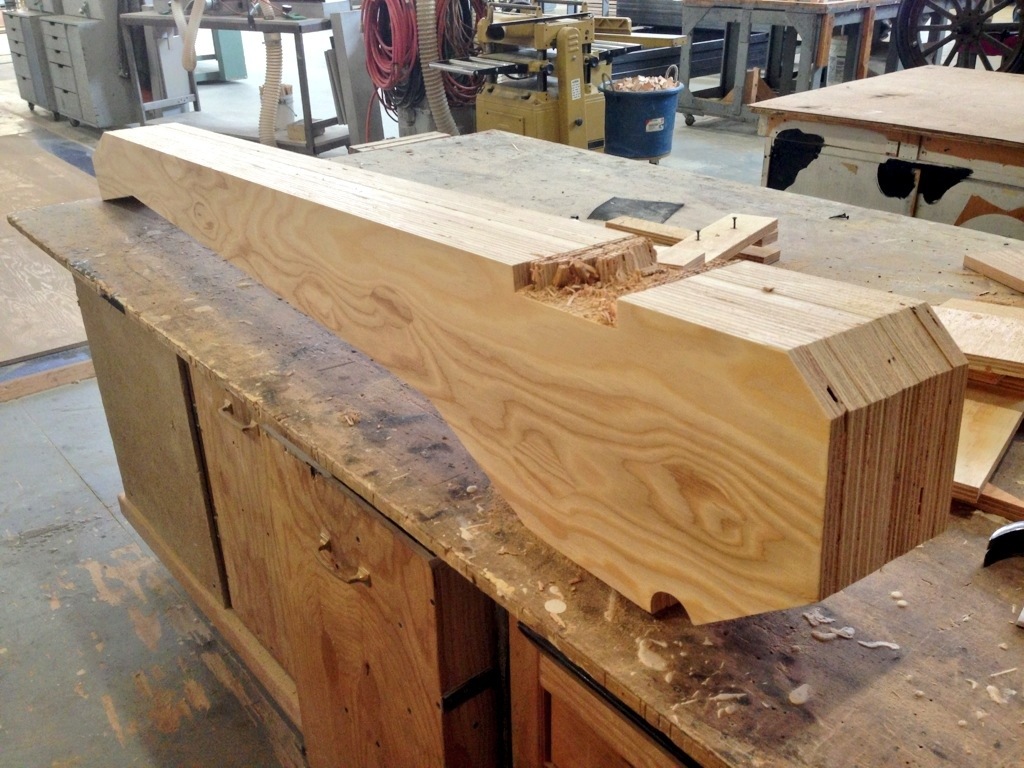
Cutting the shape
Cutting the shape

The main beams of the bases were cut out of plywood. I drew out a full-scale pattern for one of them and cut it out, then transferred it to all the pieces of plywood and cut those out to match. The bottom needed a square notch to hold the axle assembly, and it needed to be in the exact same location on all the pieces so the wheels would sit straight, so I attached all the pieces together and cut the notch out on all of them at once.
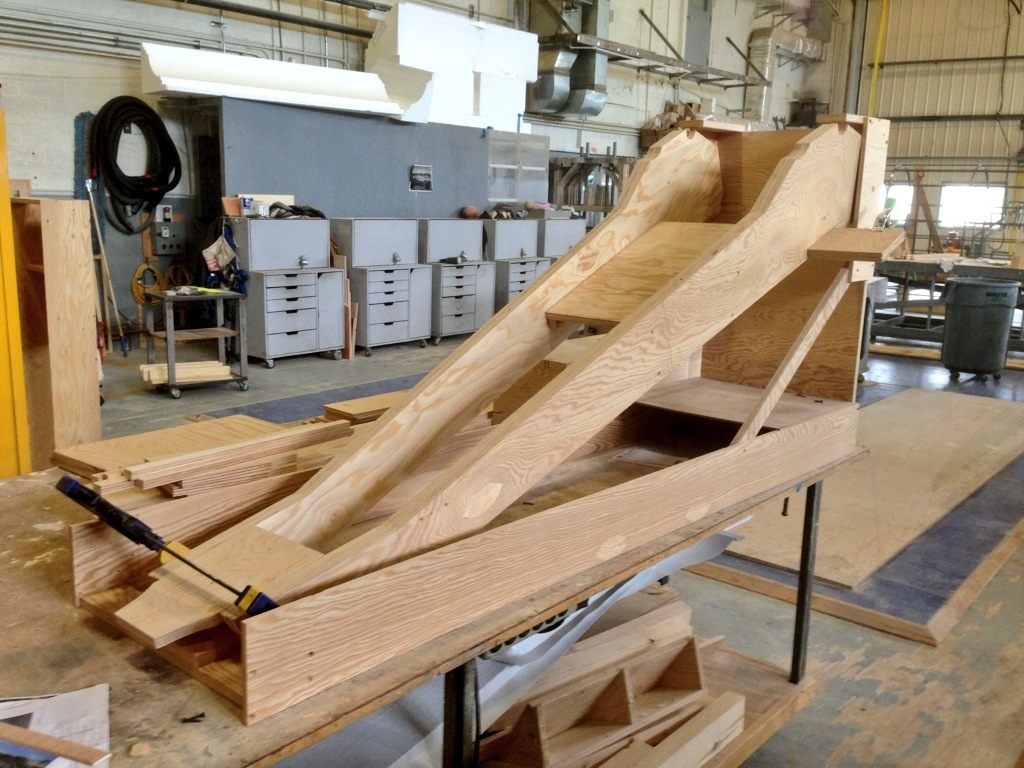
Assembling in the jig

Next I built a jig to hold the beams. They sat at an angle and tapered out at the top. While in place, I measured and cut the cross pieces to fit exactly. This part took awhile to get perfectly correct, but once I had the pieces for one of them, I could just duplicate them for the other three carriages.
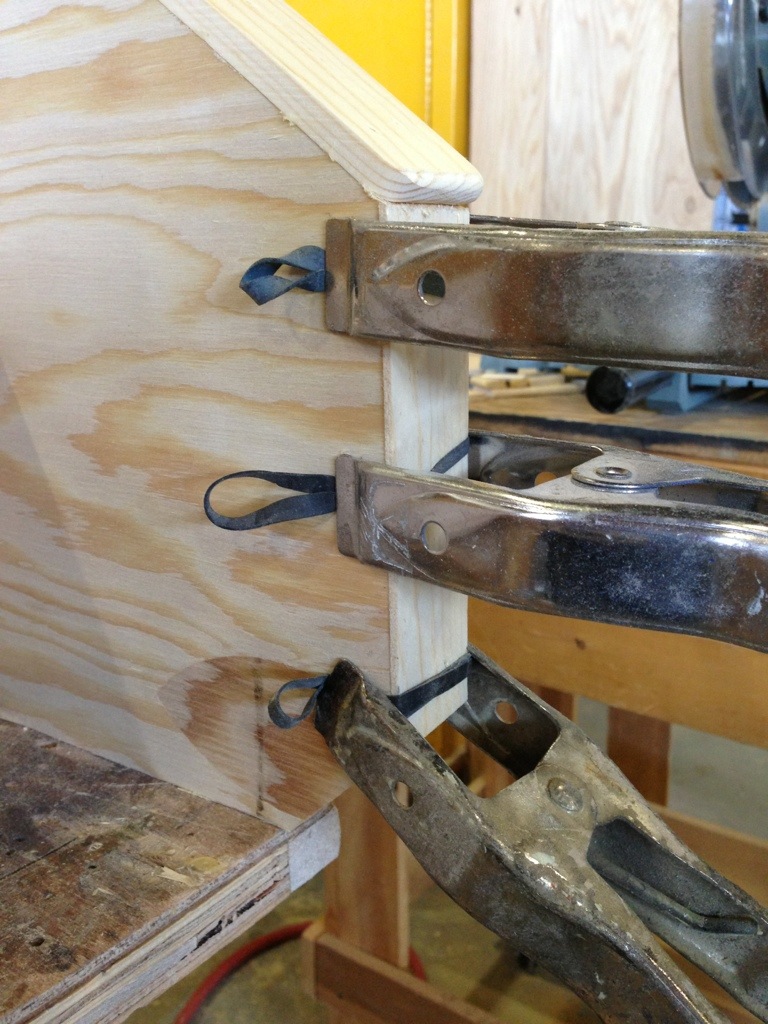
Attaching the facing

The carriages wanted to look like cast iron, so I faced all the edges with some strips of wood that were a little wider than the bases and rounded over on the ends. This gave it that look you might find on I-beams or similar pieces of metal. The photograph above shows a trick I read about that I wanted to try out: clamping a long strip of wood using rubber bands and spring clamps. It was not as effortless as I thought it would be, but it was a better clamping method than anything else I’ve used in the past.
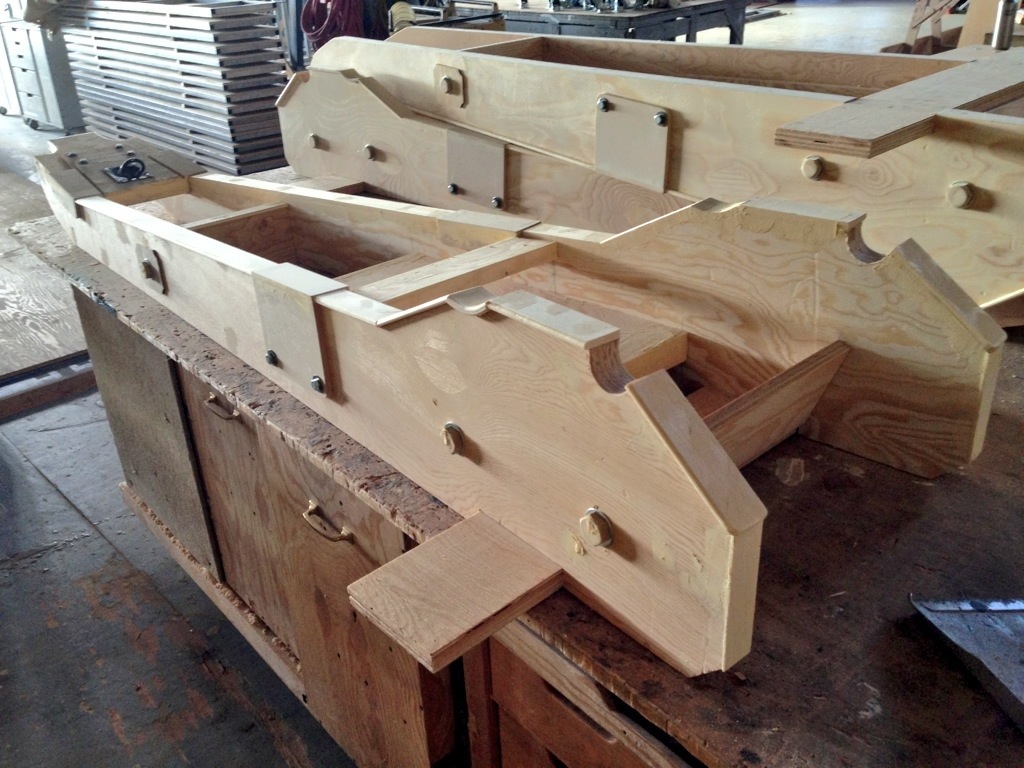
Adding details
Adding details

With the major structure in place, I began adding details, like bolt heads and plates. These were all applied pieces; I cut and shaped the larger bolt heads out of MDF, while the smaller bolt heads were just short lag bolts that I screwed in.
Positioning the axles

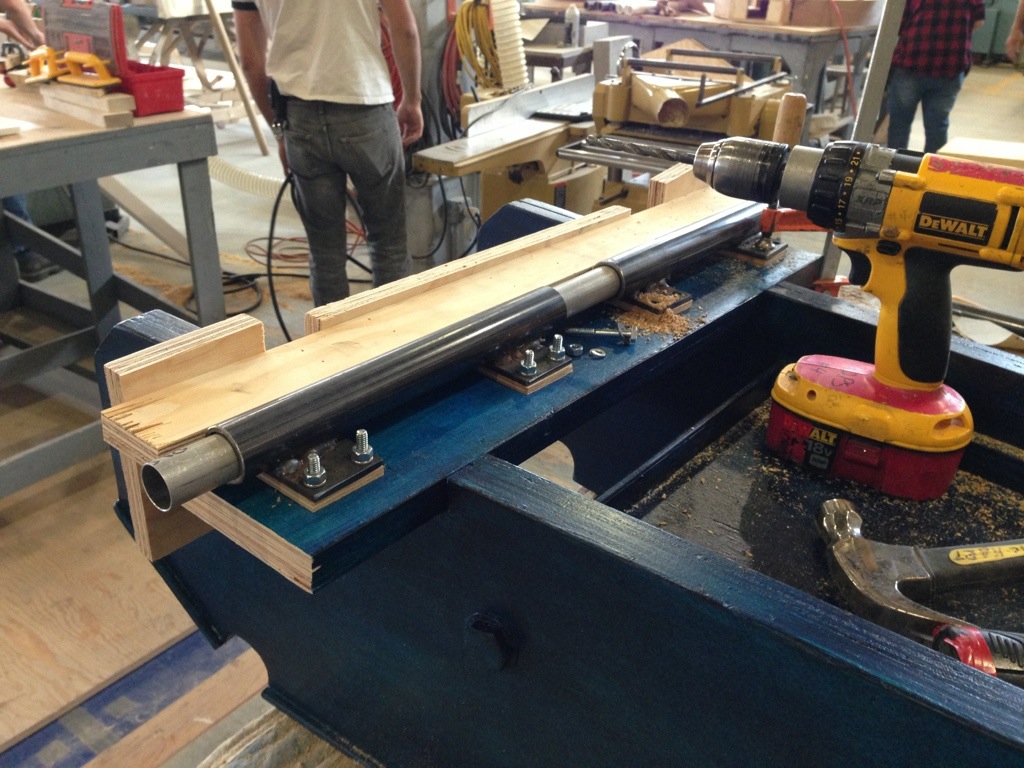
The wheels we used were bought from a place that makes wooden carriage wheels; I’ve made wheels in the past, but it’s very time-consuming, and hard to make them as strong as a legit wooden wheel. I attached a pipe to each of the wheels as an axle, and found a slightly larger pipe that could sleeve over them. I welded this larger pipe to some plates so I could bolt it to the carriage. In the photo above, you can see the axle pipe is in two sections. When building a carriage like this, you need the wheels to be able to spin independently of each other, because when you make turns, they spin at different speeds. The long aluminum pipe going through both larger pipes in the photograph was used to line them up with each other while attaching them.
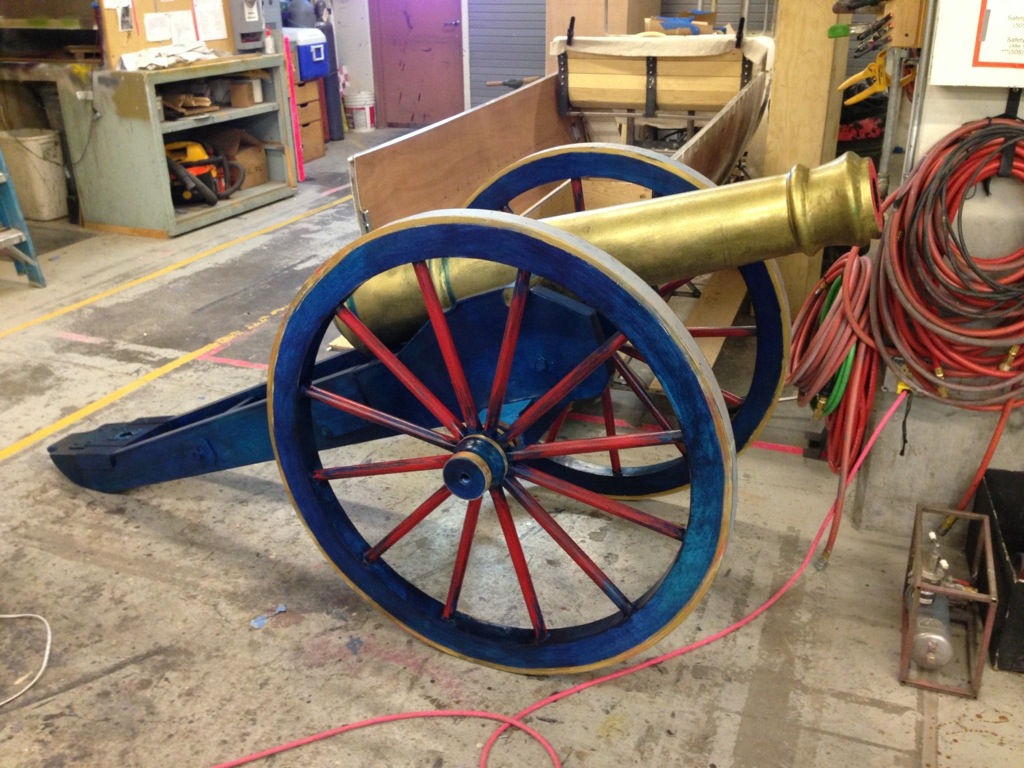
Cannon for Duchess of Gérolstein‎

The whole thing got a pretty interesting paint treatment by the paint crew. Overall, it was a very fun project that saw a lot of stage time during the performance. It was also interesting to compare it to the previous cannon I have built, which could not be more different than this one both in appearance and in methods of construction.
Foam Cannon Barrels

Last week, I showed off some giant champagne bottles I made, and mentioned that they would act as the barrels of some cannons I was also building at the Santa Fe Opera. Today, I will show you the actual cannon barrels I made. We needed four cannons, so that meant four barrels.

Bandsaw Cutting Jig
Bandsaw Cutting Jig

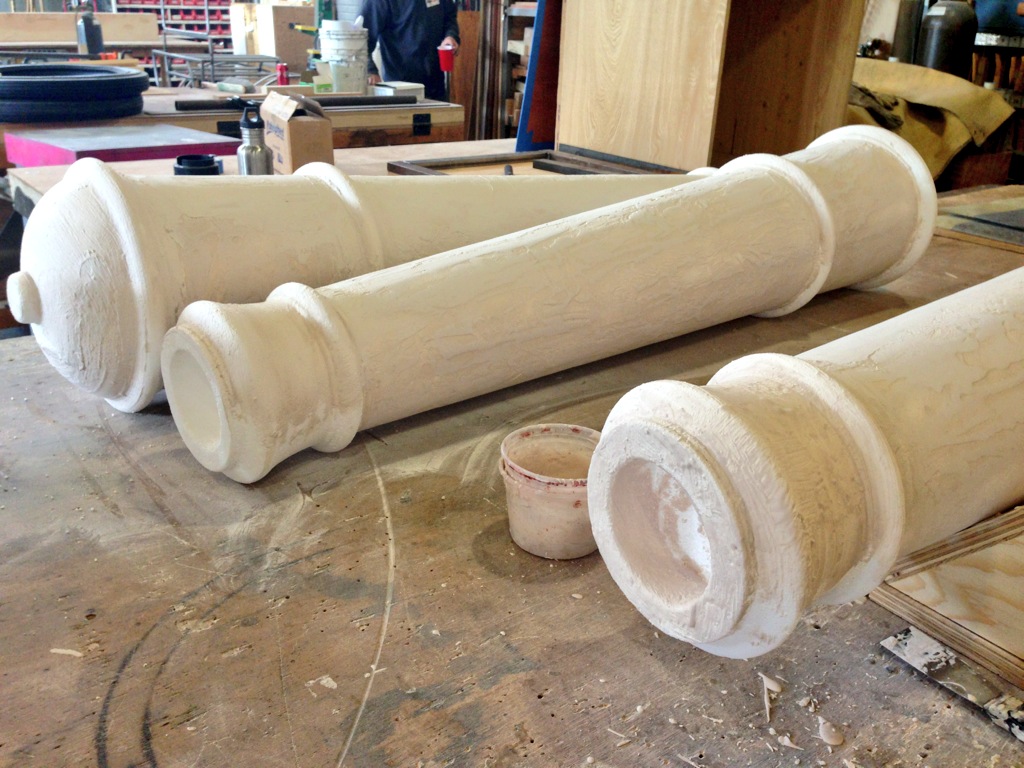
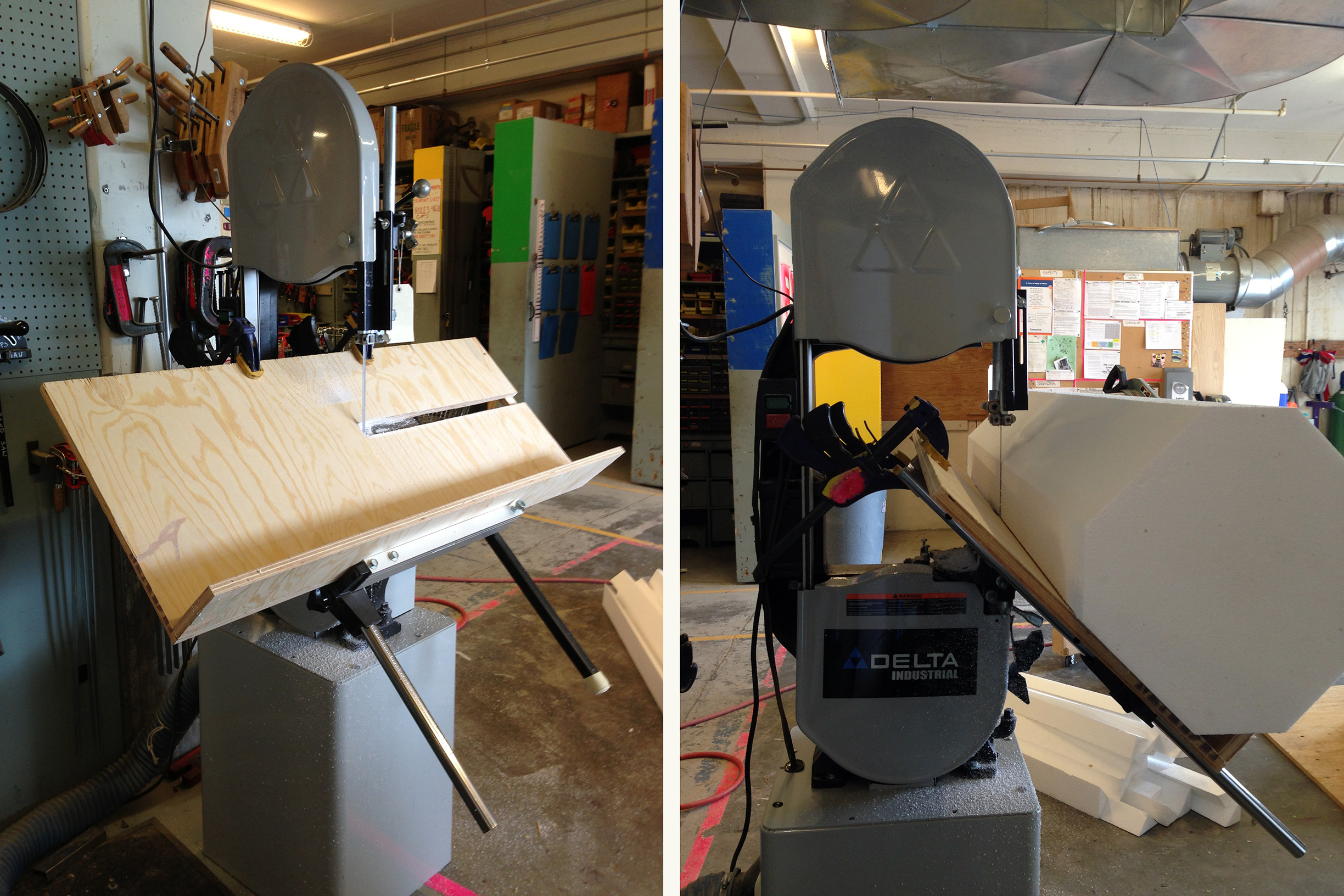
I made the barrels out of foam to keep them lightweight; the Santa Fe Opera runs their shows in repertory, so any savings in weight is much appreciated by the running crew, who have to move all the props from the basement to the stage on a daily basis. I whipped up a quick jig for the bandsaw to cut the corners from the blocks of foam I got. This meant less time turning, less dust, and it allowed the foam to actually fit on the lathe.

Turned barrels
Turned barrels

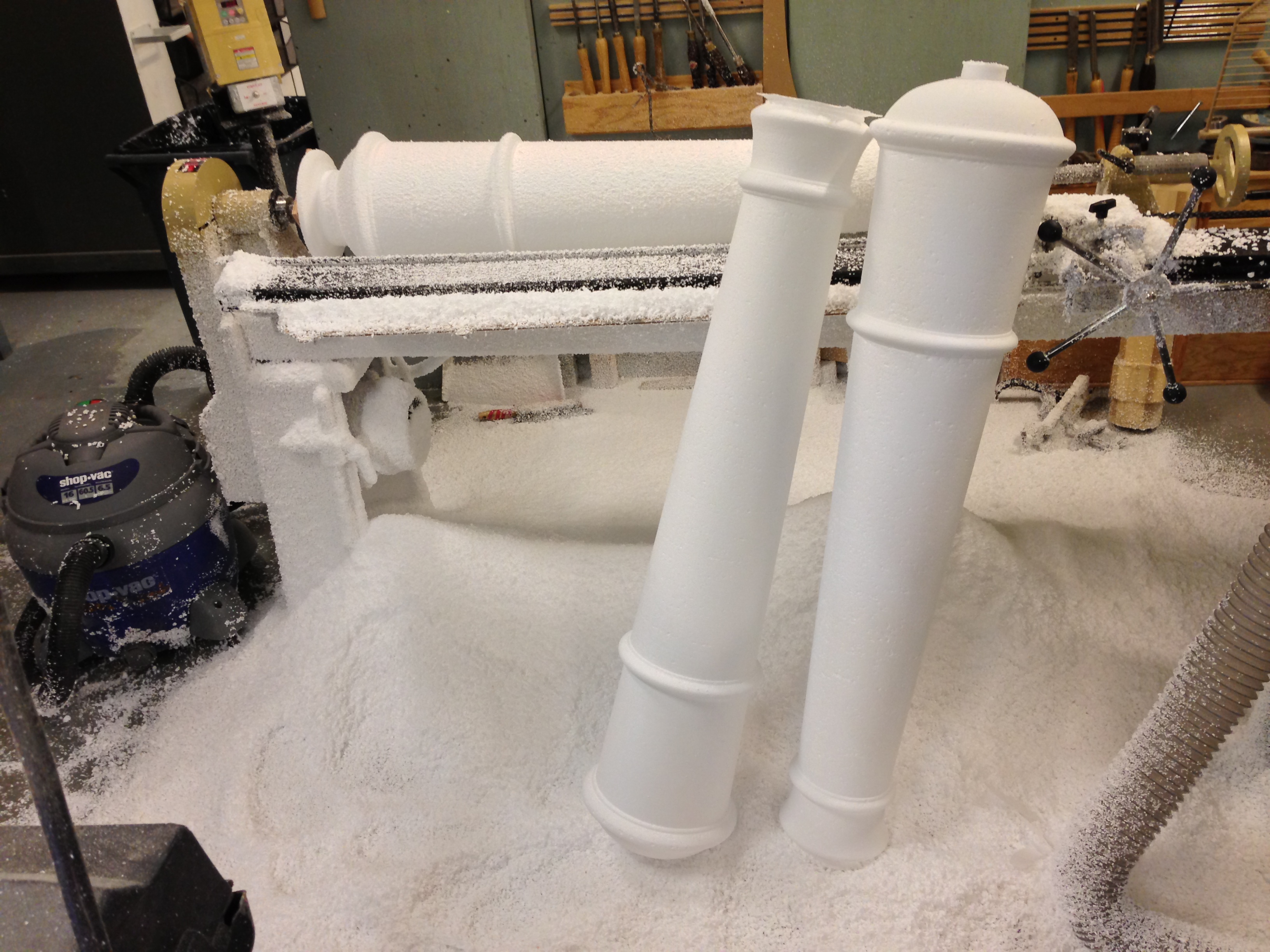
I designed a full-size template of the shape of the barrels based on the designer’s sketches and my own research. I could also use this template as a pattern on the lathe to make all four barrels exactly the same as each other. Turning foam on the lathe is fun and easy, but it makes a gigantic mess.

Coating and sanding
Coating and sanding

After the barrels were taken off the lathe, I began the long and laborious process of coating and sanding them. The designer wanted them to look like smooth brass without any distressing, so they needed to be absolutely flawless. I used Aqua Resin, which provided a sandable hard coat with far less toxicity than Bondo. I spent nearly a week just coating and sanding all these guys.

Drilling straight through

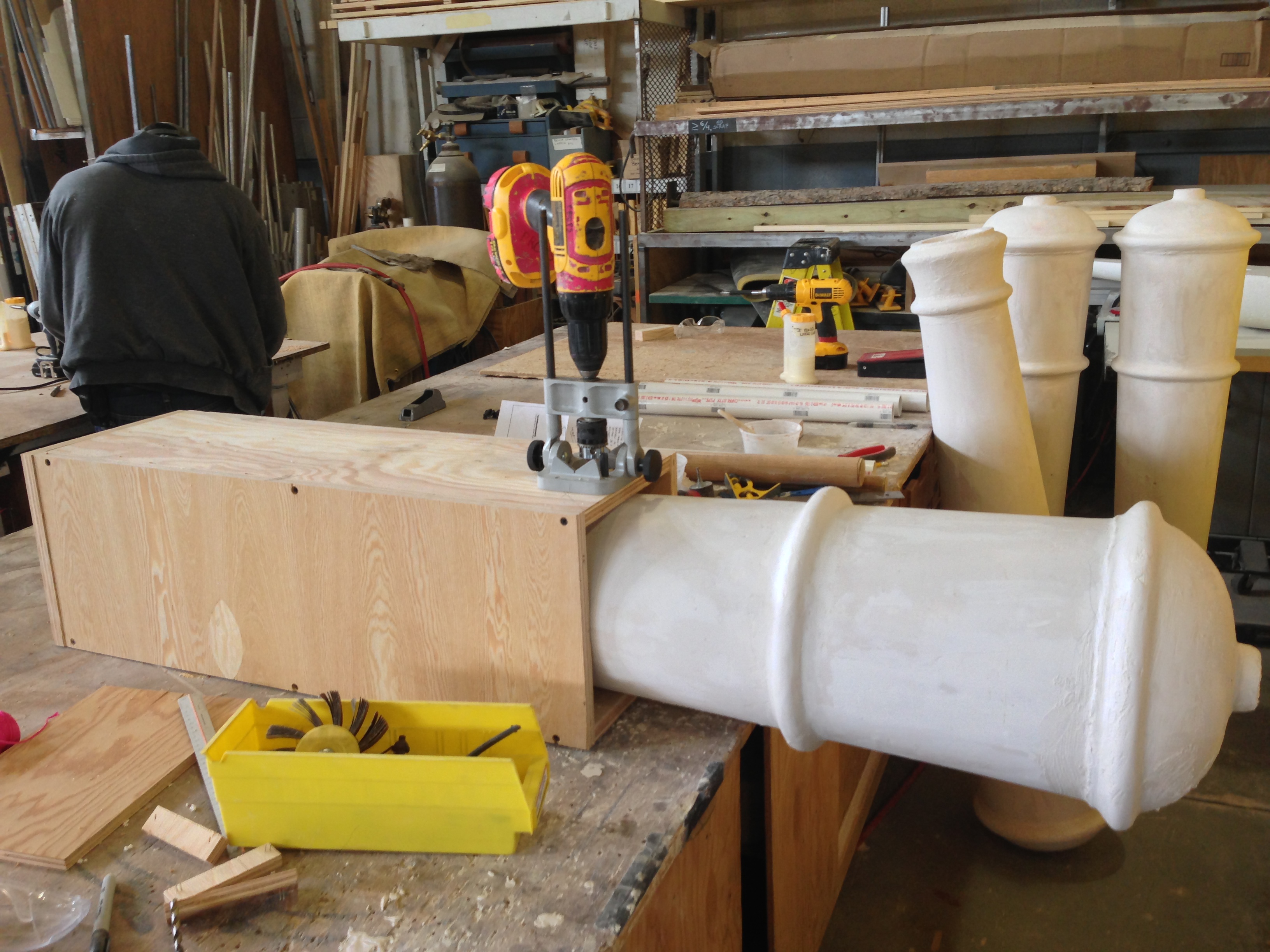
I built a jig so I could hold the barrel and a cordless drill perpendicular to each other. This provided a pilot hole for the trunnion I would add; the trunnion would be a piece of PVC pipe which would hold the cannon on the carriage and allow it to pivot up and down.

Hole
Hole

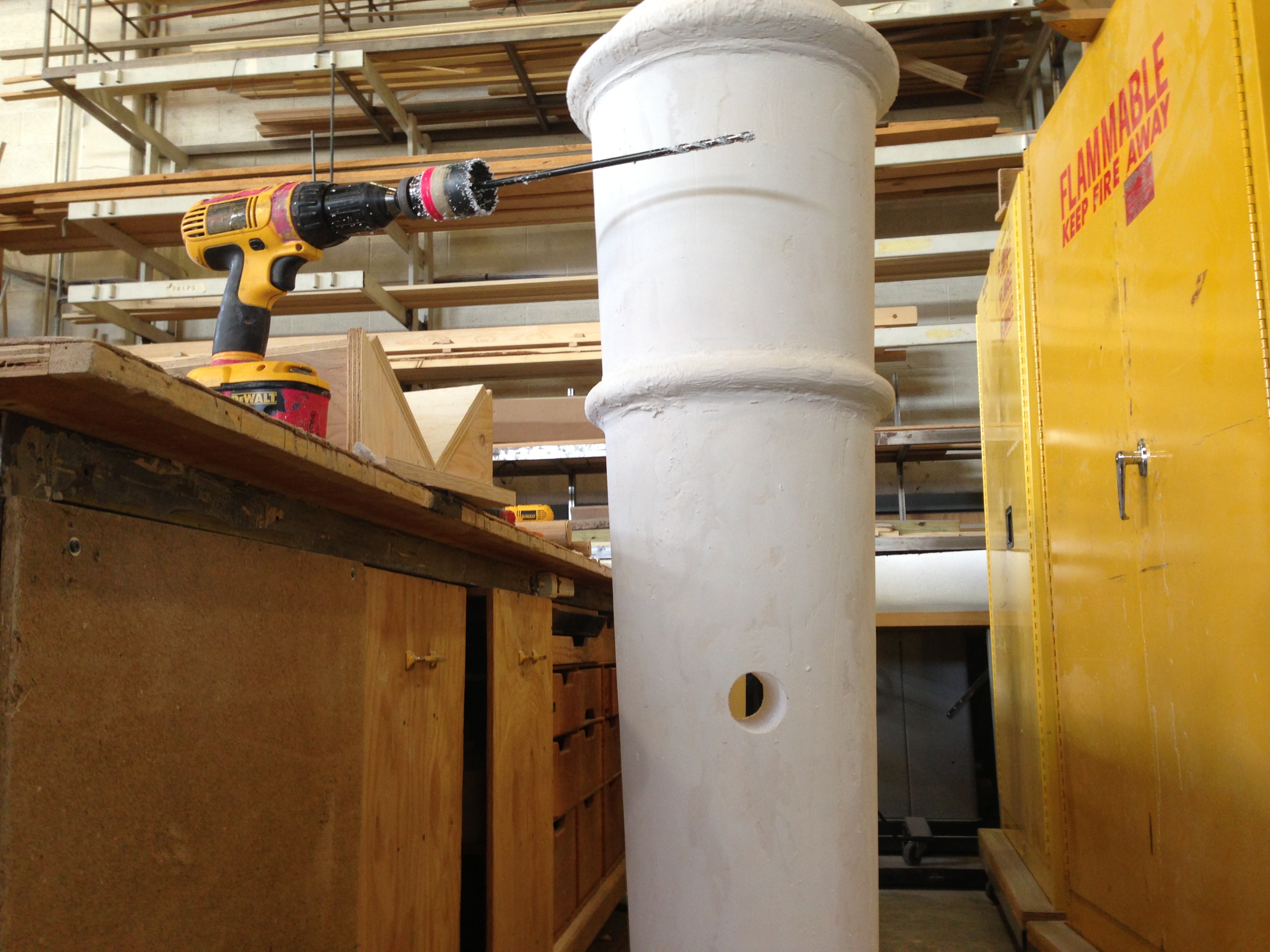
With the pilot hole drilled, I switched to a hole saw that was closer to the size of the PVC pipe. You can see in the photo above that I have an extra long pilot bit on the hole saw. This bit was long enough to pop out the other side of the barrel so I could be sure that the hole saw would exit in exactly the right place.

Finished Barrels
Finished Barrels

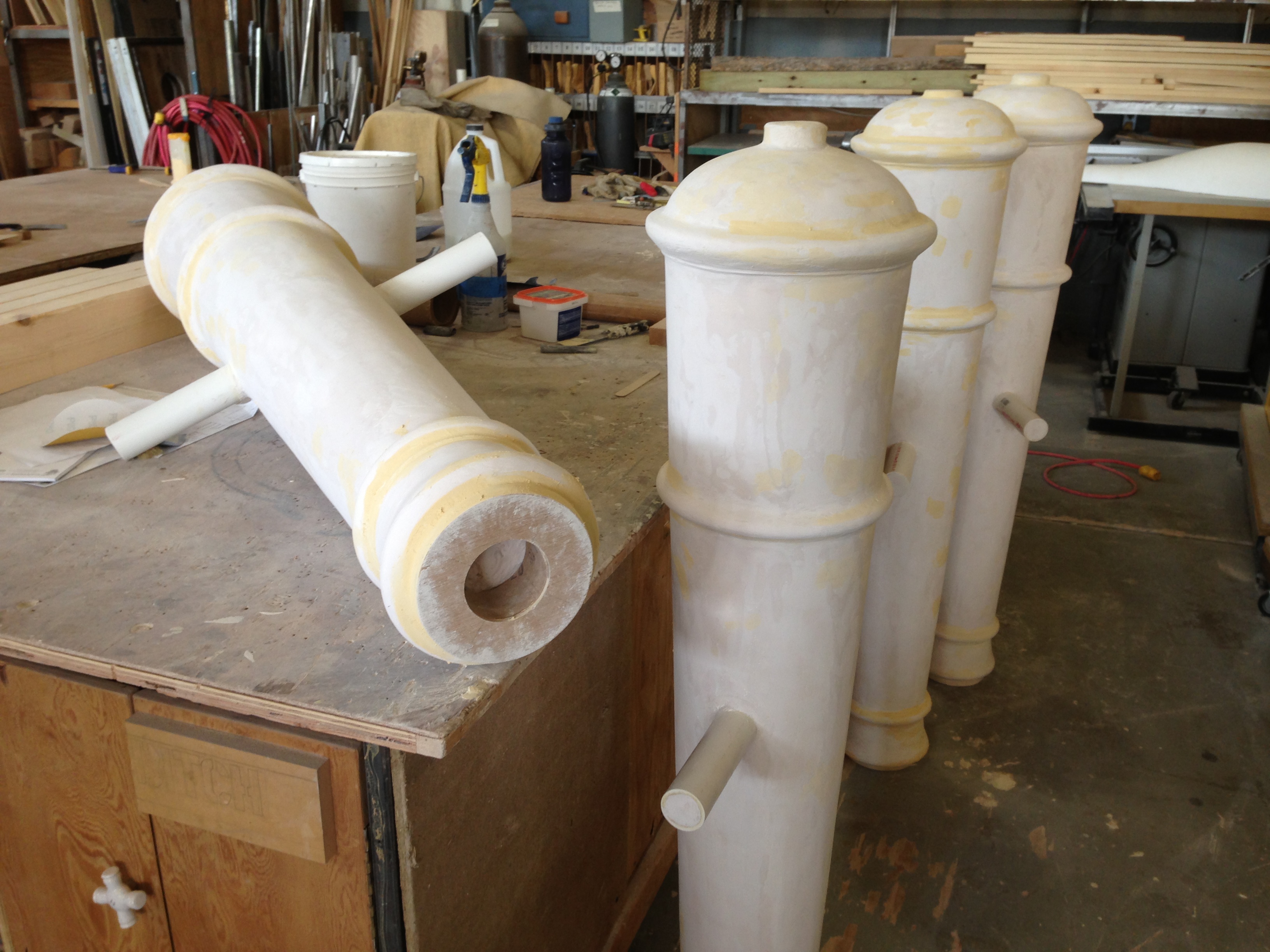
I pushed the sections of PVC pipe through the hole and capped off the ends to make them look like a solid bar. I also added some lauan rings to the ends of the barrels to help reinforce them when they were standing up.

Painted Barrels
Painted Barrels

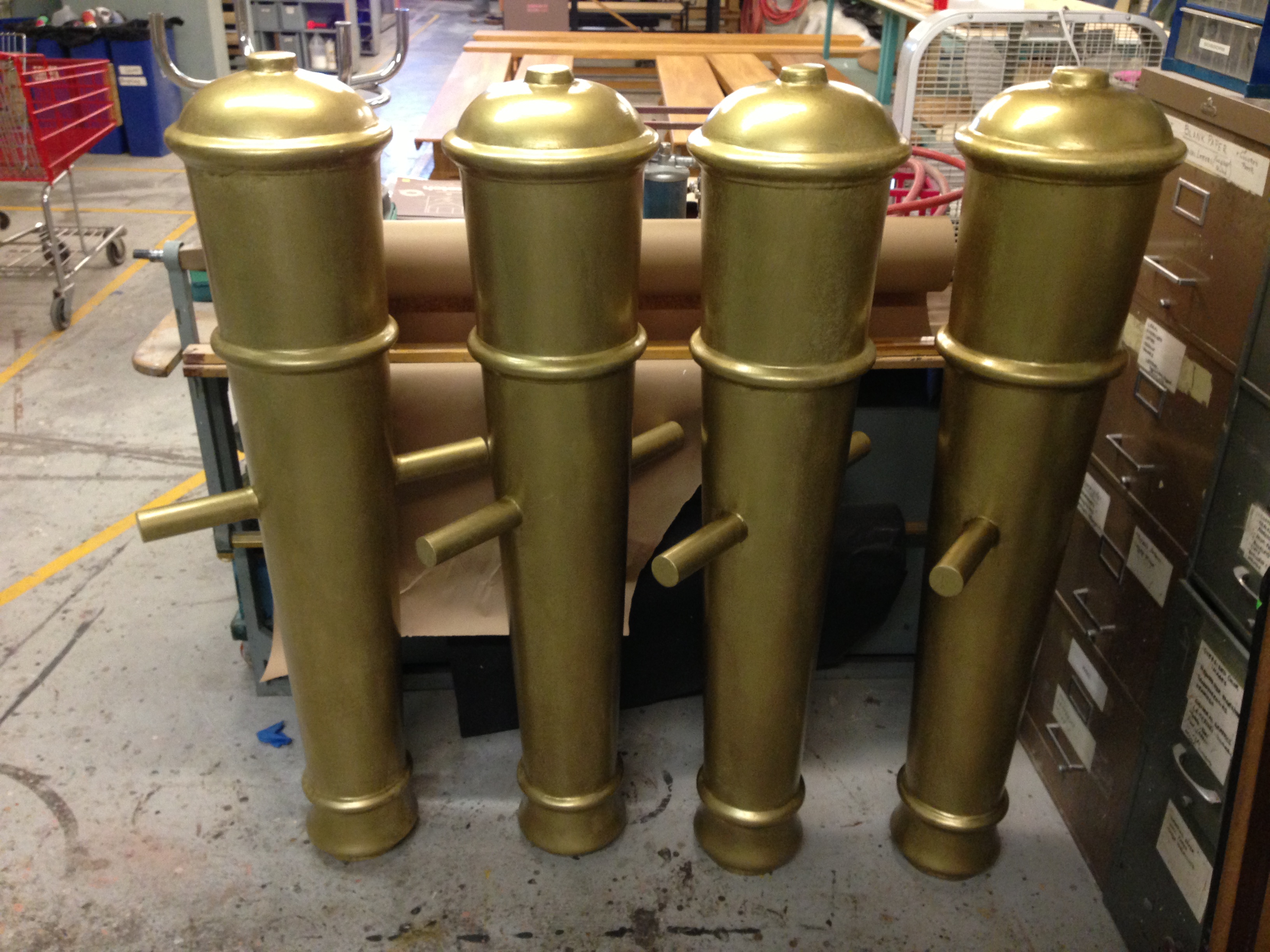
With the barrels finished, I handed them off to the painters, who gave them the great brass paint treatment that you see above. In a few days, I’ll post about how I built the carriages to these cannons, and you can see pictures of the final piece.

Friday Links on Display

It’s another Friday, and another September. This always seems like the busiest time of the year for the whole entertainment industry. Some of you may have gotten a four-day week this past week, but for most of us, it was an eight-day week. So take a seat, relax, and enjoy these links for a few minutes:

Huffington Post has an interview with props master Peter Bankins. Bankins has been a prop master in film for the past 25 years, working on movies such as Young Guns, Grumpier Old Men, Erin Brockovitch and many more.

On the other side of the pond, Farfetch has a short photo essay called “Our Day With Thomas Petherick“. Petherick is a young prop maker and set designer working mainly on fashion photography shoots.

Bill Doran and his wife created a fairly detailed set of armor and weapons from the video game Skyrim for this year’s Dragon Con. He details the lengthy build process as they fashion parts out of wood, EVA foam, Worbla, resin and more.

Finally, here is a familiar face; I was displaying some of my props at last month’s Burlington Mini Maker Faire. Coffey Productions was going around filming the various exhibits, and shot this video of me talking about my props and my book. Check it out!

Giant Champagne Bottles

With this summer’s season at the Santa Fe Opera at an end, I can begin to show off some of the props I’ve built there. First up is a giant champagne bottle.

We needed four champagne bottles of a very specific size; they were going to be the barrels of cannons that I would also build. Nobody manufactures champagne bottles that large, so we had to make them. Since we would vacuum-form them from plastic, I began by making a solid foam bottle.

Blank and pattern
Blank and pattern

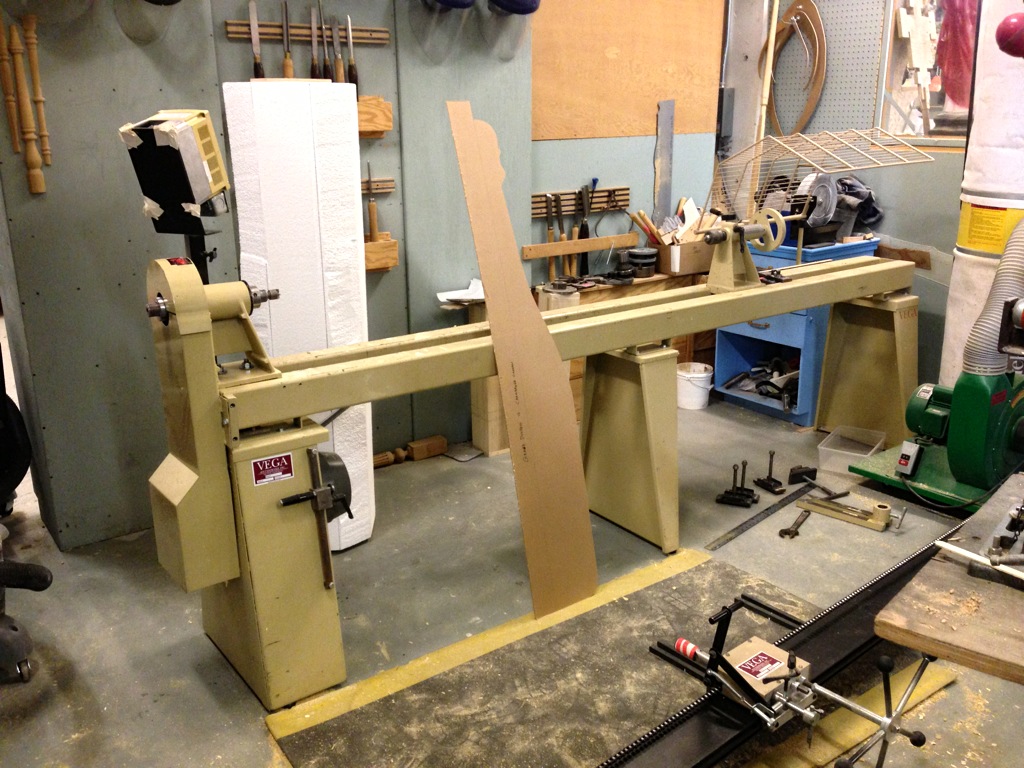
I drew out half the shape at full-scale on a piece of plexiglass. We have a duplicator on our lathe, which allows us to rough out the shape by directly following a pattern like this. I also got the block of foam ready. This piece was so wide, it barely fit on the lathe; I had to take most of the attachments off and round off the foam by hand before there was enough room to put the attachments back on.

Turning foam
Turning foam

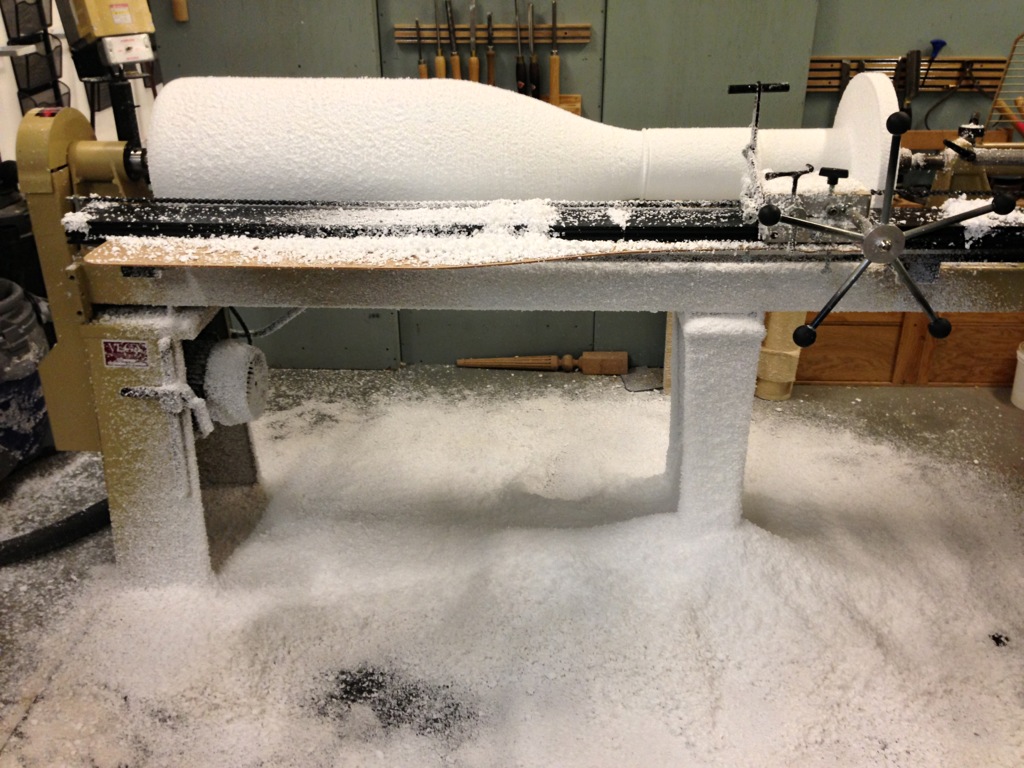
As you can imagine, turning a block of foam this large creates quite a bit of debris. I am still finding bits of foam in my clothes to this day.

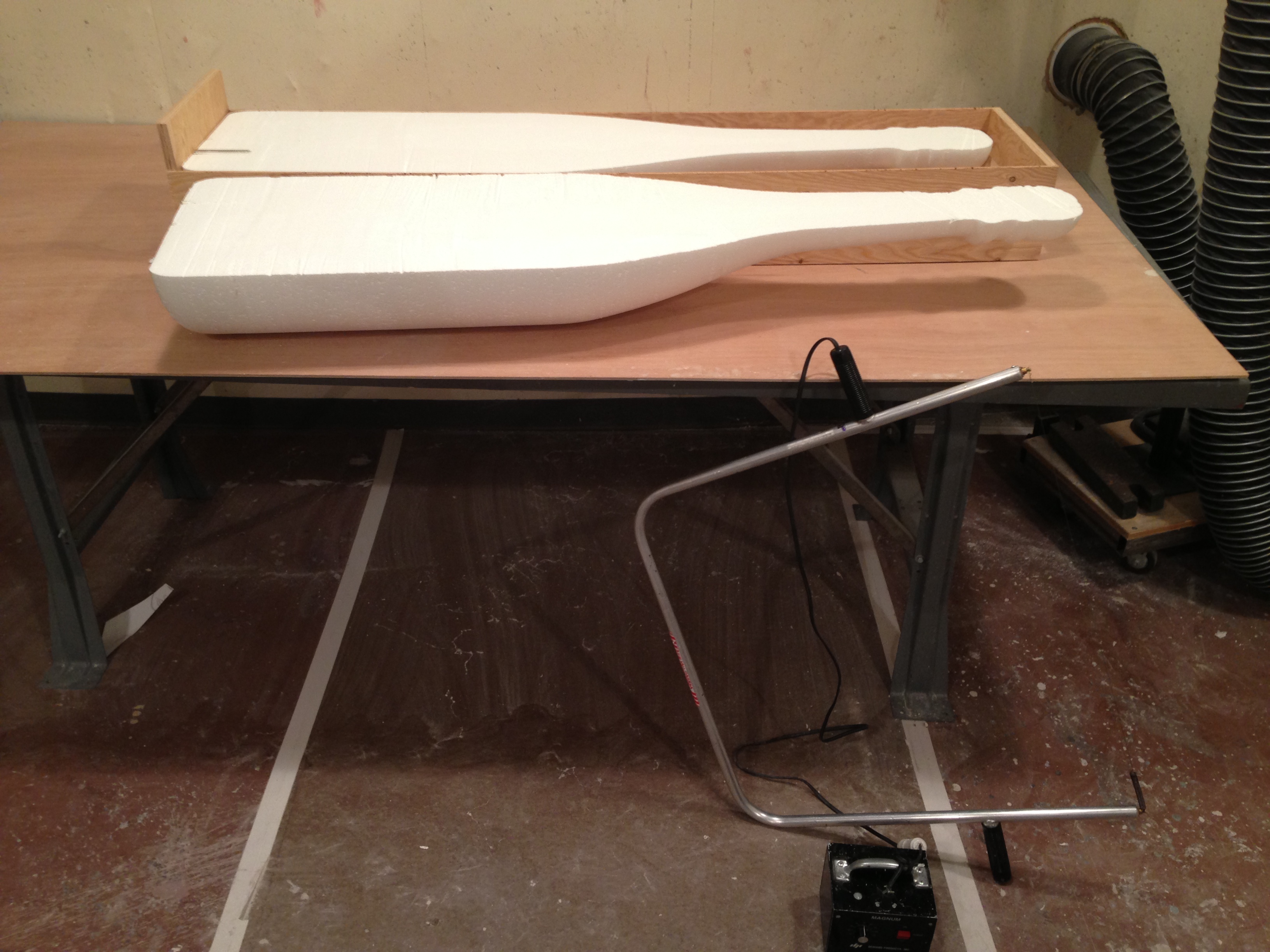
Splitting the foam in half

To vacuum form this piece, I only needed half of the bottle. I built a box so I could hold the bottle straight. The top of the box reached the exact middle point of the bottle, so when I ran a hot wire along it, it sliced the foam bottle directly in half.

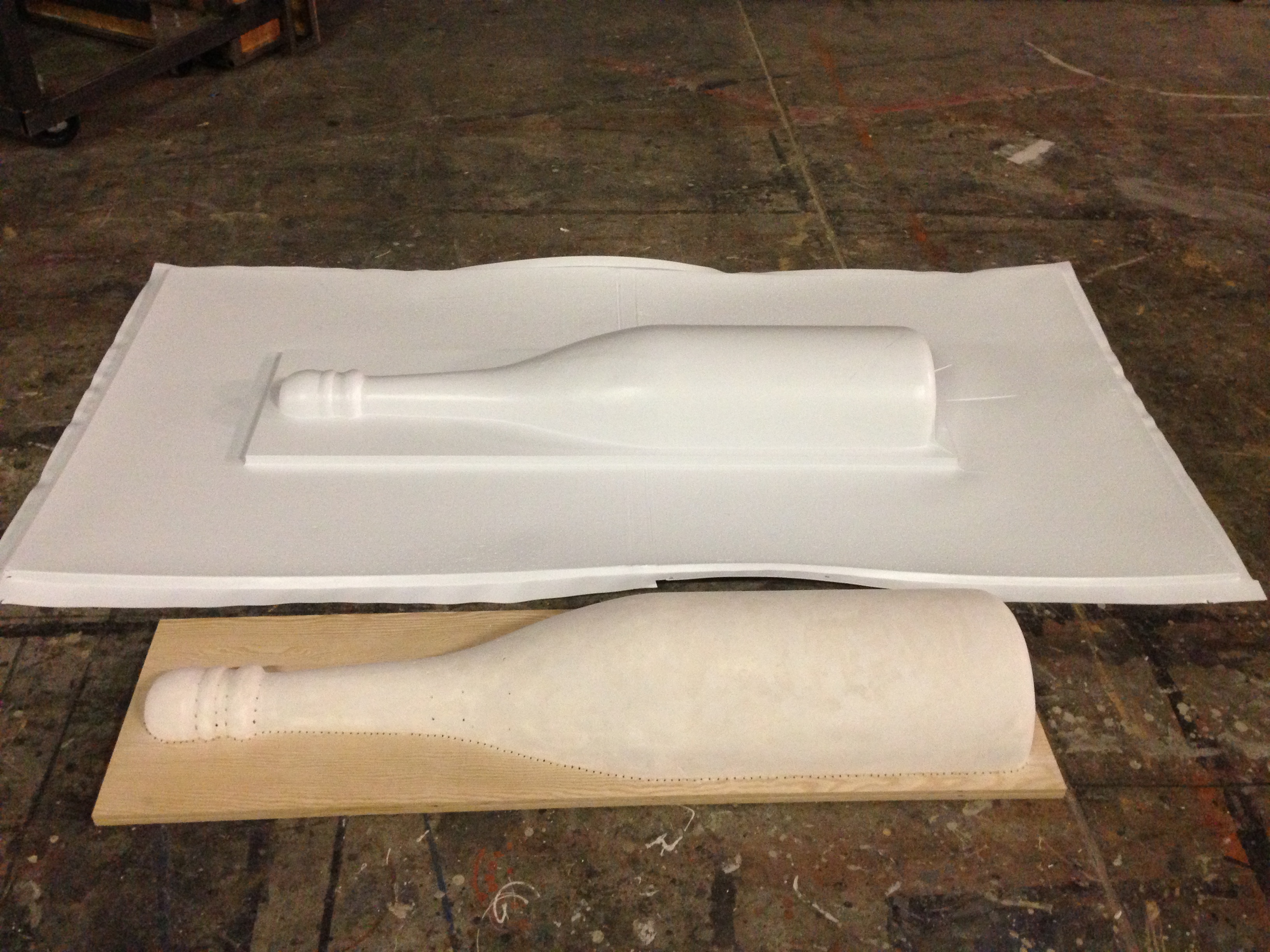
Vacuum formed half
Vacuum formed half

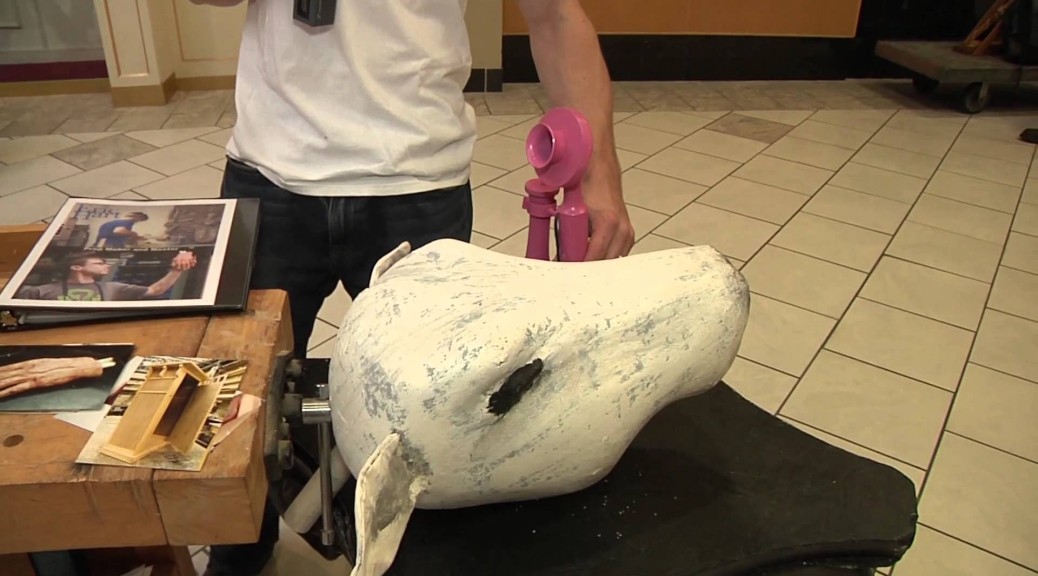
I mounted the foam onto a board and drilled holes all around the circumference, as well as holes in the concave portions to ensure the plastic would be sucked all the way down. I also coated the foam with Aqua Resin and sanded it smooth. I posted a video a few weeks ago showing the vacuum forming machine in action; check it out if you want to see how I made the piece in the photo above.

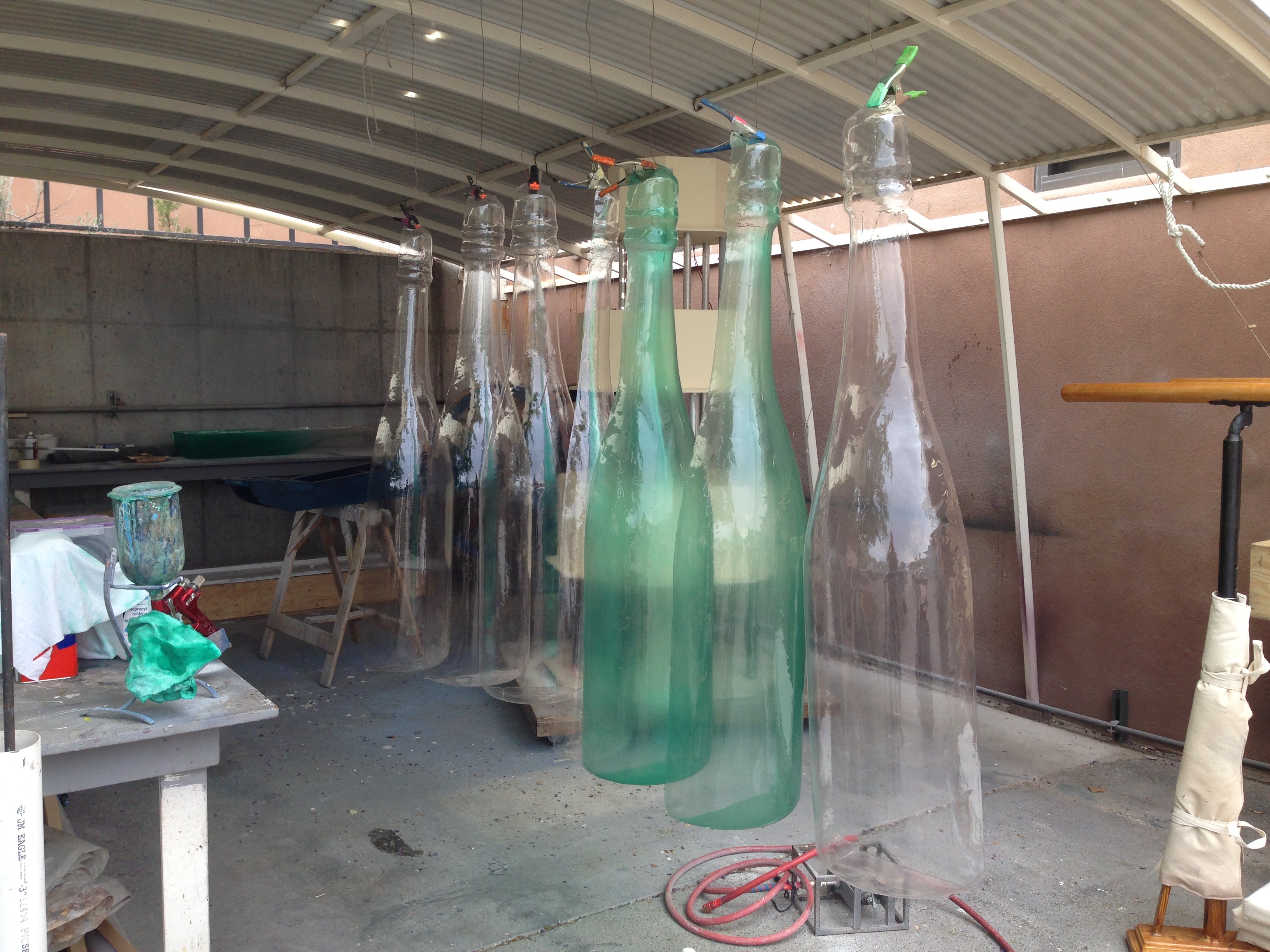
Painting the halves
Painting the halves

With a successful pull on the vacuum former, this project was turned over to the crafting department, and my work on it ended. They began manufacturing clear plastic halves like you see above, and spraying them down with green dye to match the color of a real champagne bottle.

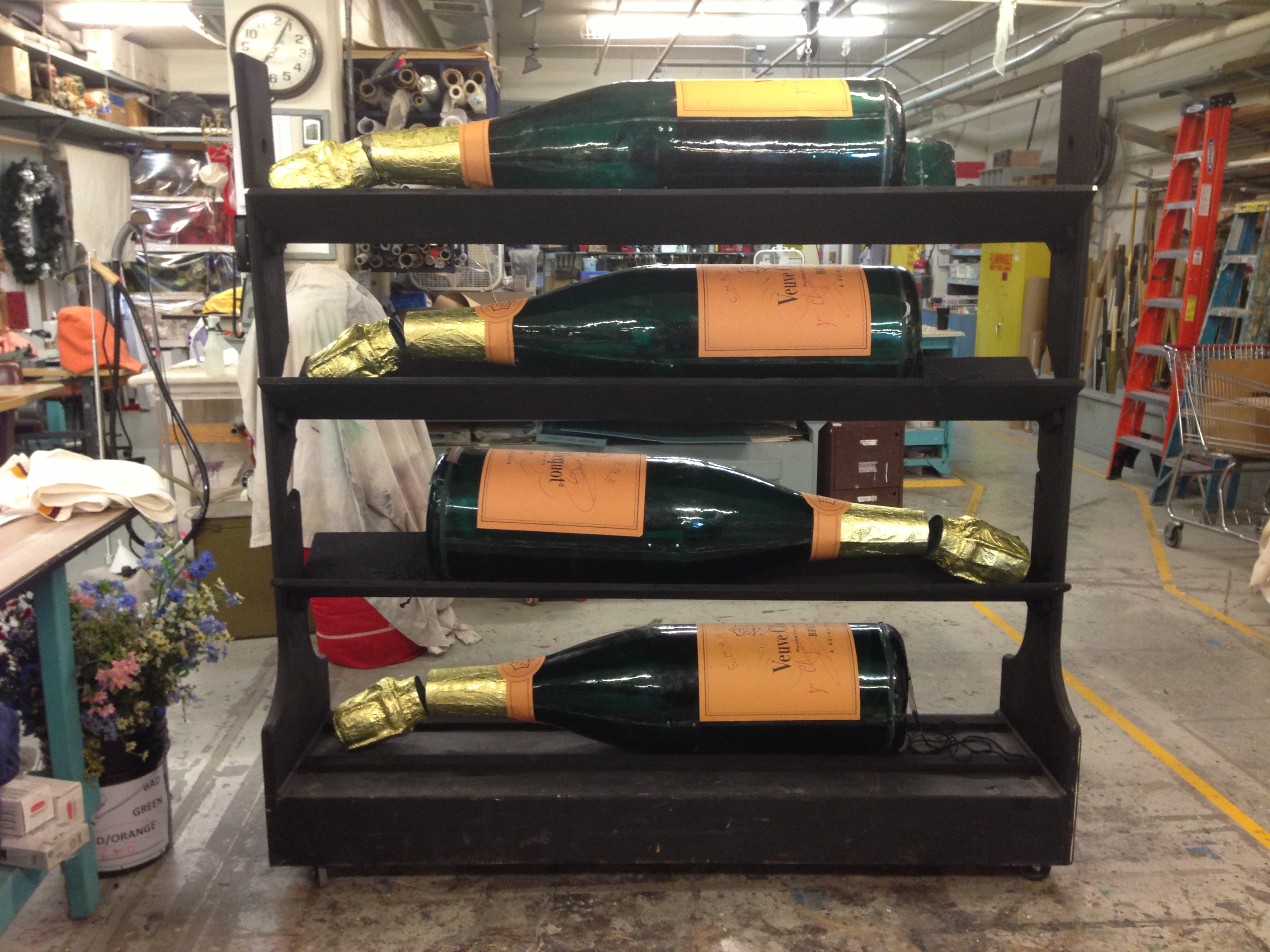
Finished bottles
Finished bottles

They glued the halves together and added some labels and gold foil to complete the look. The final bottles were over four feet tall.


Friday Link-o-Rama

I’m light on words this week because we are in the middle of tech for my first show at Triad Stage, but enjoy these links:

Set decorator Stephenie McMillan passed away this week. She got her start working on films in 1984, with her most notable credit as the set decorator on all eight Harry Potter films. Check out this interview with McMillan from last year to learn more about her work and her process.

If all the glues and adhesives out there are confusing to you, Design Sponge has an “adhesives 101” for you. It does a good job breaking down the major types of glues available and what they are useful for. Of course, you should always test the specific glue you want to use first, but this guide is helpful to give you a place to start.

Check out this massive behind-the-scenes photo gallery of the first Alien movie. The models and miniatures used on that film are incredible.

Kamui Cosplay has a detailed look at how she created some fantasy armor from World of Warcraft using Wonderflex, Worbla, Friendly Plastic, PVC and EVA foam.