Kamui Cosplay has a great video tutorial on adding animated LEDs to your prop. Making your LEDs pulse and chase really bumps up the wow-factor compared to static on/off lights.
Did you know that new overtime rules for workers in the US are going into effect in December? American Theatre tackles how this may affect theatres, particularly non-profits. All of us should be aware of the rules and regulations that govern our wages, particularly since theatre and small films are so rife with infractions. A combination of ignorance, lack of oversight, and the belief that we should “suffer for our art” keeps it from improving. My worry is that these new overtime rules will either be ignored or hand-waved away like so many other labor regulations that some theatres do not follow.
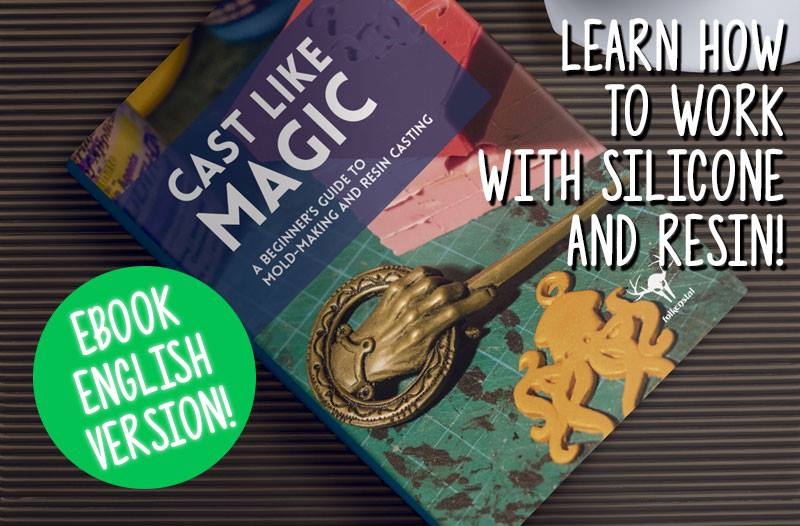
If you follow the world of cosplay props, you have probably run across the work of Folkenstal Armory. This Swiss cosplayer is known for her fantasy daggers and armor from games like Elder Scrolls and Skyrim.
She wrote this in response to the lack of books on silicone mold-making and resin casting. While it’s true you can find a variety of books that have a section on silicone molds and resin casting, none are solely devoted to the individual prop maker. And though you can find a plethora of tutorials online, most are for specific projects, and none give a comprehensive overview of the entire process like this book does.
Cast Like Magic covers one-part silicone molds, cut silicone molds, two-part silicone molds, brush on molds, and rotation casting. What really sets this book apart are the illustrated diagrams for each process giving a cut-away view of what is going on. Mold making and casting can be difficult processes to photograph because everything is happening inside or underneath the opaque material. Her diagrams give a clear picture of what we cannot see.
The photographs are bright, colorful, and extremely clear. The pictures of her own work are especially wonderful, giving an up close view of all the exquisite detail she adds.
Cast Like Magic has chapters on mold boxes and registration keys as well, two topics which are frequently glossed over in discussions on mold making.
A good chunk of the beginning of the book is spent discussing materials used. Besides the various silicones and resins, she also discusses mold releases, thickeners and thinners. You also see various resin additives in action, from metal powders to UV colorants.
She uses Smooth-On products almost exclusively. At times, it almost feels like you are reading one of their catalogs. While they remain one of the more accessible suppliers for beginners, keep in mind that many other companies and products exist.
This is a very well-informed book, providing proper safety precautions where necessary and giving just the right amount of technical information.
So if you’ve been waiting to take the plunge into silicone mold-making and resin casting, this book will help you make sense of the whole thing. If you have already made a few molds and casts, this book will fill in the gaps of your knowledge and show you a few new tips and tricks. At only $8.50, it’s a heck of a deal, too.
Shreveport has their very own movie prop maker with Jim Hayes, owner of LA House of Props. He has built props for films such as True Blood, Austin Powers: The Spy Who Shagged Me, Armageddon, and so many more. It’s worth fighting the popup ads to view the massive photo gallery of his work.
Finally, Bloomberg News takes us on a video tour of Creature Technology, the Australian animatronic company building life-size moving dinosaurs for live performance. There’s nothing really to say here, except “can I get a job there?” and “can you move your shop to Burlington, North Carolina?”.
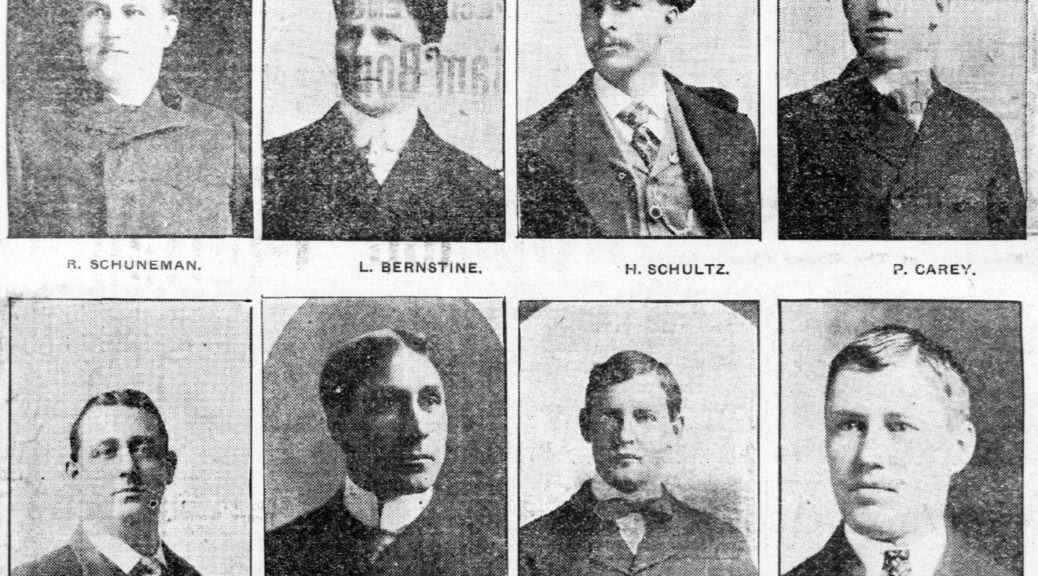
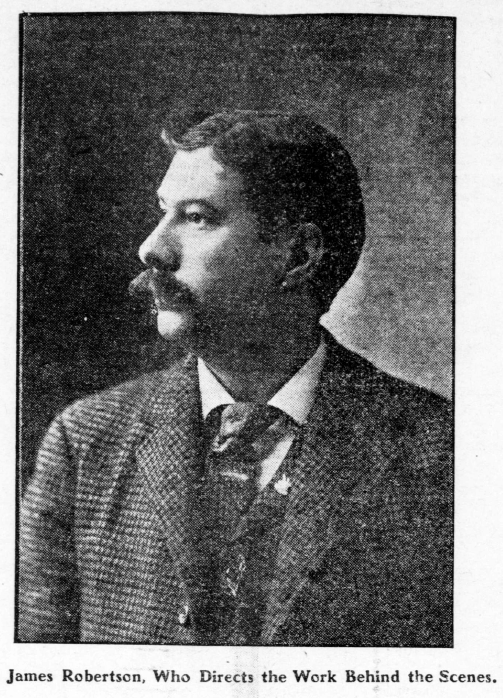
The following comes from the May 3, 1903 issue of The St. Paul Globe:
When the curtain drops at the close of every act of a drama or opera it is the signal for the players to rush for their dressing rooms, some of the men in the audience to troop up the aisles in search of—a change of air, and the women to chat and—possibly to note what the other women are wearing.
But there is another class of individuals for whom the falling of the curtain means business, and the liveliest kind of business at that. They are the “stage hands.”
As the curtain strikes the floor a stentorian voice cries:
“Strike!”
“Strike!” echoes another equally robust voice, and instantly there is a commotion on that stage that would bewilder a bystander, if he were permitted there at such a time—which he is not.
The first voice is that of the stage manager of the company playing at the theater. The second is that of the stage carpenter attached to the house. The commotion is the scurrying about of the stage hands, the property men and the electricians whose duty it is to clear the stage with the greatest possible celerity of all scenery, furniture and lighting paraphernalia that encumbers it. For perhaps the first act presented a street in a large city or the parlor of a rich man’s mansion, and the second is to picture a country lane or the wretched hovel of the poor but virtuous. Hence this bustle.
The store bought items used as sci-fi movie props – In theatre, even the lowest-budget show will demand actual antiques and designer furniture. In film, apparently, you can just talk into a lady’s razor and call it a communicator.
Stranger Things Product Placement: The Definitive Guide – The Dieline looks at all the vintage packaging found in this amazing show, both real and imaginary. As a bonus, many of the boxes and labels are flattened out, so you can print your own!