Here’s something that has me really excited: T-shirt brushes for shellac and oil finishes. This is the last step in the life cycle of a T-shirt for a props person: Good Shirt->Work Shirt->Paint Shirt->Shellac Rag.
Finally, in more sad news, designer Desmond Heeley passed away last Friday. His set and costume designs have been appearing on Broadway since the 1950s.
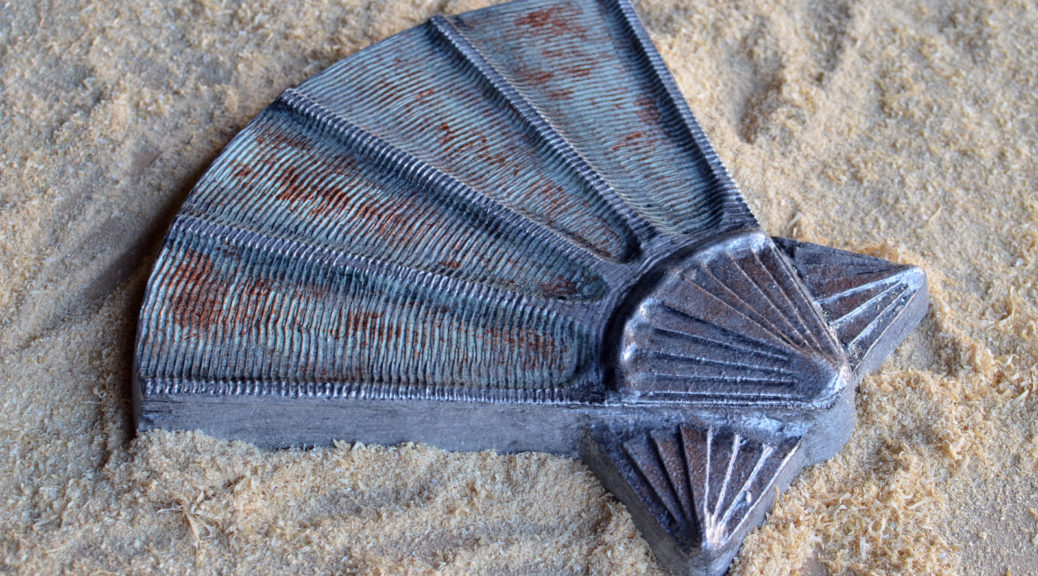
When I was a kid, I played a video game called Faery Tale Adventure that was filled with all sorts of magical items. I started making replica props of these items; I needed projects to show off various techniques for the second edition of The Prop Building Guidebook, and I wanted some props I could trot around to Maker Faires. The first one I have finished is a magic seashell, used in the game to summon a friendly turtle.
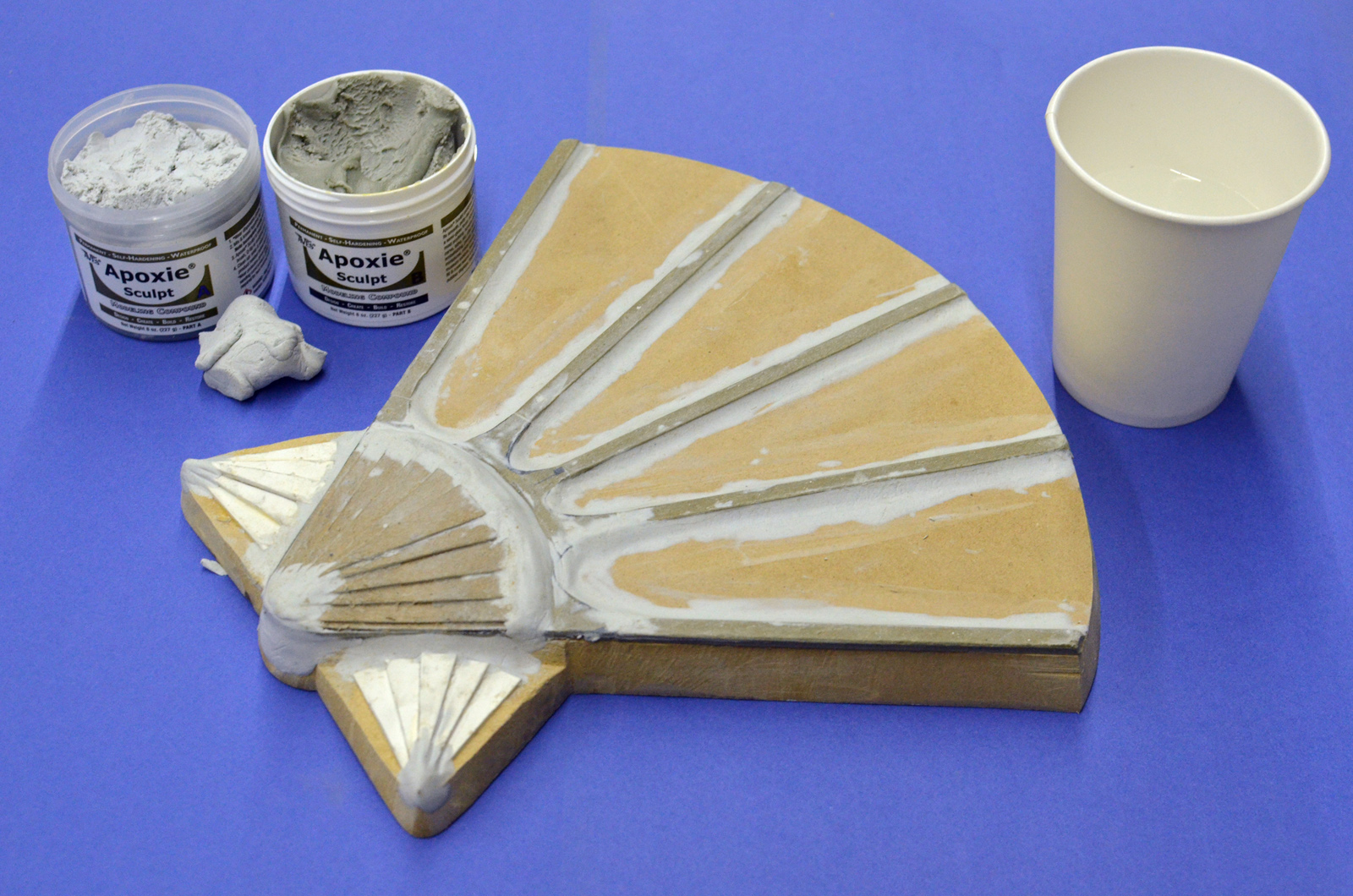
Seashell Model
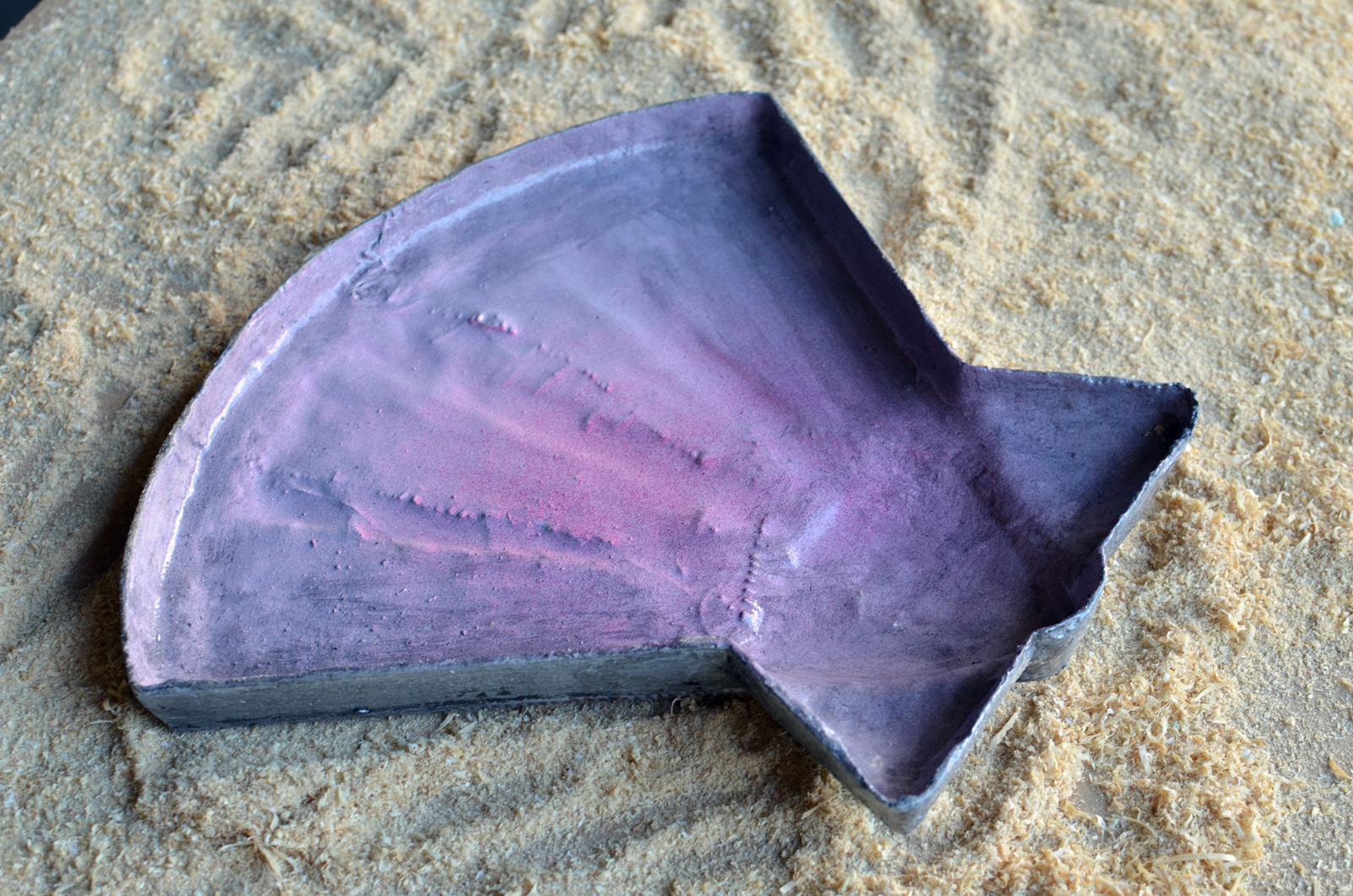
The model was cut out of MDF and layered with pieces of cardstock. I used some Apoxie Sculpt to further refine the shape. I coated it to give it a bit of texture, then spray painted it gloss pink to seal it all together and make it shiny.
Clay covered model
Next I made a matrix mold of the shell. I’ll describe it briefly here, but I have a lot more information in my upcoming book. I also shot a video which I promise will be up later this summer. Basically, you cover the model in a half-inch of clay, build a box around it, and fill it with plaster.
After the plaster is poured
When the plaster is set, you remove the clay and put the plaster mother mold back. This leaves you with a half-inch air gap between the plaster and the model; fill this with silicon rubber.
After the rubber is poured
The silicone rubber mold ends up supported by the plaster, and I used the smallest amount of silicone rubber possible. Matrix molding takes a lot more prep work, but it leaves you with very clean-looking results, and saves you money on materials.
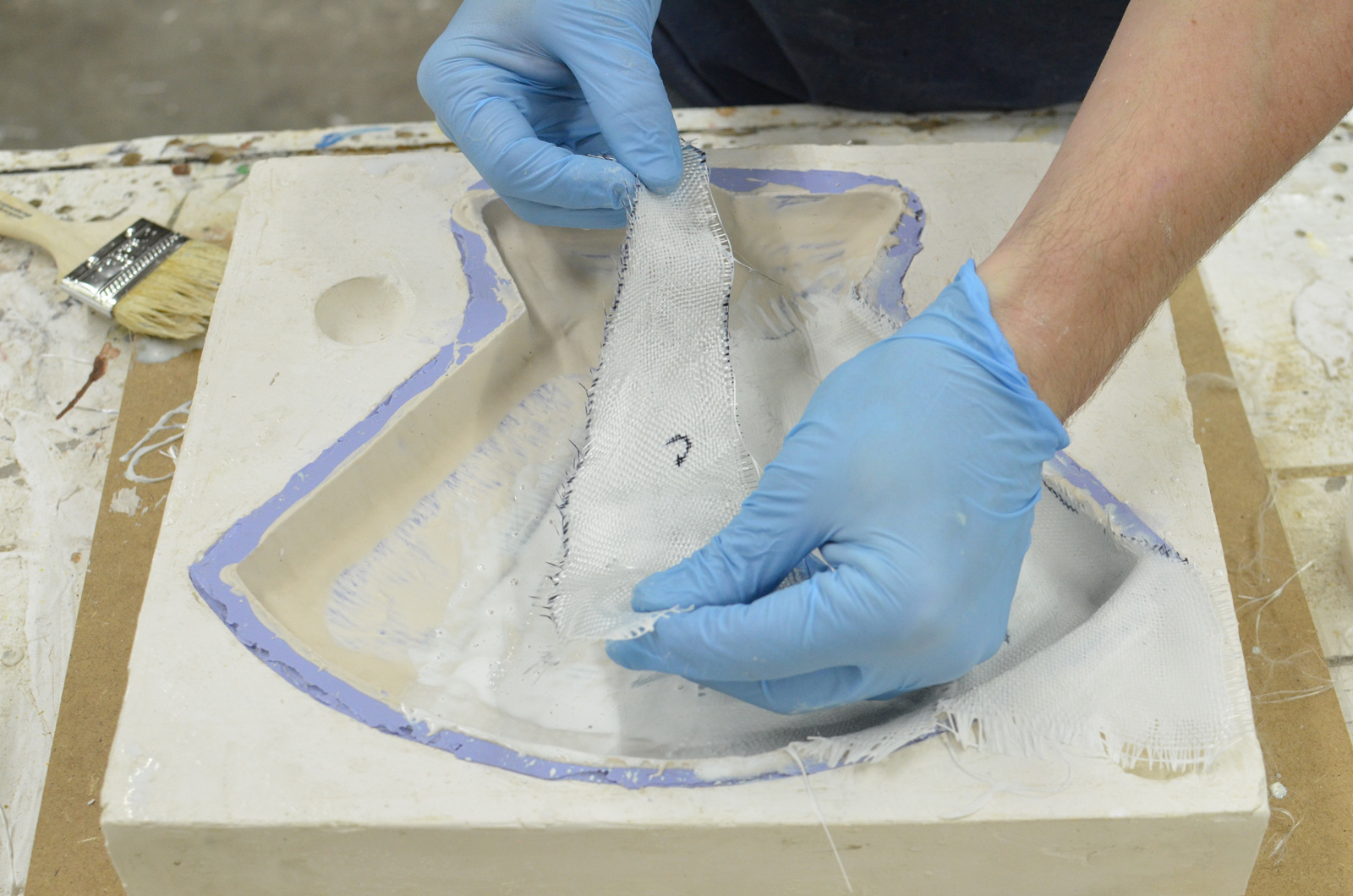
Laying in fiberglass cloth
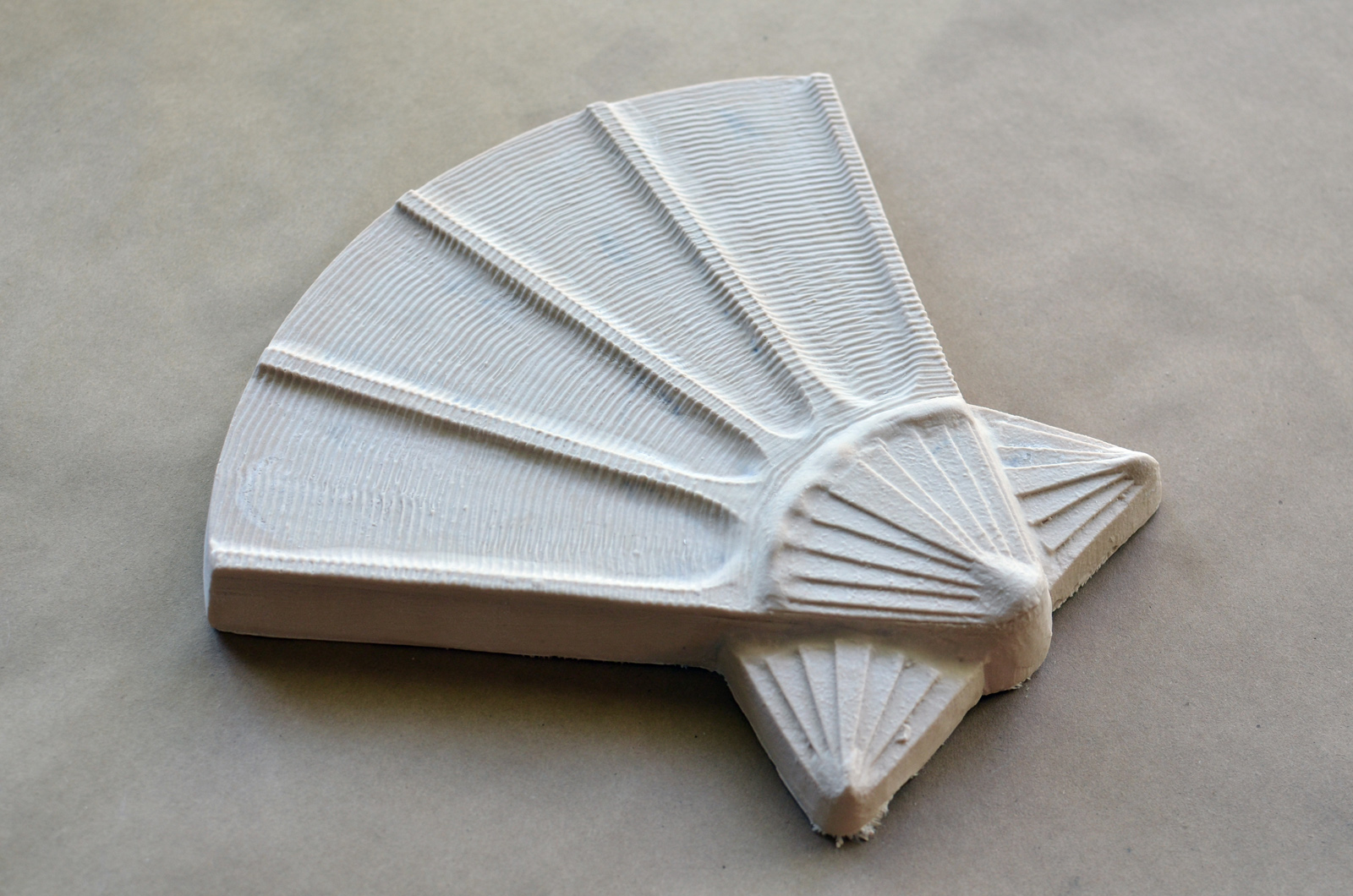
To make the finished piece, I used fiberglass with Aqua Resin. Again, this was for the book; I will have a video of the entire process later this summer. I had never actually fiberglassed a piece from a mold before, so I learned a lot; the final seashell  was actually the fourth one I attempted, and the first I completed without anything going wrong.
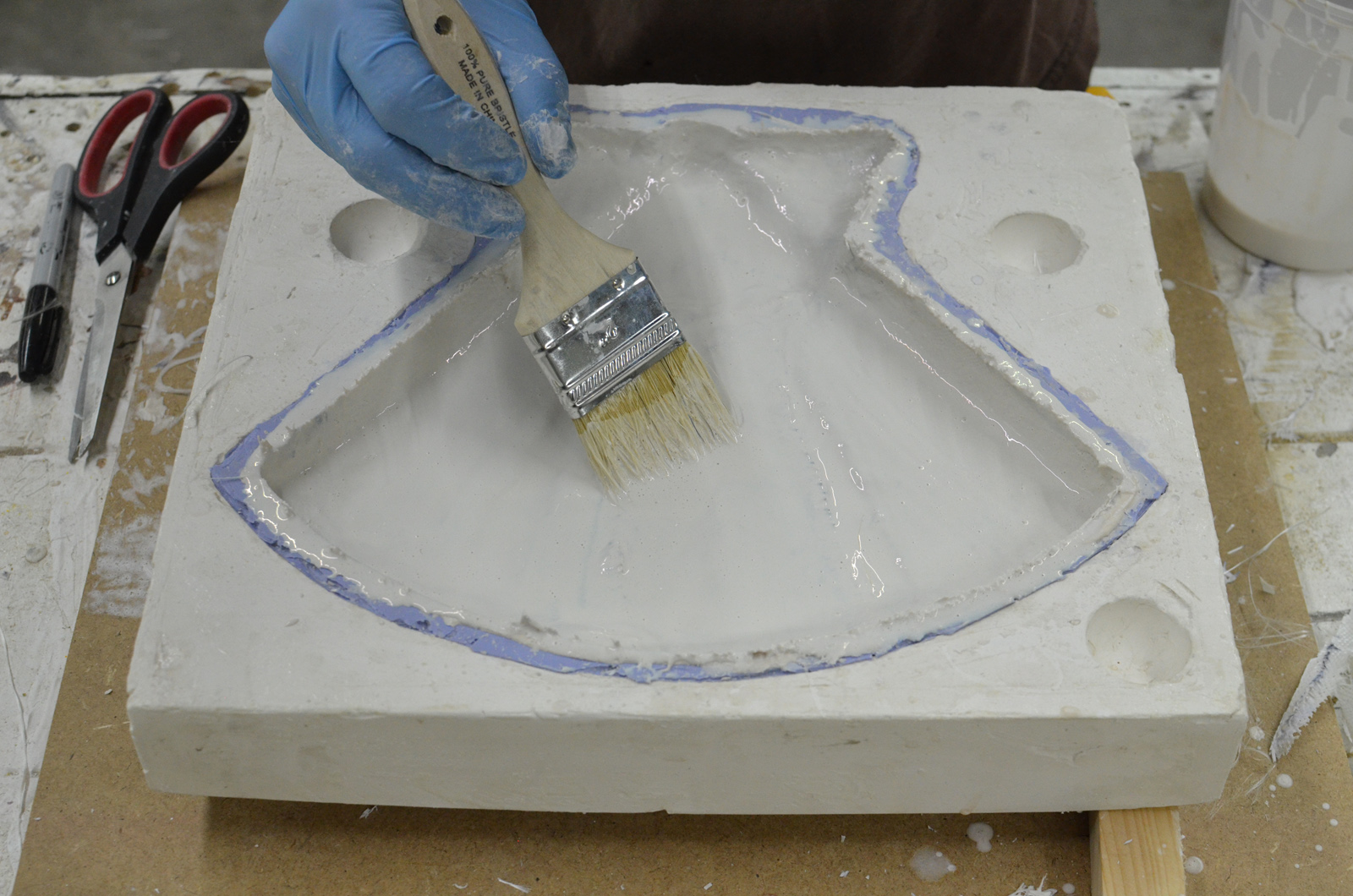
Coating with Aqua Resin
Using Aqua Resin with fiberglass is similar to using polyester resin, but a whole lot less toxic. The end result is a bit more like plaster rather than plastic, but it is still fairly strong and lightweight. I have a few more alternatives to polyester resin that I’ve been wanting to try so I can compare the results.
Finished piece before paint
This was not really that great of a piece to demonstrate the advantages of using fiberglass. It is very flat; you can easily create it using sheet goods, such as lauan, and still have it remain strong but lightweight. Fiberglass becomes more useful when you need an undulating skin, like a mask, that needs to be hollow but retain a consistent thickness throughout. But these are things I think about long after I have begun a project, when it is too late to start a new one from scratch. I say this for those of you who will look at this prop and ask, “Why did he bother with fiberglass? Why not just cut it out of thin plywood?”
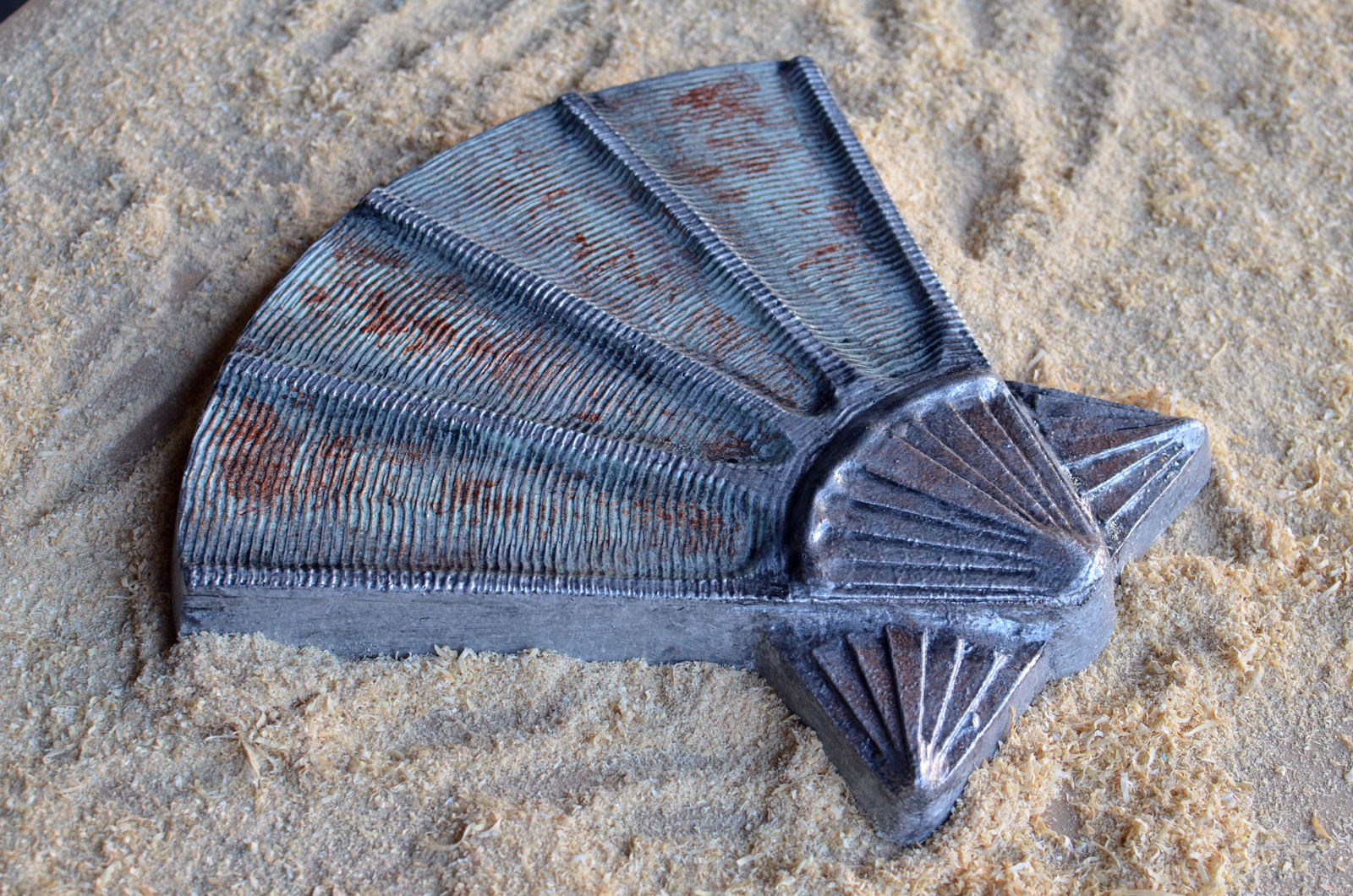
Seashell
With the piece finished, I painted it with a number of metallic paints, as well as a dark wash for the cracks and crevices, and some Rub’n Buff for highlights along the edges.
Life Behind the Curtain—The Show Couldn’t Go On Without Them – Playbill has gathered the stories of 21 different folk who work behind-the-scenes on this year’s Tony-nominated productions. The range and variety of jobs in theatre is vast, which many high school and even college students do not realize. Not everyone needs to be a stage manager!
Assembling the Giants – Alliance Studio created some massive action figures based off the characters of Blizzard’s new game Overwatch as part of its promotion. The construction was mostly boring 3D printing, but the paint jobs were quite complex and cool.
Shop Hats for You & the Apprentice – If you wanted to reintroduce the tradition of making your apprentices and journeymen wear special paper hats, Chris Schwartz has dug up these authentic instructions and illustrations showing how to make your own.
Tool Storage for the Rest of Us – “All drawers eventually become junk drawers.” Wise words from Popular Woodworking Magazine, which gives us some tips and tricks on creating wall-mounted tool storage so you can see everything you got.
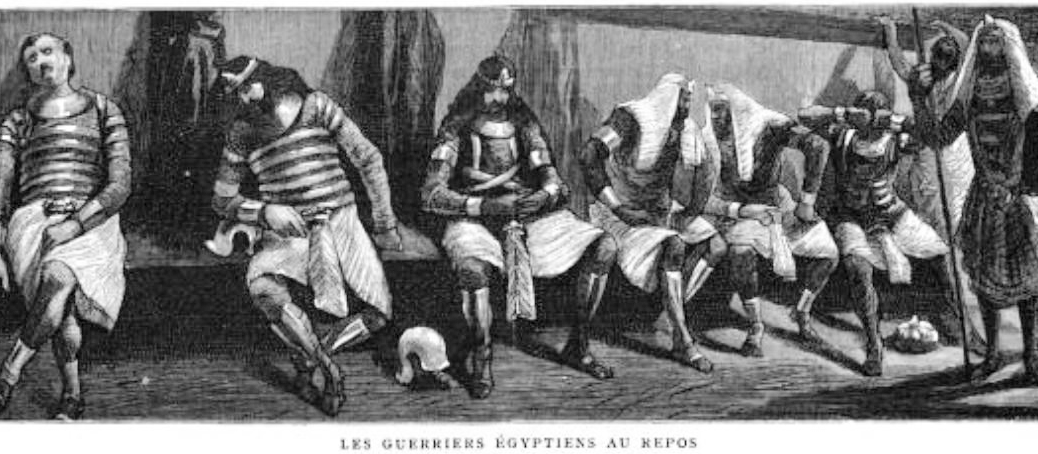
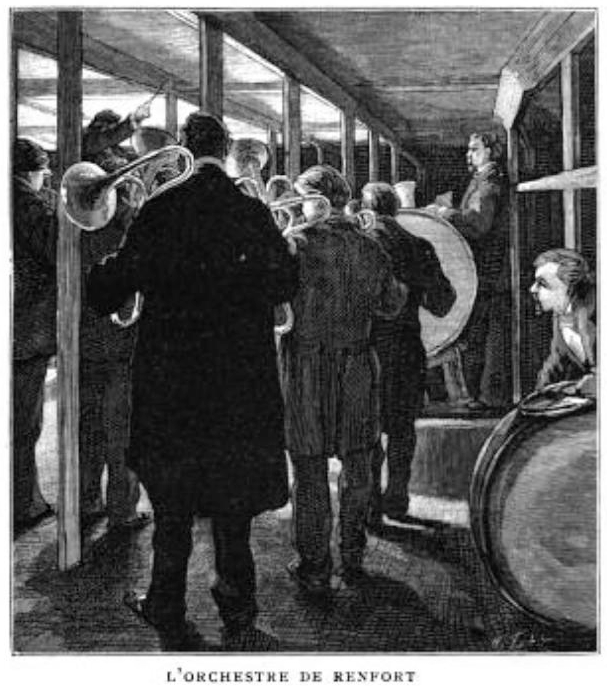
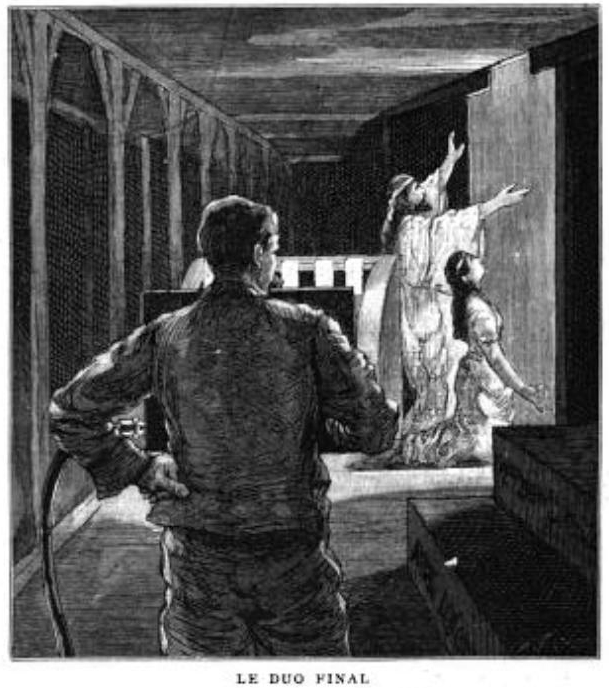
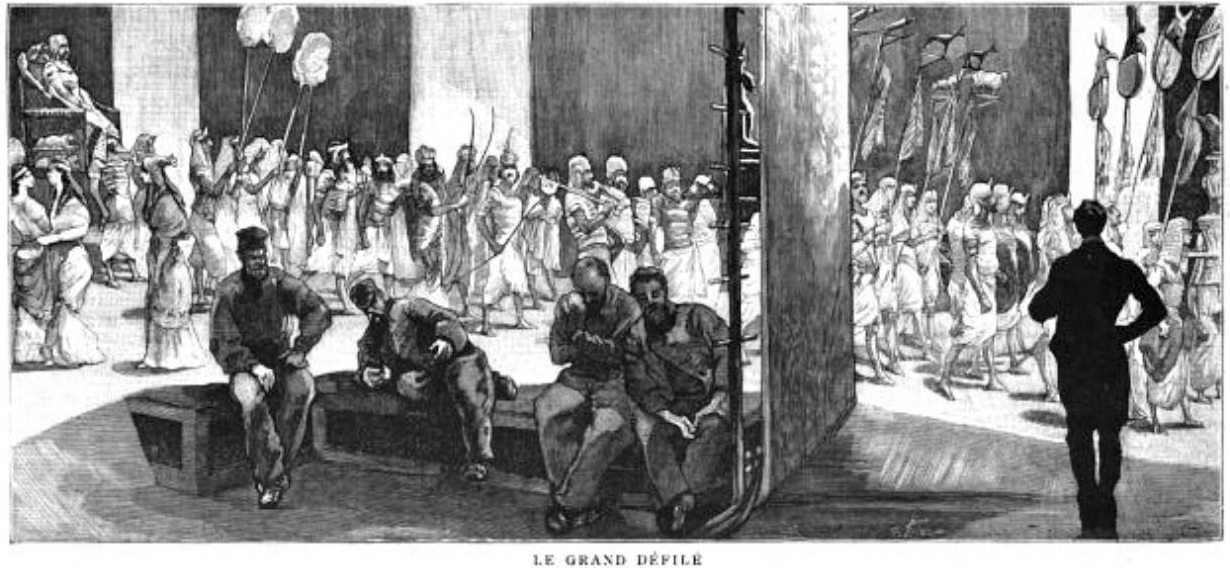
I came across these illustrations giving a backstage look at the opera Aïda. It is a French production from 1880. Even though it is over 135 years ago, some things still look the same.
The Egyptian Warriors at rest.Orchestra reinforcement.The final duet.The big parade.
First up, Mashable takes a peek into the props shop at Pinewood Film Studios, the UK studio where the new Star Wars films are being made. They show the process for making some of the film’s iconic props, like Darth Vader’s melted helmet and Kylo Ren’s lightsaber hilt. The process is a bit more high-tech than your typical props shop.
J. Kent decided he needed a life-size replica of a Tyrannosaurus Rex skull, so he built one out of paper-mache. Check out pictures of the five-foot long piece that took over 500 hours to build.
Make Magazine discovers David Neat and his amazing model-making blog. I’ve linked to many of his posts before, but if you haven’t seen this blog yet, you’re in for a treat. He covers a lot of the same materials and methods we use in props in exquisite detail.
Making and finding props for theatre, film, and hobbies