
All posts by Eric Hart

A Stage Banquet, 1884

The following is the third part of an article which appeared in an 1884 issue of the Bismarck Weekly Tribune. The first part and second part were posted previously:

“Stage banquets, suppers and meals of all kinds often put the ingenuity of the property man to a severe test. If the manager is economical the most elegant banquets are but hollow mockeries. The turkeys and chickens, which seem to spectators to be roasted to such a delicious degree of brownness, are only brown holland stuffed with sawdust. The wines are cold tea or water colored with burnt sugar. Sometimes they are drunk from pasteboard goblets and then they are purely imaginary. Do you remember Dickens’ description of how Mr. Crummles used to take long draughts of nothing out of the pasteboard goblets in banquet scenes?”

“Yet in these banquet scenes the people eat something?”

“Oh, yes. It is essential to the action that they shall eat. There is always a plate of bread and one of cold meat. They look at the elegant turkeys, chickens, etc, and eat the bread and meat. If the manager is liberal, however, a stage banquet is sometimes a meal at which no epicure would turn up his nose. This is always the case under Lester Wallack’s management. He gives his companies splendid suppers and real champagne. Poor Matilda Heron always did so, too, when she played Camille, and Albina de Mer, the wife of M. B. Curtis revived this good old custom in the same play when she starred it last season, presenting a bill of fare which included oysters, raw and fried, roast turkey, chicken salad and real wines.”

“The Property Man”, The Bismarck Weekly Tribune, Oct 31, 1884, pg 2. Reprinted from The Philadelphia Times.
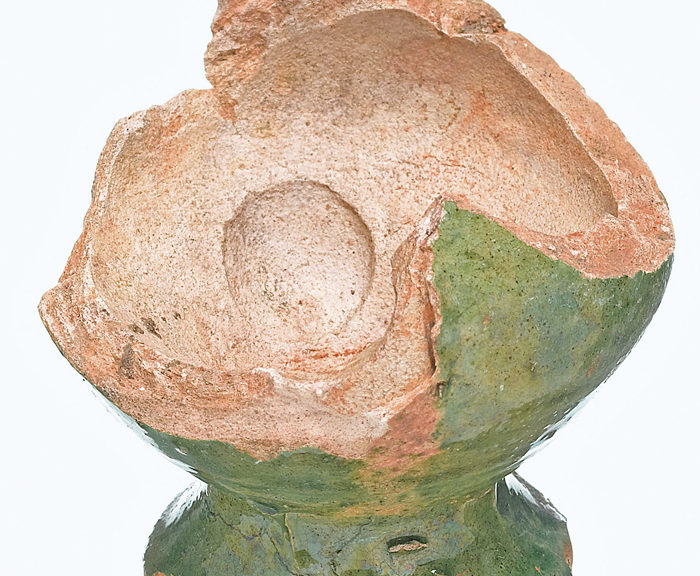
Original Romeo and Juliet Props Found

If you’re a Shakespeare buff or just interested in theatrical history, you may be aware that archaeologists from the Museum of London Archaeology are currently excavating the Curtain Theatre. The Curtain is one of the earlier theatres used by Shakespeare, and its well-preserved remains are filling in a lot of gaps about our knowledge of Elizabethan theatre. It has already yielded some surprises: the stage is rectangular, not circular as previously supposed. And last week, you probably saw the news articles exclaiming that props from the original Romeo and Juliet were unearthed. Is this true? Or rather, how likely is this?

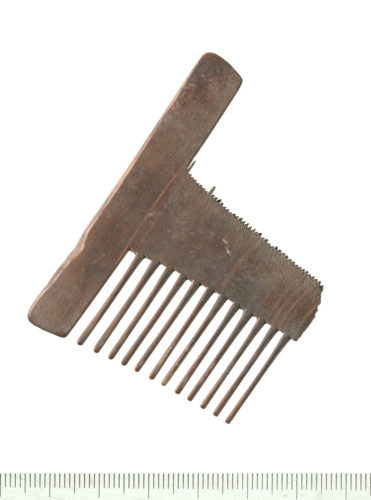
Bone comb found at Curtain Theatre, (C) MOLA

Continue reading Original Romeo and Juliet Props Found

To the Weekend and Beyond

Bill Doran shows us how to mold and cast tiny parts, which often have their own set of challenges distinct from molding larger pieces. One word: bubbles.

Modern-Day Gepettos Keep Marionette Making Alive – Make Magazine introduces us to Mirek Trejtnar, a puppet-maker who not only carefully researches traditional methods of building marionettes, but shares his techniques on his blog.

Most explosive squibs used on film sets contain lead, which spreads lead all over the film crew. A new report highlights the potential dangers and asks if your film crew is being poisoned. It came to no surprise to me that Monona Rossol was behind this report; she often appears to be solely responsible for pointing out the toxic dangers hidden in the entertainment industry. Many of us have learned safer practices either from one of her classes or from her essential book, The Health and Safety Guide for Film, TV, and Theater.

Propnomicon points out that the New York Public Library has a great collection on old apartment buildings. They have detailed floor plans from the early Twentieth Century, as well as common plumbing and bathroom fixtures. It’s great research for any play from this time period.

Swearing at Props, 1884

The following is the second part of an article which appeared in an 1884 issue of the Bismarck Weekly Tribune. The first part was posted last week:

“Writing letters is another important duty of the property man. The letters which people read on the stage are all written for them by him. Actors do not commit them to memory, but simply read them when they are handed to them upon the stage. In the multiplicity of his cares the property man sometimes forgets to write one of these letters, and when the actor to whom it is handed opens it he finds only a blank sheet of paper. His wits must serve him then, and if he knows the general purport of the letter he can improvise it. If not he can only affect to read and exclaim when he has finished: ”Tis well.’

Swearing at Property Men.

“More fault is found with the property man than with all the other attaches of the stage put together. A property man is expected to know how to make anything and everything. If there is a crown and scepter required, if a golden goblet is needed, or if there is a demand for a handsome drawing-room mantel, the property man must make them all, and no one outside of the profession can have any idea of the skill with which a first-rate property man can make a most deceptive imitation of almost anything. Turkeys and chickens, either with their feathers on or dressed and roasted for the table; fish and vegetables of all kinds, pies and cakes—all are within the resources of his art, as indeed it would be hard to name anything that is not.

Several days before the production of a new play there is given to the property man a complete list of all the properties required therein, and it is his duty to see that they are all ready in their proper places at the proper time. Many of these things, of course, he already has in his extensive collection in the property-room. Others he will borrow, if he can, from other theatres or from stores which deal in the articles required. China and glassware, furniture, fancy riding whips, paintings and bric-a-brac are always borrowed from stores, the dealers being glad to loan them for the sake of obtaining free admission to the theatre and of having their name on the house programme.”

“The Property Man”, The Bismarck Weekly Tribune, Oct 31, 1884, pg 2. Reprinted from The Philadelphia Times.
Triskaideka-Prop-ia

Chuck Fox, the props master at the Arena Stage in DC, is retiring, and the Washington Post has a great look back on his career. He started as a props carpenter at the Arena back in 1980. Kids, that was before props masters had Amazon and eBay. It was before you could do research on Google. Heck, it was before you could keep your props list saved on your computer and print out a copy every you updated it.

Genevieve Bee has this massive blog post documenting her construction of a life-size troll figure out of foam.  Over 150 photos and a video detail her process from scale model to finished piece. She uses flat foam patterning, fabric manipulation, sculpting, plaster molding, latex casting, and a plethora of other techniques to bring this to life. And it’s her first time doing a project of this scale; she points out all the things she learned along the way.

Bill Doran brings us this introduction to 3D modeling for prop and costume making. Doran got his start as a 3D modeler, and he shows us some of the more accessible programs out there. 3D modeling is great for making 3D printed parts, but it can also be used to visualize a project and create blueprints for more traditional fabrication projects.

Myles McNutt hates when television characters carry around empty coffee cups. I mean, he really hates it. He has put together a video showing some of the more egregious examples of empty coffee cup usage, and has even created an award for the best (or worst?) empty cup acting on screen. Despite being a props person, I have actually never noticed this when watching TV.