Smell is Irrelevant

“This doesn’t smell bad so I don’t need a respirator.” I hear that from time to time, either from students or in online forums. Prop makers working with chemicals use their sense of smell to determine how dangerous something is. “This smells better than that, so I don’t use that anymore.” “I can’t smell a thing, so this must be safe.”

No no no. This is dangerous, and the wrong way to think about safety with chemicals.

For every chemical, OSHA sets limits as to how much you can be exposed to. They try to figure out the amount you can be exposed to while working with something your entire life, and never have adverse health effects from it. These are called Threshold Limit Values (TLV).

The first is  the time-weighted average (TWA). The TWA is meant to indicate what you are constantly exposed to at work. They measure the average amount you are exposed to over an 8-hour day and a 40 hour week. (Uh oh, we often work much more than that in theatre).

Next is the short-term exposure. or STEL. They define this as 15 minutes of exposure. And you have to have an hour break before the next exposure. And you can only have four exposures per day.

Finally there is the ceiling value. You should never reach this level of exposure, even for an instant. They also have IDLH, which is “immediately dangerous to life and health”. Instant exposure at this amount will kill or irreversibly affect your health.

So let’s look at the following chart, which has the TLVs for some common chemicals found in the props shop. You probably recognize some of these as ingredients in paints and coatings. Amines are found in many epoxies. Methyl ethyl ketone is used in polyester resin. The diisocyanates (TDI and MDI) are two of the more common curing agents used in two-part polyurethanes.

All the values are measured in parts per million (ppm), which means out of a million pieces of air, that is how many pieces are of the substance being measured (for comparison, room air has 209,500 ppm of oxygen).
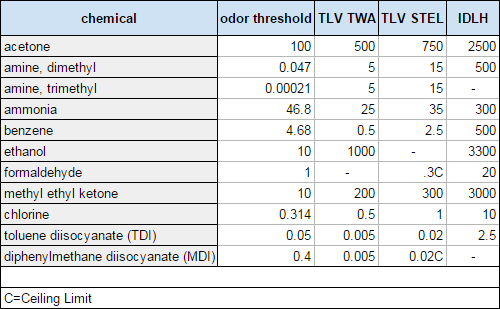
Odor thresholds and Threshold Limit Values of certain chemicals

So where does smell come in? Well, every chemical has an “odor threshold”. This is the amount, again in ppm, of a chemical at which point you can smell it. This is much less standardized, because it can be hard to test and different people have different sensitivities to smell. The number is often given in a range. You can see in the chart that the odor thresholds are all over the place for the different chemicals.

I’ve pulled a few chemicals out and put them in a chart so you can see what’s happening a bit easier.
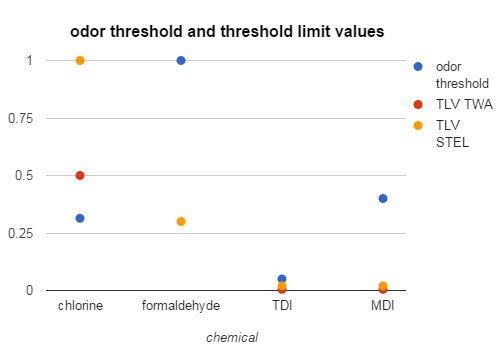
 

Chart for OT and TLV

Look at chlorine. The odor threshold is way below the TLV TWA. This means that even if you smell chlorine, you may not be exposed to a harmful amount. You may be able to smell chlorine all day every day and still not have harmful effects (like if you work at an indoor pool).

Now look at formaldehyde. The short-term exposure limit (the orange dot) is way down in the graph. The odor threshold is way at the top. That means you can be exposed to a harmful amount before smelling it. In fact, you will have to be exposed to three times the threshold limit before you can smell it. So if you are working with something that off-gasses formaldehyde (including many plywoods and engineered lumber, VOC-containing paints, and even some fabrics), you cannot assume you are safe because you do not smell anything.

Look at the two diisocyanates (MDI and TDI). Both of them also have an odor threshold above their short-term exposure limit. If you look back at the chart, you will see that the STEL for MDI is also its ceiling value, which is the amount you should not exceed even for an instant. And its odor threshold is twenty times higher than that. You can be breathing dangerous and even deadly amounts of MDI before you even get close to smelling it.

This is why many people suggest casting urethane parts inside a fume hood or a spray booth; even a respirator is not a reliable protector. One way to tell if your respirator has stopped working is if you can smell the outside air. But with these chemicals, you cannot smell them even when they are present in dangerous amounts. So you have no indication of whether your respirator is working or not.

Your nose is a great sensor for many chemicals, but you should never rely solely on it for your safety. You need to know about the specific chemicals you are working with and how their odor threshold relates to their threshold limit values. No more, “this doesn’t smell bad so I don’t need a respirator.”

Smell you later.
End of the Week Links

American Theatre has this week’s “must read” article on jobs in technical theatre. They look at where new technicians get their training and interview a number of people working in theatre to see how they got their start. The interviewees come from a range of different departments, like lighting, sound and costumes. No props people appear in the article; probably because we were all too busy to give an interview.

The Abbey Theatre has a video up where Eimer Murphy talks about the vintage working dentist’s chair that appears in their current production of You Never Can Tell.

Propnomicon found this great video on aging glass bottles. It’s a lot better than giving your actors actual antique bottles that they have to drink out of.

Take a tour through the prop warehouse of the Food Network. In the basement of NYC’s Chelsea Market, Wendy Waxman stores thousands of vintage items which appear on the various shows and specials of this TV station. I bet a lot of my readers wish they could spend every day finding and buying quirky kitchen items.

Finally, this is short but interesting. The actor who originally played Darth Vader (David Prowse, not James Earl Jones) posted a photo of the original Vader mask that burned at the end of Return of the Jedi and compared it to the prop that Kylo Ren holds in The Force Awakens. Since the original was made of fiberglass, it turned a little “hairy”, while the prop in the new film looks more “melty”.

Elephant Puppet Heads

Last week I showed you the Lion Puppets I made for Triad Stage’s Beautiful Star. Today you can see how the Elephant Puppets were done.

The idea was similar; they were designed to look like a giant papier-mache head with a flowing fabric body made of silk.

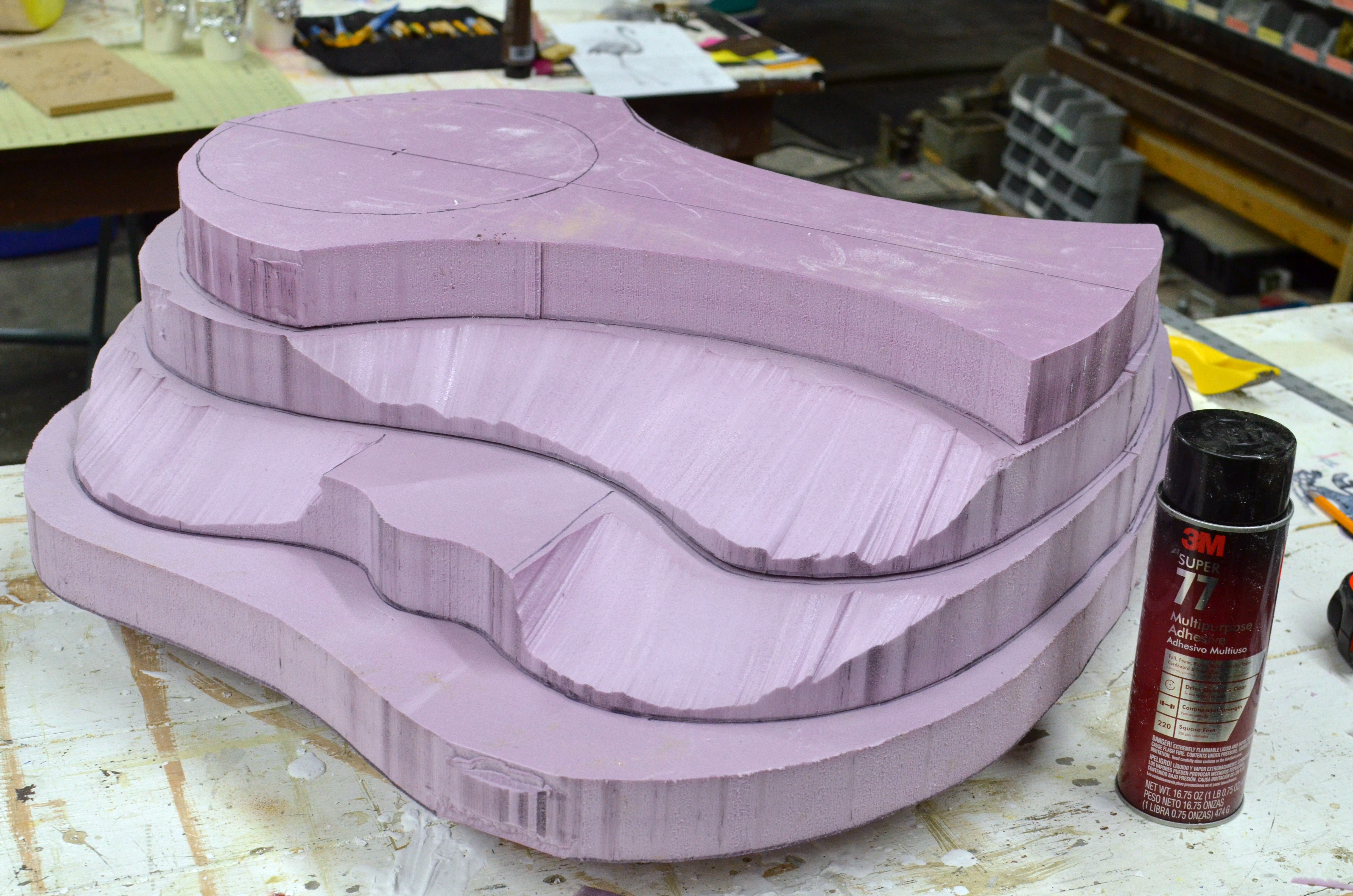
Stack of foam
Stack of foam

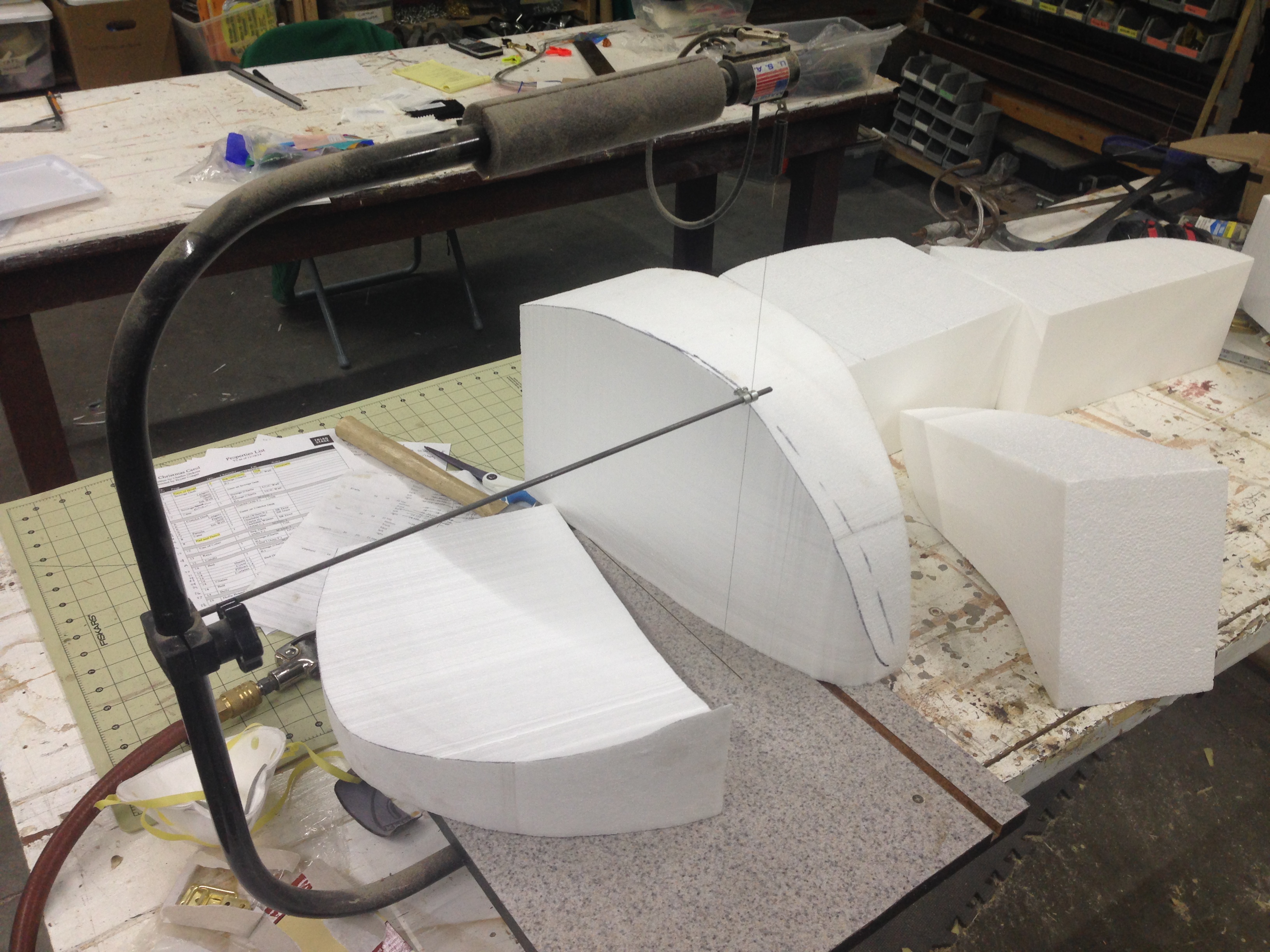
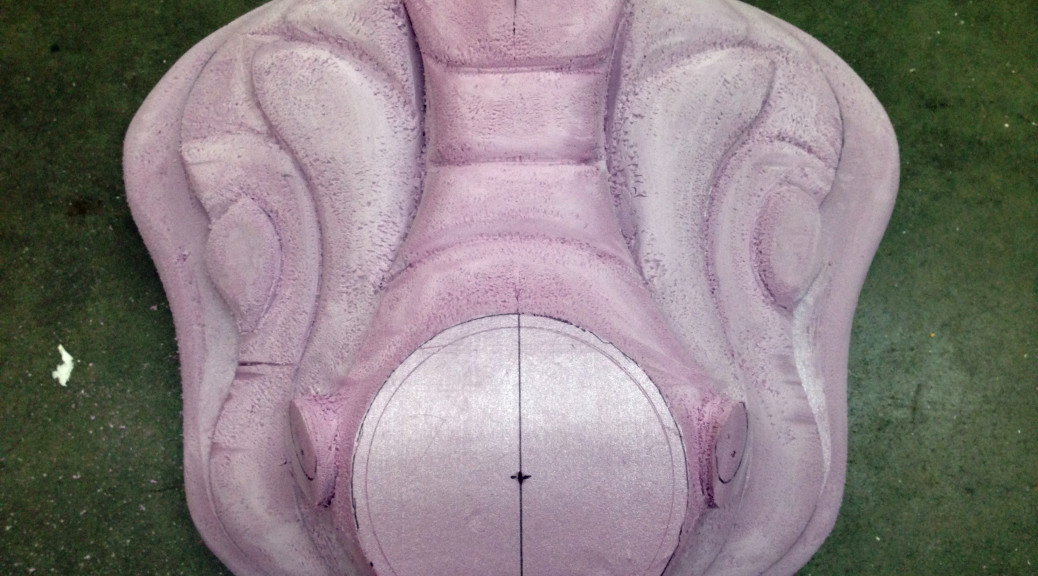
I made this one from a stack of insulation foam sheets. I cut their outlines and did some beveling with the hot wire cutter before attaching them together. This helped establish the proportions and maintain some symmetry.

Someone in the shop told me that Spray 77 would work well to stick them together. I thought it would eat into the foam, but I was surprised when I tried it. It attacked the foam a little bit, but it made a pretty strong bond.

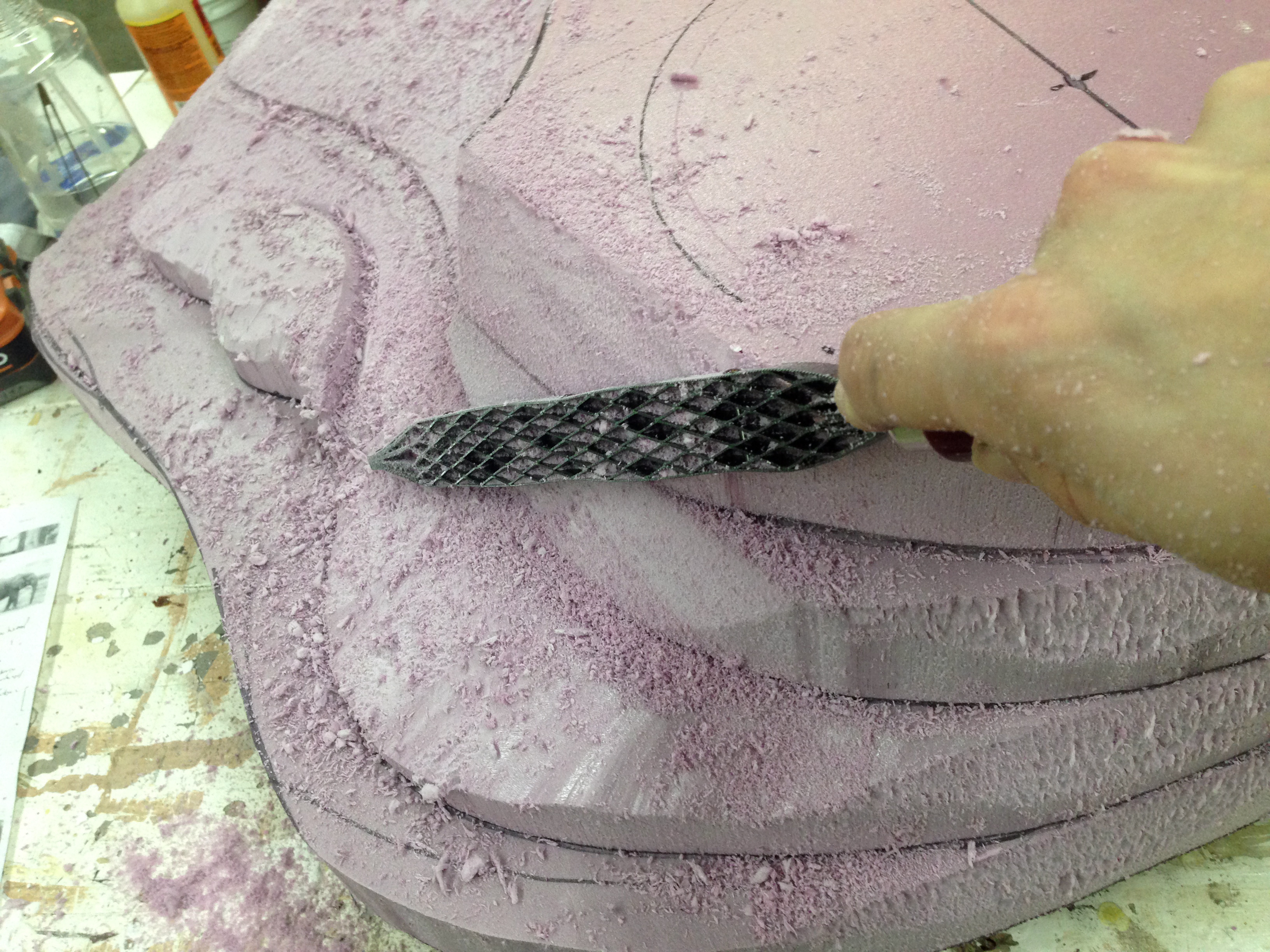
Shaping with a rasp
Shaping with a rasp

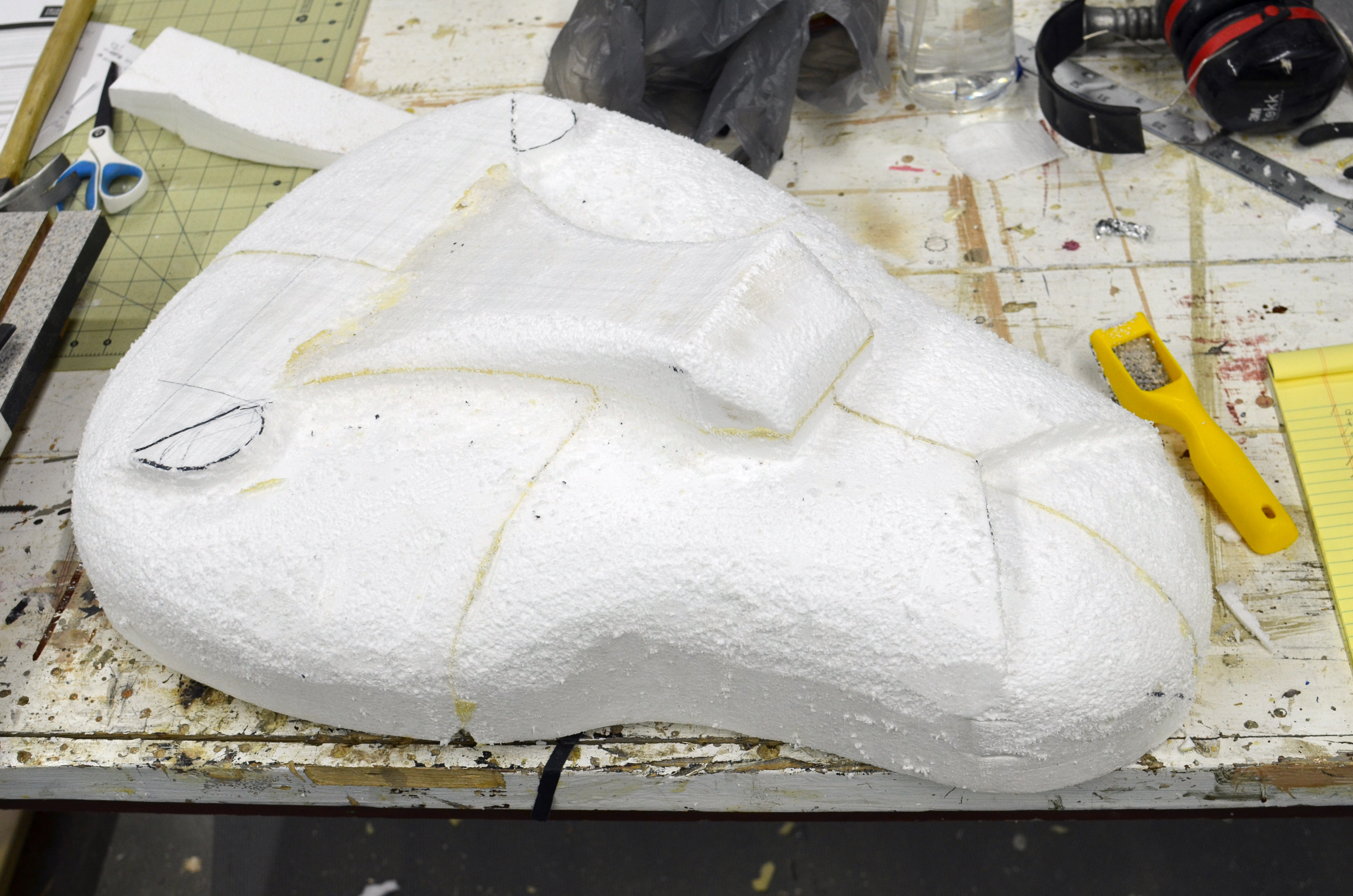
I began shaping the foam with a mix of snap-blade knives and surform tools. I also tried out one of my newer purchases, a saw file rasp. It is made up of a bunch of criss-crossing saw blades, making it very aggressive in removing material. It is completely open, though, so all the foam passes right through rather than clogging it up. Very nice.

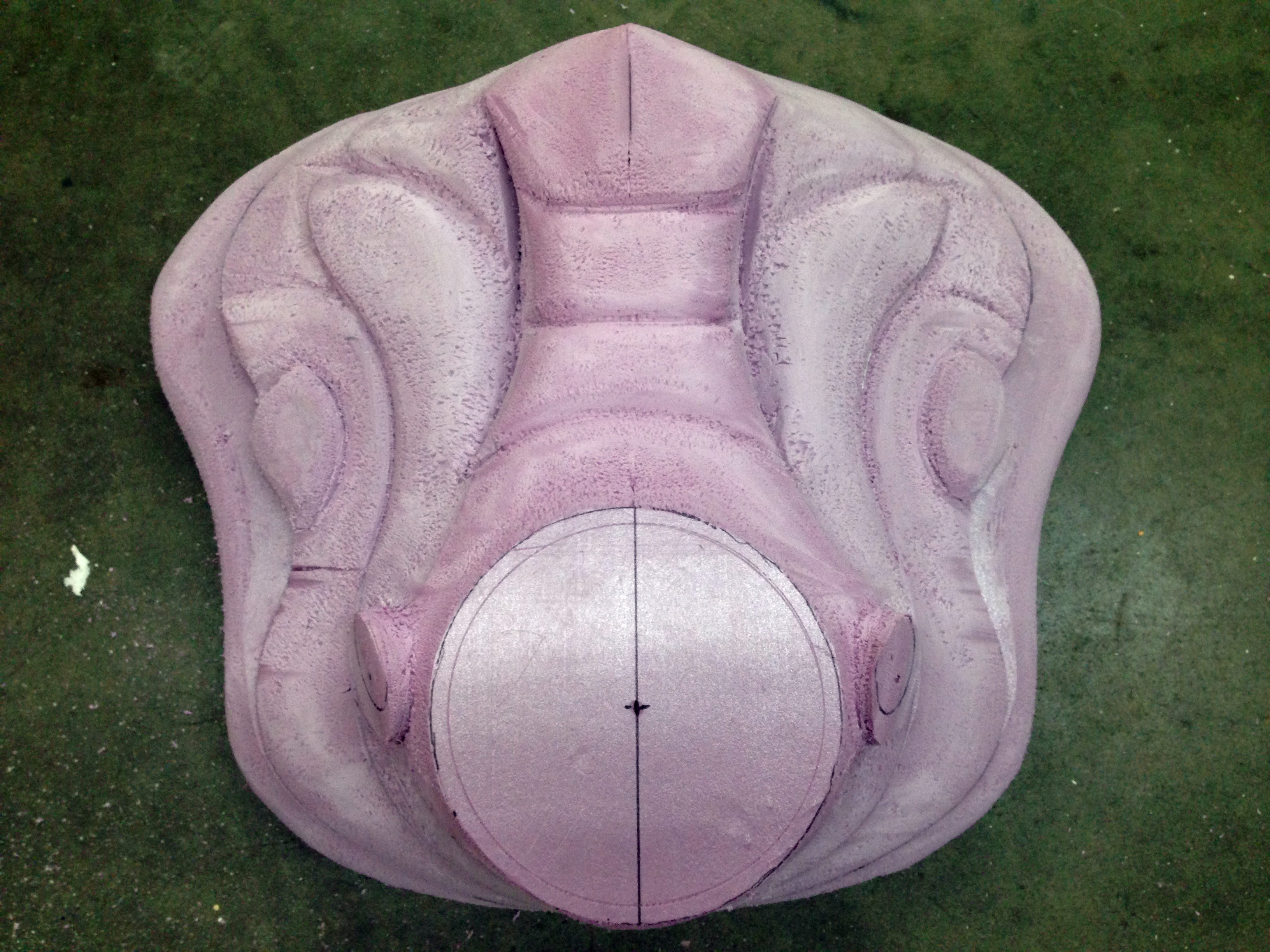
Carved elephant head

The finished foam piece may look a little funny, but that is because it doesn’t have a trunk or tusks. The trunk was going to be a piece of silk which the actors can manipulate, and the tusks would be separate pieces of Wonderflex. This piece of foam was now ready to use to make Wonderflex shells for the head.

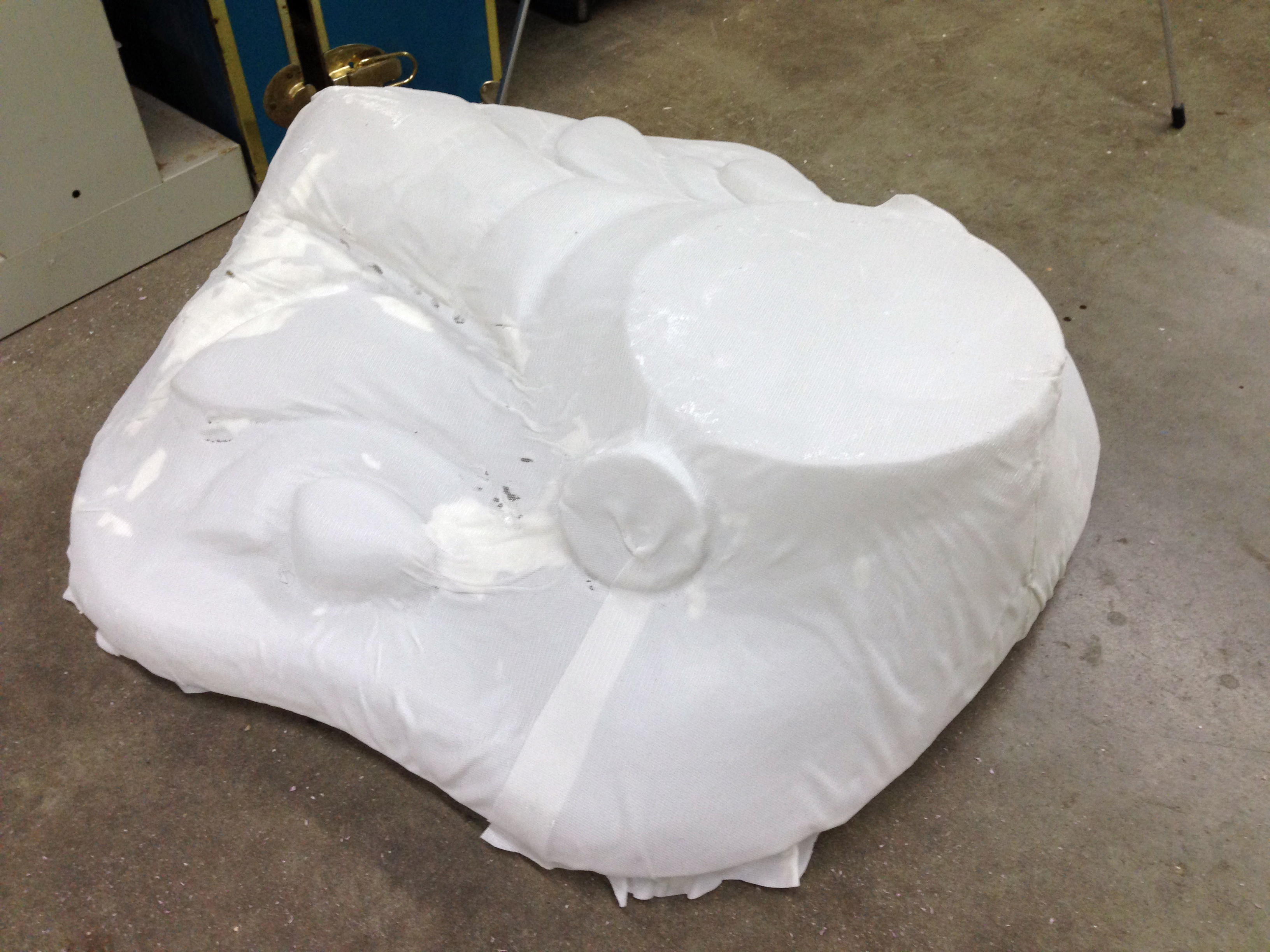
Wonderflex head
Wonderflex head

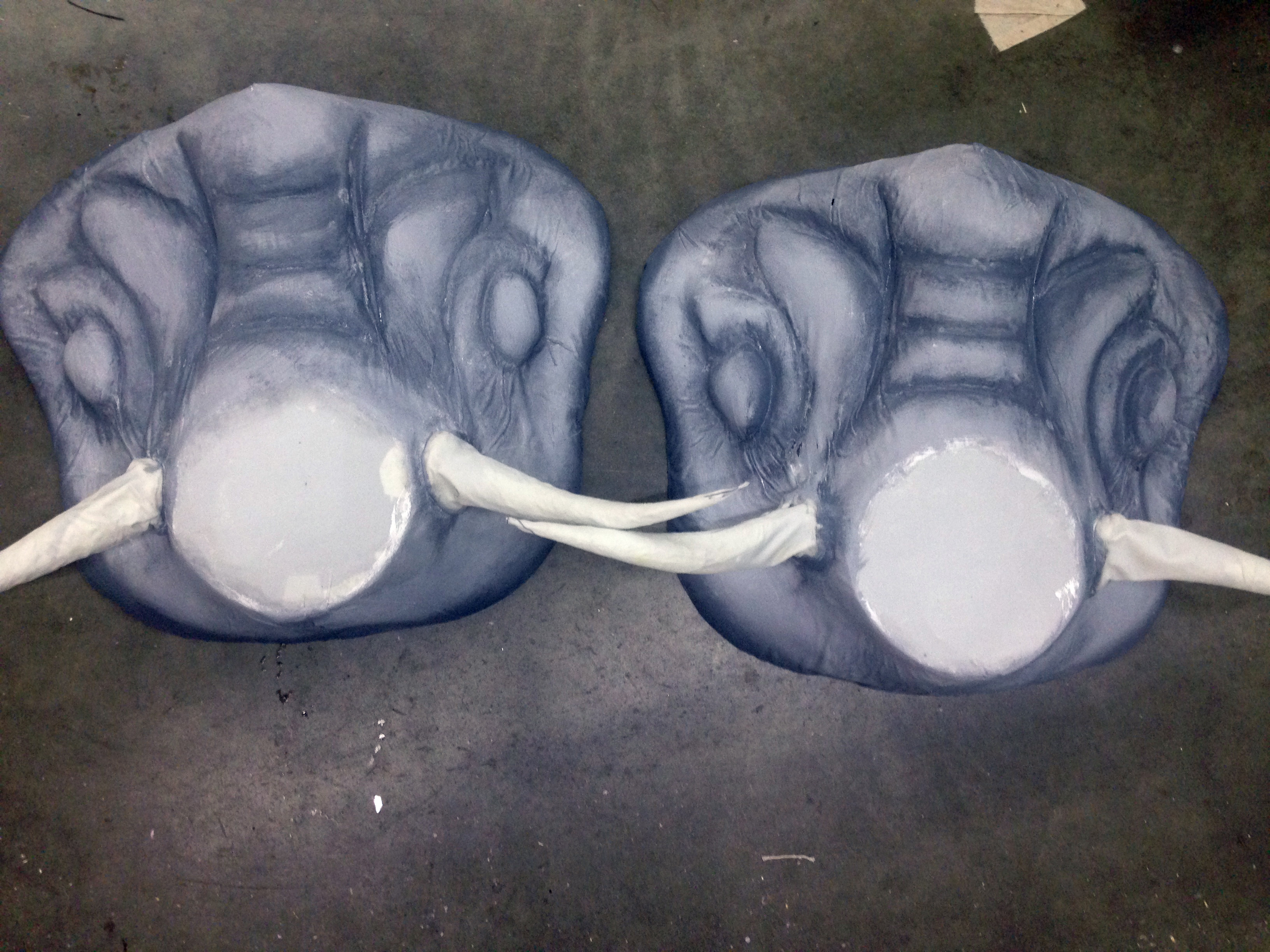
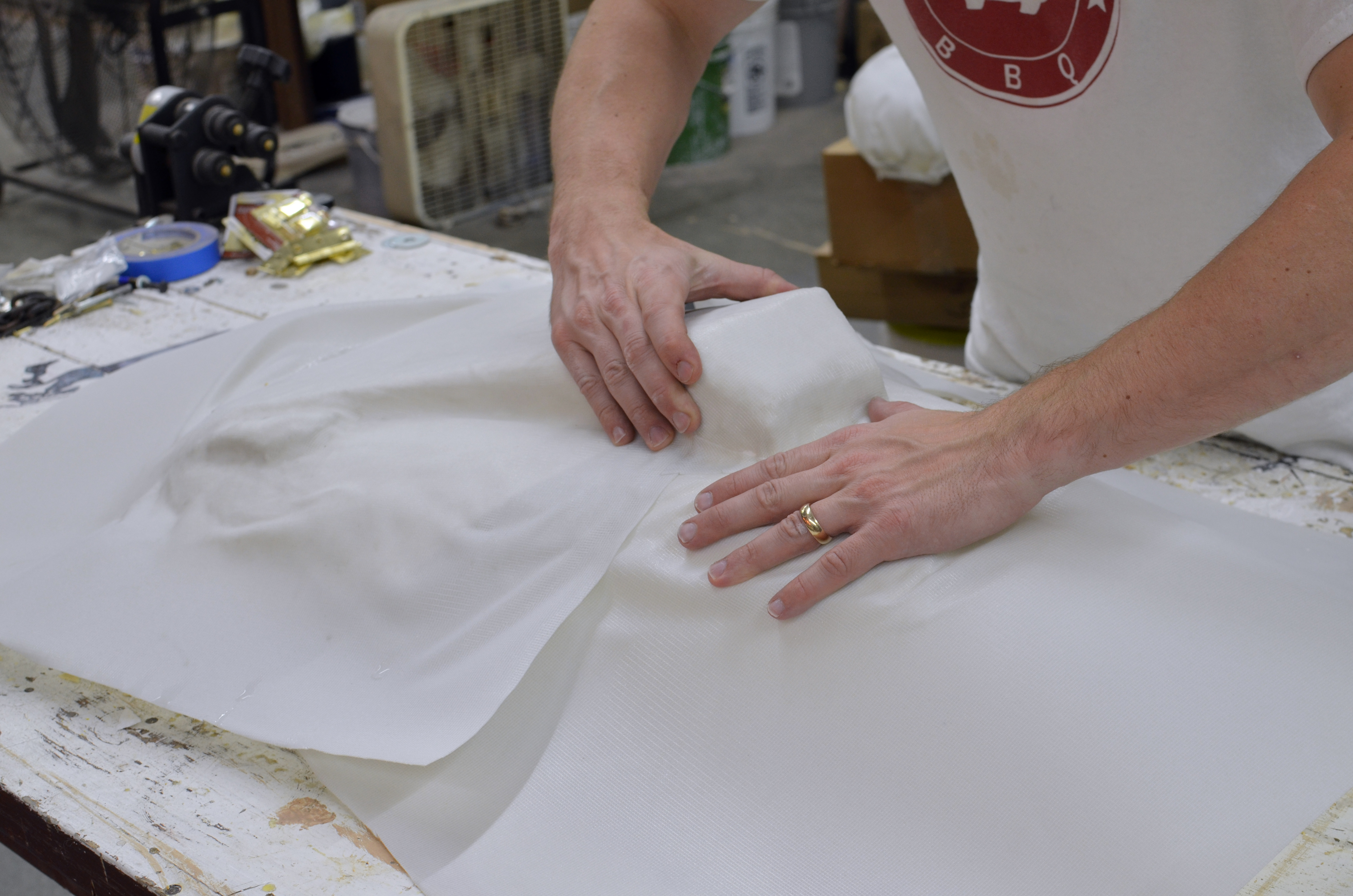
I covered the foam piece in aluminum foil so the Wonderflex would not stick to the foam. I’ve tried other methods, like coating the foam in plaster or using Vaseline as a mold release, but the aluminum foil is so much faster and easier. The Wonderflex does not pick up enough detail for the texture of the aluminum foil to show, and it peels off the back of the Wonderflex piece pretty easily.

Painted with tusks
Painted with tusks

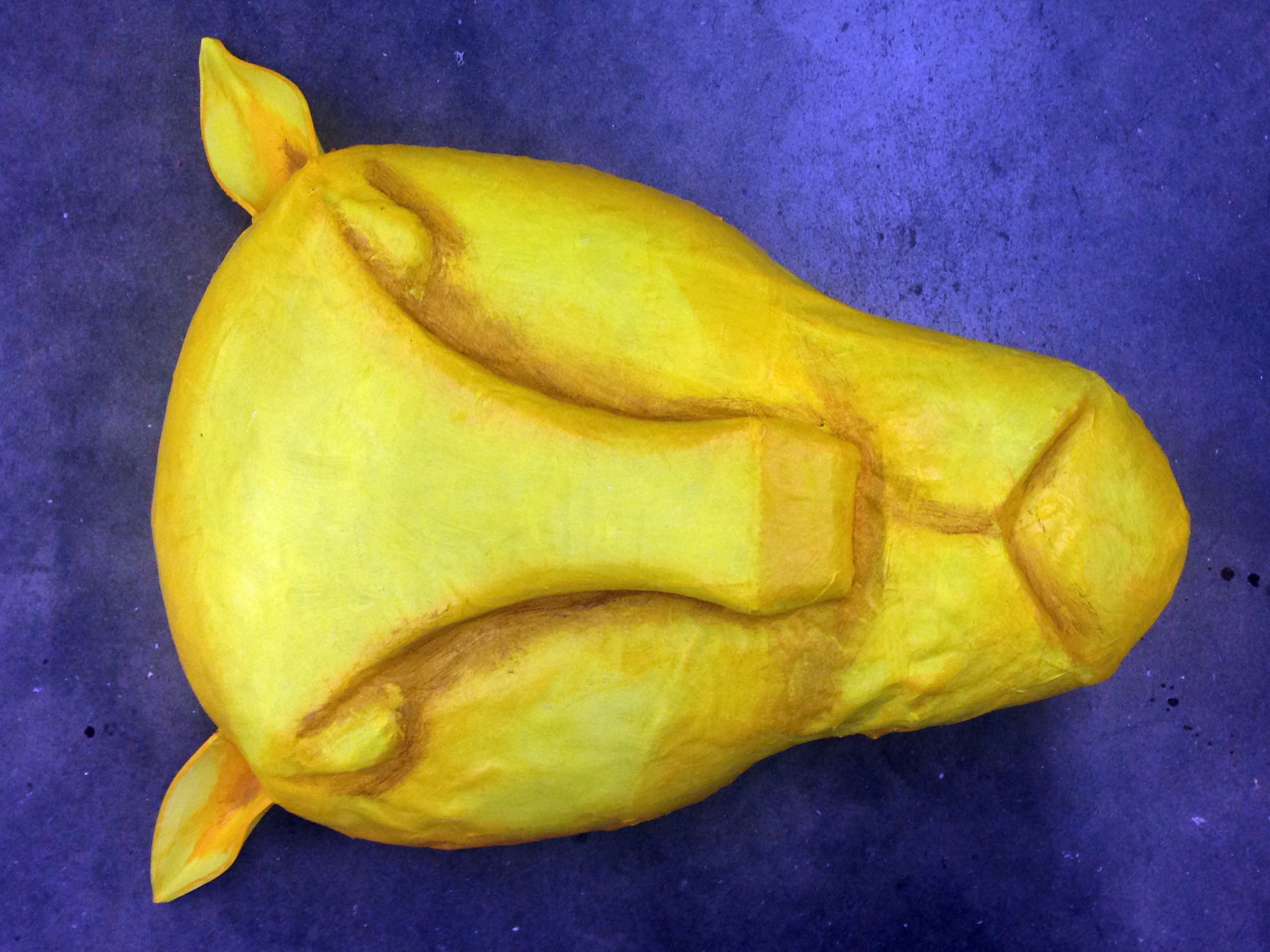
I had a set of bull horns in stock which I used as a form to make the tusks out of Wonderflex.

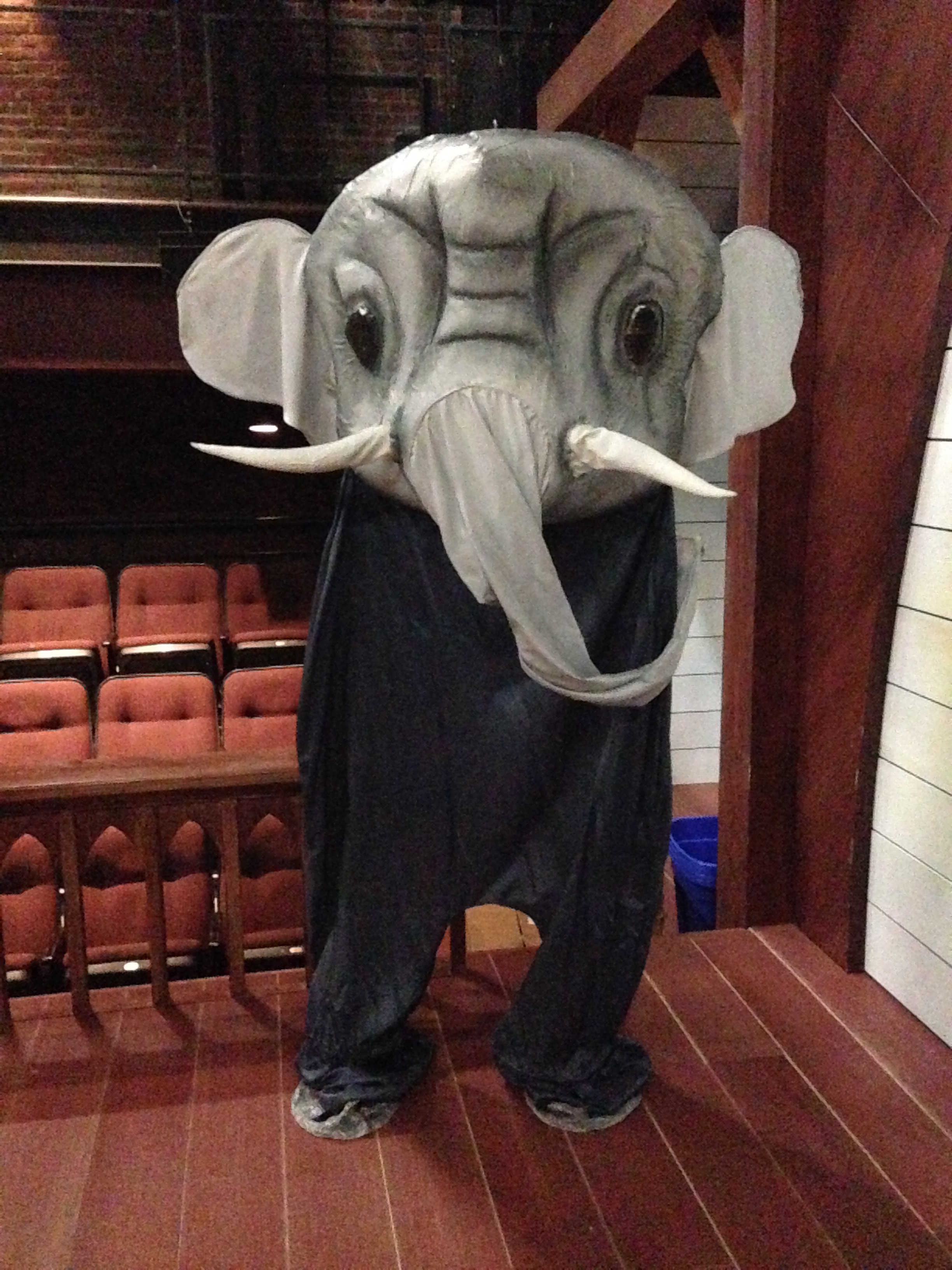
Elephant puppet. Photo by Lisa Bledsoe.

My assistant Lisa made the ears, trunks, and legs out of China silk. During the performance, the elephants flew down on a line from the catwalks and hung there. The actors could grab a stick that was attached to their trunk to make the trunk dance around.

Snow Day Links

Did you see my AMA this week on Reddit? A lot of good questions were asked, and I hope I gave decent answers to all of them.

I’m not the only one starting to use fun foam for everything. Propnomicon has this great video from Evil Ted on heat forming foam for various effects. He shows you not only how to shape and bend it, but also how to add indented details.

This is from a year ago, but the Royal Academy of Dramatic Art has a video showing the inside of their prop department where Deryk Cropper teaches the next generation of UK prop builders.

How many Millennium Falcons have there been? Cinefex looks at the history of Star Wars and talks about all the various physical models of this iconic spaceship, from tiny coin-sized miniatures up to full-size set pieces. It’s a little sad to hear that the full-size version created for the original trilogy was burned at the end of filming.

Ed Lebetkin’s antique tool shop in Pittsboro supplied all the period-appropriate tools for the new film The Revenant. The shop is right above Roy Underhill’s Woodwright’s Shop and is just down the road from me. I got to visit the place a few years ago and wrote about it on this very blog. The last photograph and paragraph talk about Lebetkin’s shop.

Lion Puppet Heads

Triad Stage’s holiday show this past year was Beautiful Star: An Appalachian Nativity. It was one of their most popular shows from before I started working there, so they decided to bring it back. It had a whole new design though, including some all new puppets. The lion puppets are the first ones I’ll show you.

Drawing the Lion
Drawing the Lion

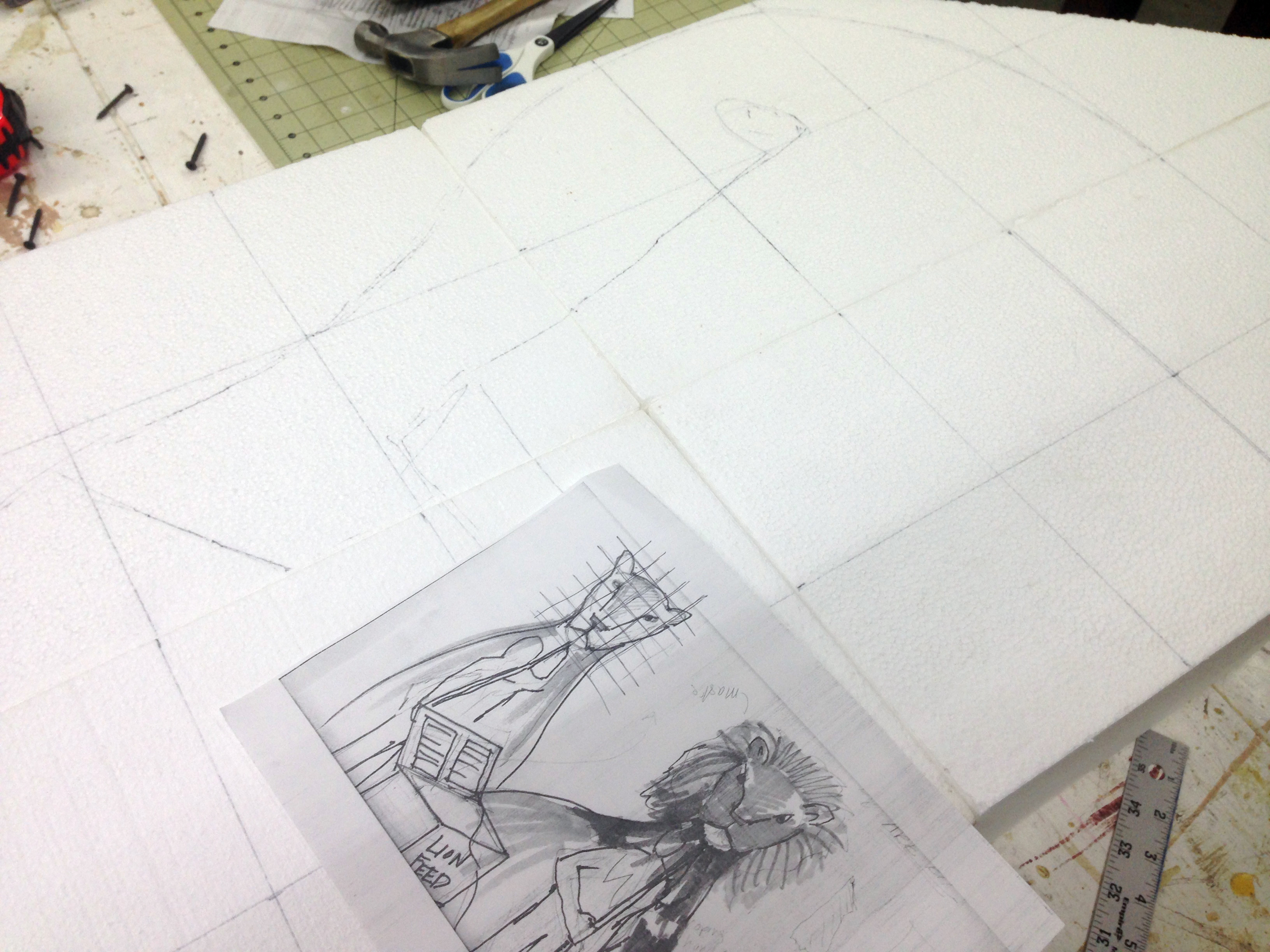
Robin Vest, the scenic designer, made the drawings for the lion puppets in the photo above. They were for the Noah’s Ark scene, so we needed two. She wanted them to look like folksy papier-mâché puppet heads with floaty silk bodies. I decided to carve a head out of foam to use as a form for Wonderflex.

Using the hot wire
Using the hot wire

I used my favorite kind of foam: free. It was polystyrene foam and the pieces were fairly big, so I broke out our hot wire cutter to cut the initial shapes. I pieced it together from a few pieces since it was so big; it also made it easier to maintain symmetry.

Carved form
Carved form

The pieces were joined with Gorilla Glue, which works great on foam. The rest of the carving was pretty standard stuff; lots of Olfa snap blades and carving with the surformer. When it was finished, I had a form that I could use to make as many lion heads as I wanted.

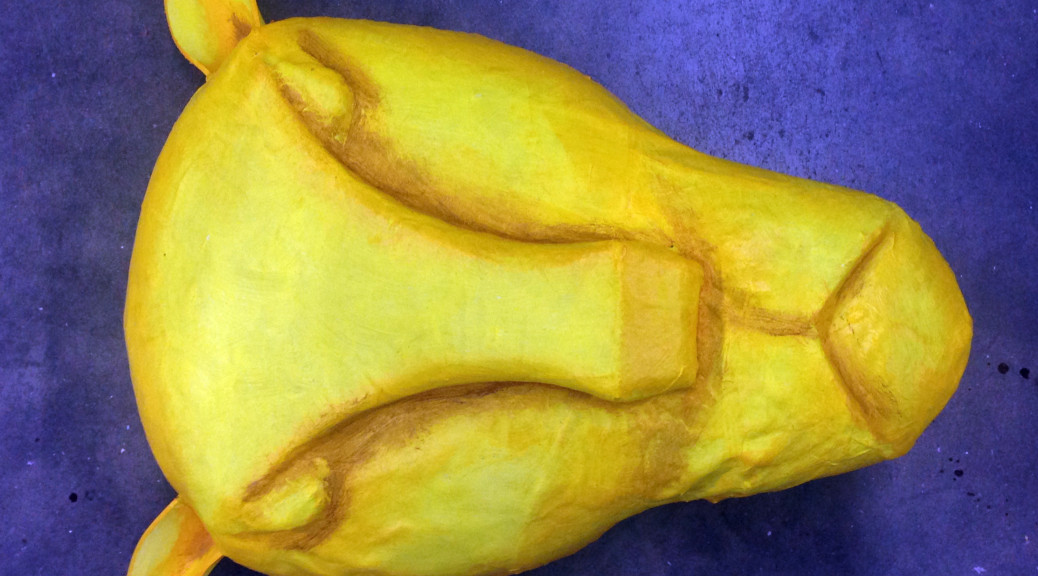
Shaping the Wonderflex

Next up was the Wonderflex. If you’ve never used it, it’s a low-melting thermoplastic sheet with an embedded fabric mesh. You can heat it up with a hot air gun and it becomes flexible, but it is still cool enough to shape with your bare hands. I used it because I could quickly form a mask-like shell around the form that would retain its shape but remain light-weight. It also cools down and is ready to paint in just a few minutes, unlike papier-mâché, which can take a few days to dry.

Shaping the ears
Shaping the ears

I made the ears out of more Foamies. I still don’t know whether this is XLPE or EVA foam, but it doesn’t matter, it’s great stuff. It can be shaped with heat, too. I curved them over a PVC pipe, heated them up, and they maintained that little curl when they cooled down.

Painting the lion
Painting the lion

I ended up doing a single layer of papier-mâché on top of the Wonderflex to give it the right texture and to cover up some of the seams. I used butcher paper dipped in Rosco Flexbond so it would remain somewhat flexible when dry. That way, no matter how many times it got pulled in and out of its crate during the show, it would always bounce back to its proper shape.

Finished Lions. Photograph by Lisa Bledsoe.

My assistant, Lisa Bledsoe, cut and sewed the long silk bodies and made a fun mane for the male lion out of small pieces of silk. The show is coming back next holiday season if you wanted to see them in action!

Making and finding props for theatre, film, and hobbies