Yale Theater “Props”, 1927

This article comes from a 1927 article in The Christian Science Monitor. It has some interesting examples of how props people shopped and sourced articles from nearly ninety years ago. I was also amazed that a university had classes in props back then.

Haunting the antique shops is a regular part of the duties of the “property man” in any well-organized theater, and “property hunting” forms part of the curriculum of Yale University Theater, established last year under the direction of Prof. George P. Baker, formerly of Harvard University.

One student in charge of properties is given a crew of from six to eight assistants, varying according to the size of the production. Early in the year it is the business of “props” to make friends with all the second-hand men and antique dealers in town and find out those who are willing to rent their goods for a small nightly sum.

As soon as the list of “props,” furniture and small article need in the play, has been made out, the crew assembles and two or three are chosen to visit the antique dealers. The explorers roam the town, up State Street and down Grand Avenue, and across to Chapel Street in excited quest of trophies that may range from hair trunks to sofas and strings of shell for a what-not, from ladder-back chairs to weaving looms or a case for an opera hat.

Some of the articles are bought outright and added to the theater’s permanent collection, appearing from year to year. These are staples, such as spinning wheels, carved chests, artificial flowers, dishes, firearms, sets of “book-backs” for sham library shelves, pottery, electric doorbells and telephones, beside innumerable small adjuncts such as writing materials, sewing and knitting paraphernalia, photographs and knives, all of which are classified and kept in marked boxes, ready for such directions as “Tooby enters from the garden carrying a bouquet of roses. Tiptoeing to the table, he places them carefully in a bowl and, seizing the paper knife, begins slitting the mail.”

Costume plays make heavy demands on the property pantry for family portraits, reticules, antimacassars, highboys, marble-topped tables, rag rugs, nail kegs and other household incidentals, a list of which sounds like a will in probate.

For such as these, the antique shop, the Salvation Army store, even the junk dealer has his uses, and in some cases near-by villages are scoured for specimens of the period. One scene laid in the middle of the last century was supposed to take place in a mid-western “parlor,” and called for a clock with a scene painted on the front. It was found in a shop in West Haven and brought in, lurching dejectedly, but embellished with a brave sweep of ocean. It was so decrepit that no one thought of stuffing the spring with cotton. In the middle of the play it suddenly came to life, ticking sonorously through the entire act, much to the actors’ discomfiture.

Old houses which are being torn down are a prolific source of “props” and are especially useful to the scene designer. Mantels, cornices, doors, window frames, and even entire fireplaces often are bought up for a song, later to be utilized as part of a “set.”

In one case the designer was in despair over a garden scene where he must produce a fountain. The usual expedients such as canvas stretched on wire netting and painted produced dolefully squat dolphins. Papier mache succeeded little better. Finally, happening to pass the weedy yard where a house was being torn down, the designer saw the very thing he wanted lying half matted in grass.

He strode in, bargained with the wrecking company, and carried his find back to the theater. For $2 he had bought what nearly a week’s work had failed to achieve.

Originally published in The Christian Science Monitor, May 3, 1927; “Yale Theater ‘Props'”, special correspondence, page 8.
Friday Night Sites

I guess Harbor Freight finally realized that they are a top destination for cosplayers and prop makers here in the US. They posted their top 10 must-have cosplay tools/accessories.

Prop maker Gemma Wright has been working on an exquisitely detailed replica of the game board from Jumanji. Check out the months-long process on her blog, or skip to the summary and photographs on this post at Nerdist.

Chris Schwartz has some good thoughts and advice on how to store your hand tools (be sure to check out parts two and three as well). Of course, props get a little more complicated because we have tools from many disciplines, and never build the same thing twice, but the basic principles here are still worth exploring for your own hand tool storage area.

Legend of Zelda Master Sword Take Two

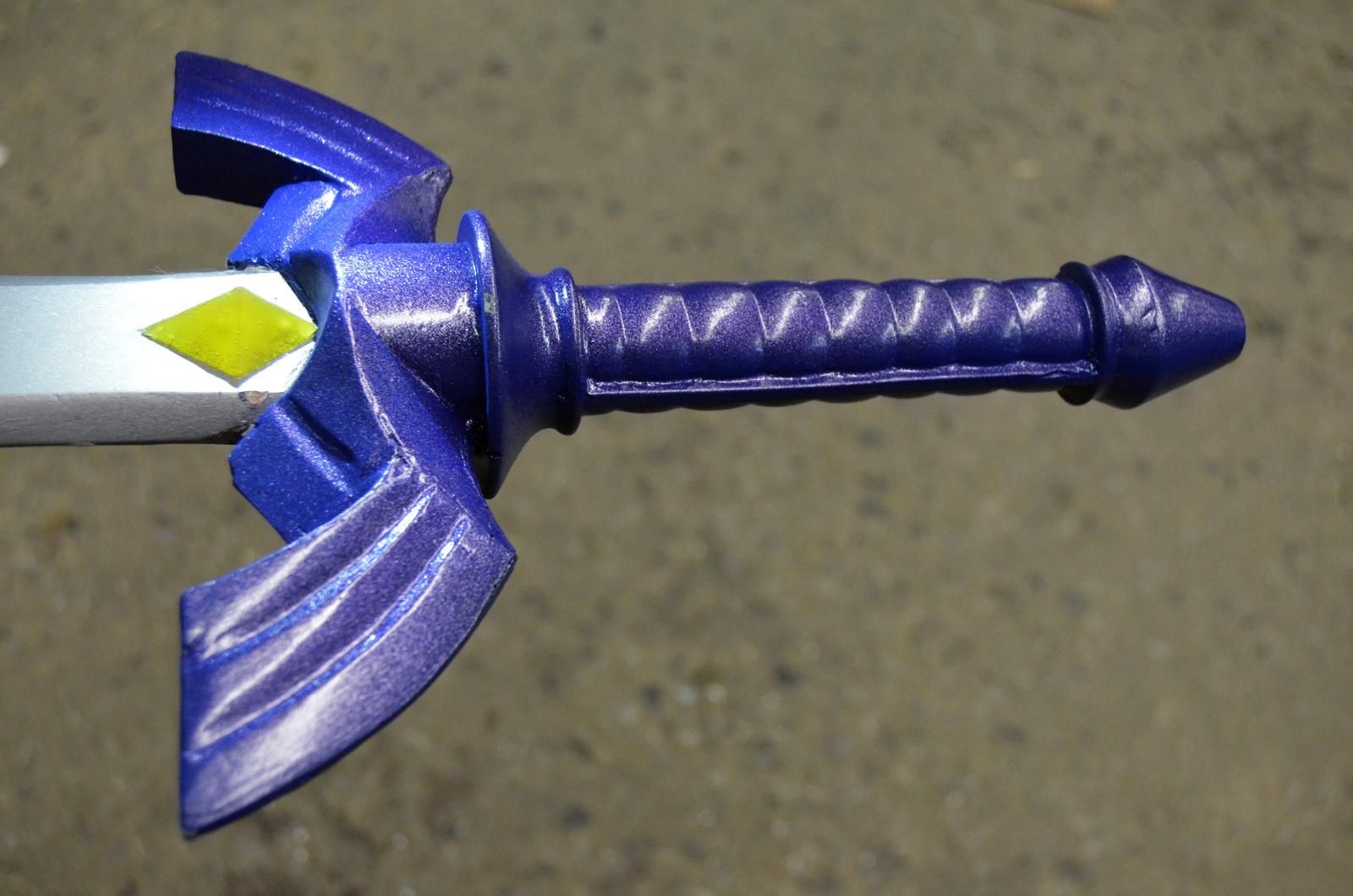
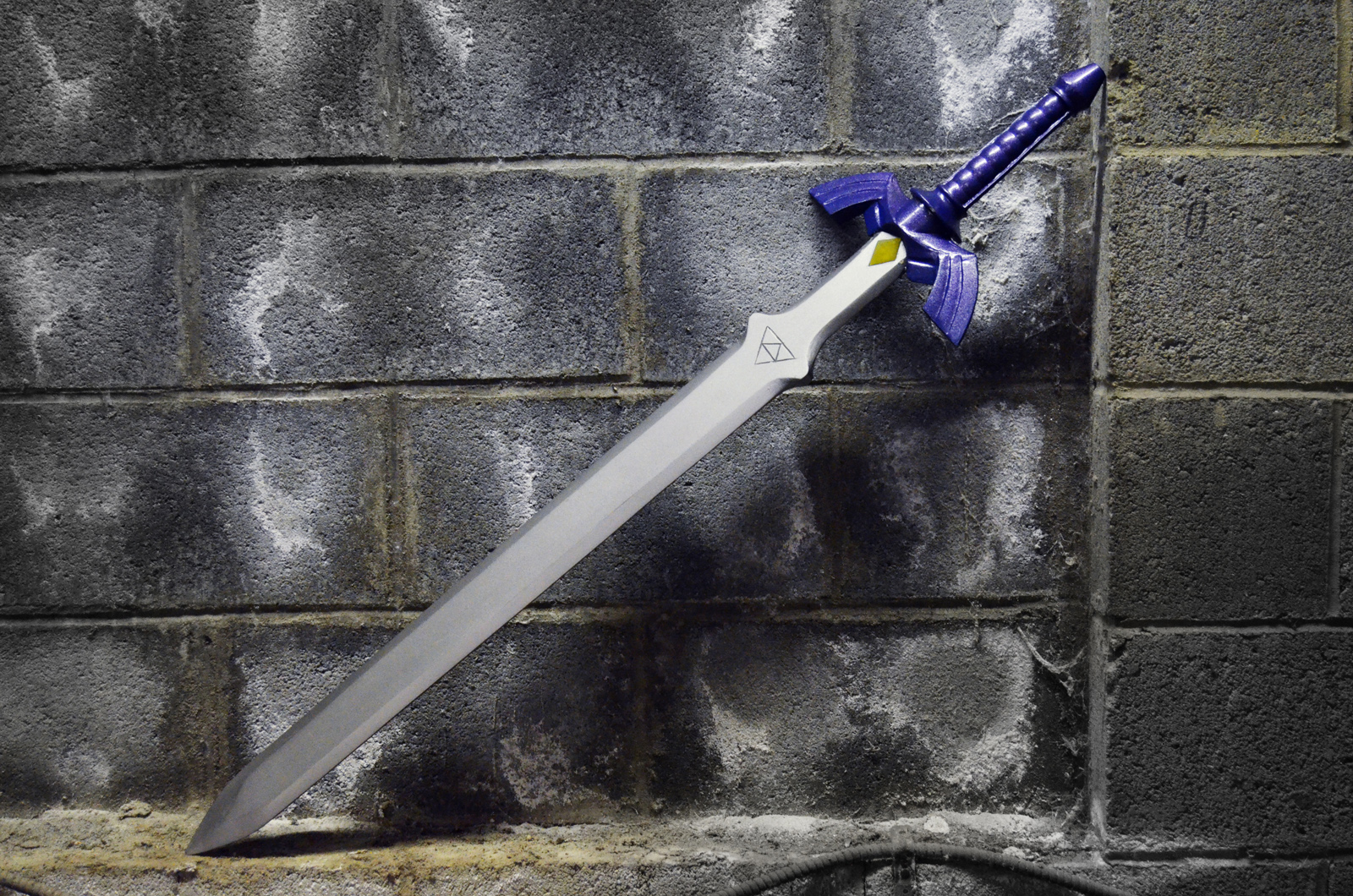
About a year and a half ago, I worked with The League of Extraordinary Thespians to make a Master Sword for their Legend of Zelda musical. It was a fun project, but I had very little time or money to do it; I thought it was a bit blocky, and the paint treatment was very rudimentary. Since I gave all the original swords away, I decided I would make a new one with some improvements for myself.

I filmed nearly every step of the process and edited it into a six-minute video.

I made the blade out of wood again; on the original swords, I used plywood, which does not really make a convincing faux metal. This time I went with a solid piece of oak. After priming and sanding it, I used some Krylon Stainless Steel spray paint, which, after rubbing it with some steel wool, makes a very convincing metallic finish.

Legend of Zelda Master Sword

I decided I would make the hilt as a separate piece, then mold it and cast it directly onto the blade. I wanted a strong connection between hilt and sword that would not break when you played with it. Another reason was that the hilt was a very time-consuming piece, and I wanted the option of making more swords in the future.

Legend of Zelda Master Sword

Casting the hilt directly onto the blade was a very challenging and hairy process for me. Despite how awesome I seem, I do not have much experience with molding and casting. The process was far from perfect, but the end result was pretty satisfactory (though you can see some wibbly defects in the picture below).

Legend of Zelda Master Sword

I also tried sculpting the quillons out of clay, which is not something I typically do. I used an air-drying clay that was way too soft; if I were to try this again, I would look for a much harder clay. In fact, I would probably be tempted to carve most of it from a solid chunk of wood.

The yellow jewels were a separate piece which I cast in tinted epoxy. I made a video showing the mold-making process on that a few weeks back.

I finished off the hilt with a purple shimmering metallic spray paint. All in all, I was happy with how this sword turned out, and I learned a lot from the process.

Another Friday of Links

Jesse Gaffney, who runs the Theatre Projects blog, is interviewed on the Oak Park Festival Theatre blog. She shares how she got started as a props master and what some of her favorite parts of the job are.

Conan’s prop master Bill Tull is back with some tips on having summer fun on a budget.

Andrea Cantrell, prop master for Dallas (the new version currently on TNT, not the original), shares some behind-the-scenes stories from the show.

WM Armory shares a pretty easy and full-proof method for inscribing detail lines into EVA foam. Thanks to Propnomicon for the link!

IATSE Job Classifications

I’ve come across the following lists of duties and responsibilities for various members of the props department in a number of places. These are the IATSE job classifications for union members working in film. I have noticed some theatres will use these as starting points to develop their own job descriptions for people in the props department as well. Property Master The duties of the Property Master shall include preparation of a hand prop breakdown, with scene allocations as per the shooting script; to research the historical period of said administered hand props; to prepare, build and procure props to be seen on camera; the repair and return of props to original condition and source; arranging for all necessary permits to convey restricted weapons; co-ordinate with the Wardrobe Department the required accessories; while on set, the Prop Master will administer props to artists, strike and reset hot sets established by the Set Decorators, with the aid of Polaroid’s, photographs or sketches; consult with the Script Supervisor on the continuity of hand props; responsible for the disbursement of the assigned budget; and delegate the work required for the efficient operation of the Department. Assistant Property Master Duties are acts as the Prop Master’s representative on the set; during pre-production helps with script and prop breakdown; in the Prop Master’s absence this person can be left in charge of the props on shooting set; makes sure that the set and props are as the Props Master wishes them to be; oversees the supplying and loading of the truck; has the ability to oversee the set and props in a camera ready condition; has the ability to oversee the set and prop continuity; and can perform these duties in an unsupervised role. Additionally, this person must hold a valid Firearms Acquisition Certificate; carry the Motion Picture Firearms Safety Course card; be knowledgeable in the building and repair of props; be knowledgeable in the handling of firearms; the safe use of firearms and the blank firing of firearms; and carries the same responsibilities for the safety of artists and shooting crew when it comes to the firing of blanks as the Props Master. Props Buyer Performs those duties as delegated by the Property Master. Armour Must have Fire Arms Acquisition Certificate and no criminal record. Responsible for maintaining safety on set in relation to weapons and ammunition, including but not limited to determining the distance for all loads; ¼, ½ and full loads and as such providing plexi-glass shields, etc. when required. Order all weapons, permits, ammunition etc. and inspect them as a safety precaution. Responsible for the distribution and collection of the weapons to talent and background performers. Warn to the cast and crew prior to firing weapons, secure area effected. Along with performing those duties as delegated by the Property Master. Props Builder Work with wood, leather, and metal must have carpentry skills, and perform duties as delegated by the Property Master. Props Assistant Performs those duties as delegated by the Property Master. Props Men/Women or Props Crew Performs those duties as delegated by the Property Master

Making and finding props for theatre, film, and hobbies