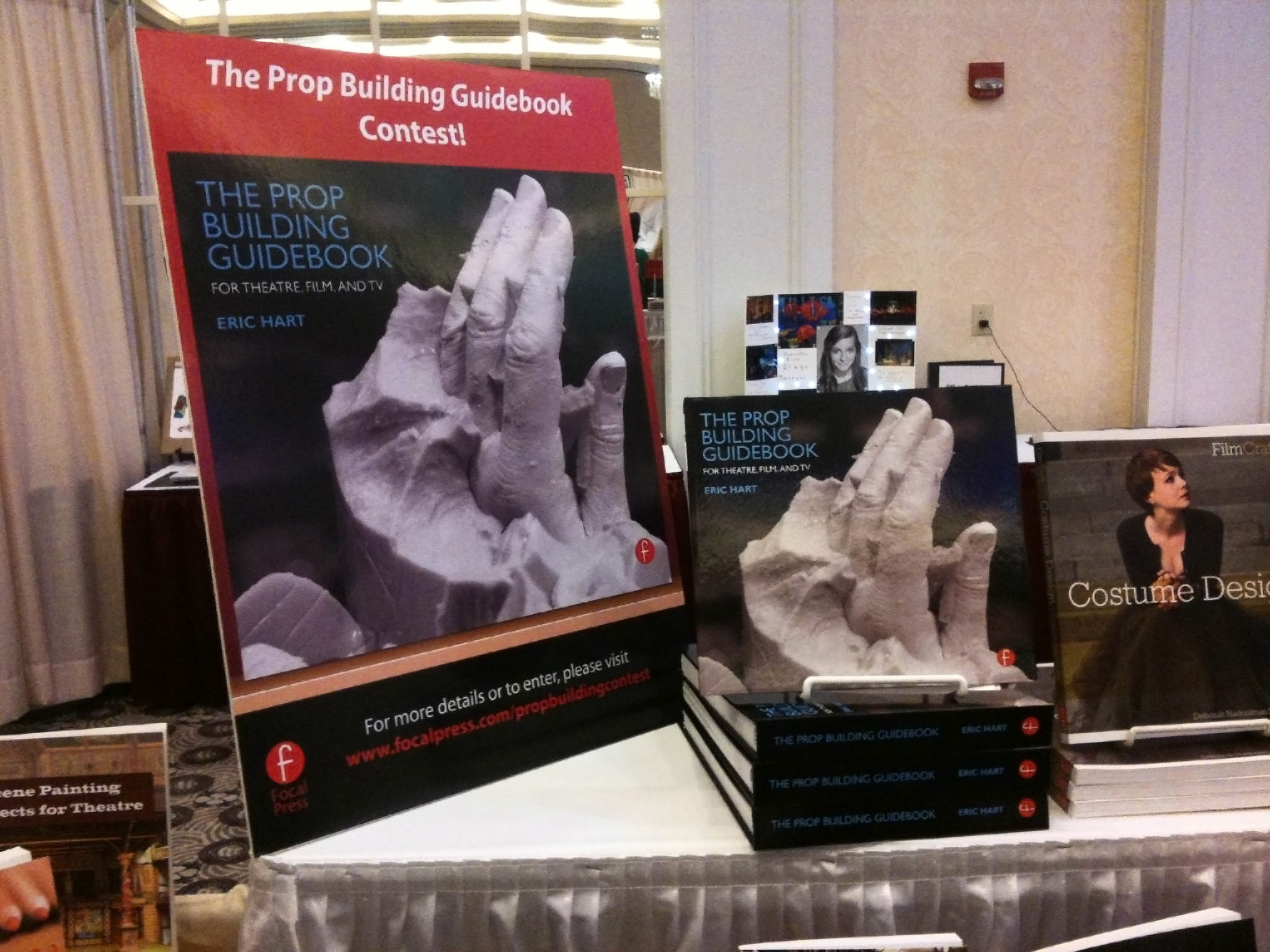
I just got back from this year’s SETC Conference in Louisville, KY. Focal Press had a nice display for The Prop Building Guidebook: For Theatre, Film, and TV, which will (hopefully) become available at some point today. As you can see from the photograph below, there is another exciting announcement:
Book display at SETC
That’s right, a contest! You can send in a photo or video of  a prop you make and win a pretty cool collection of prizes, including my book, some more Focal Press books, and some prop-making supplies and materials. The contest page has more details on the prizes and how to enter; there are separate categories for students and professionals, as well as a category for group entries, since we often build props in collaboration with others. The contest runs until April 30th, so you have some time to prepare your entry, but don’t wait too long!
In other news, I will be at USITT (March 20-23 in Milwaukee, WI). Stage Directions magazine is hosting a book signing at their booth (#100) on Friday, March 22nd, at 12:30 pm. You will be able to purchase the book there if you do not already have one. You can also check out the latest issue of Stage Directions magazine, which has an article on the Milwaukee Rep props shop by yours truly. A press release about the signing will be going out later today, but I thought I would let everyone know now, since schedules at USITT tend to fill up fast.
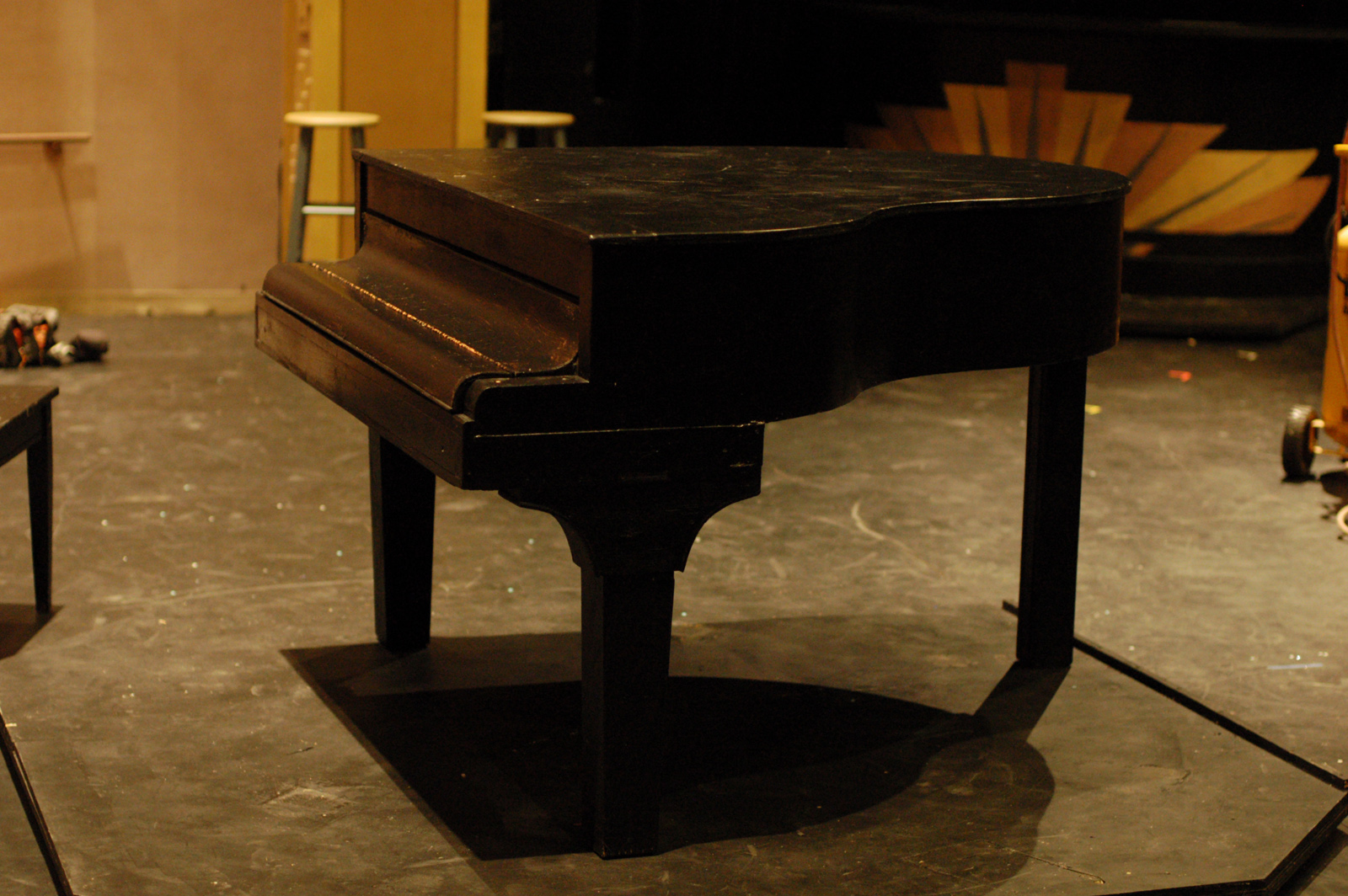
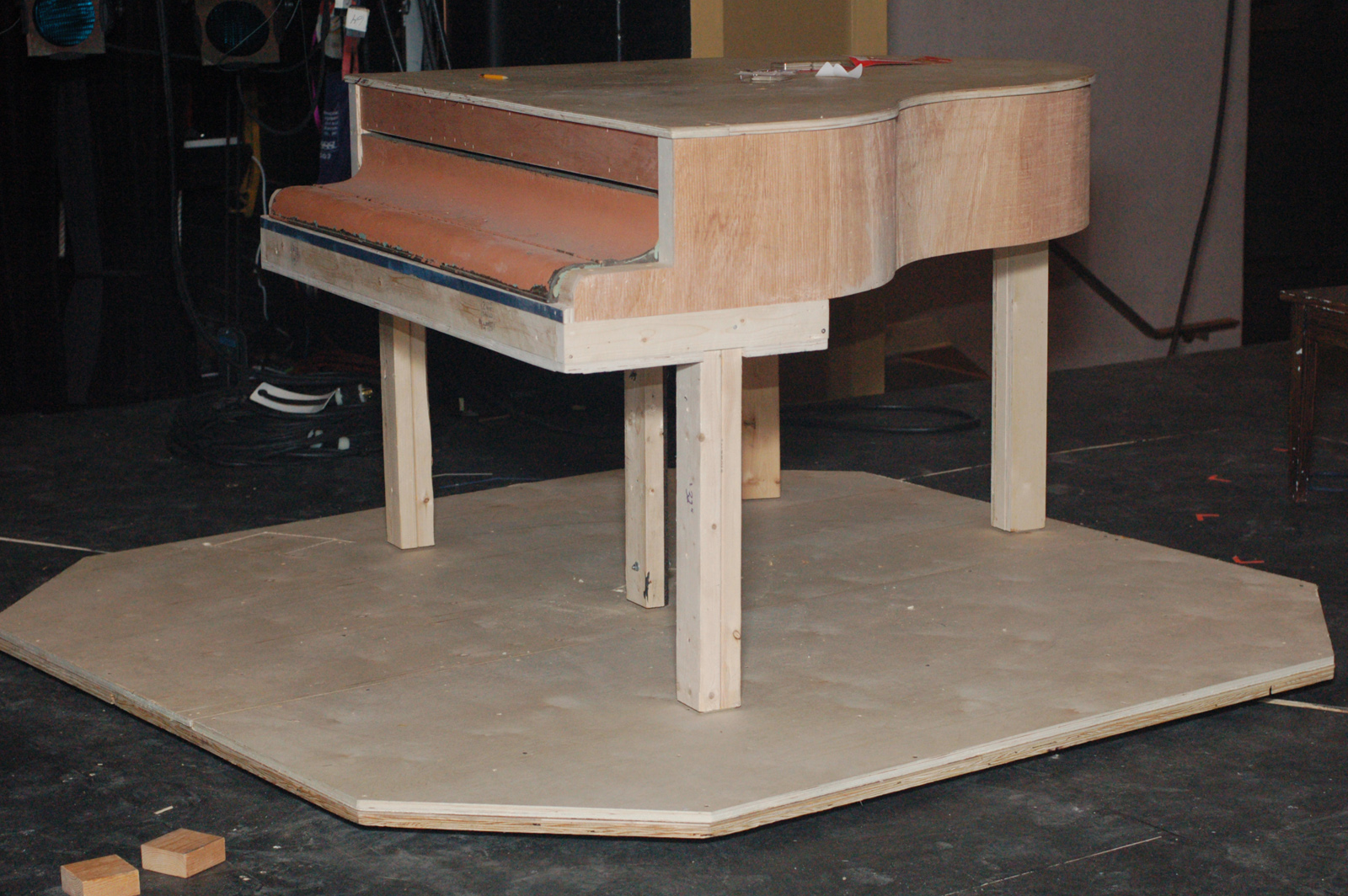
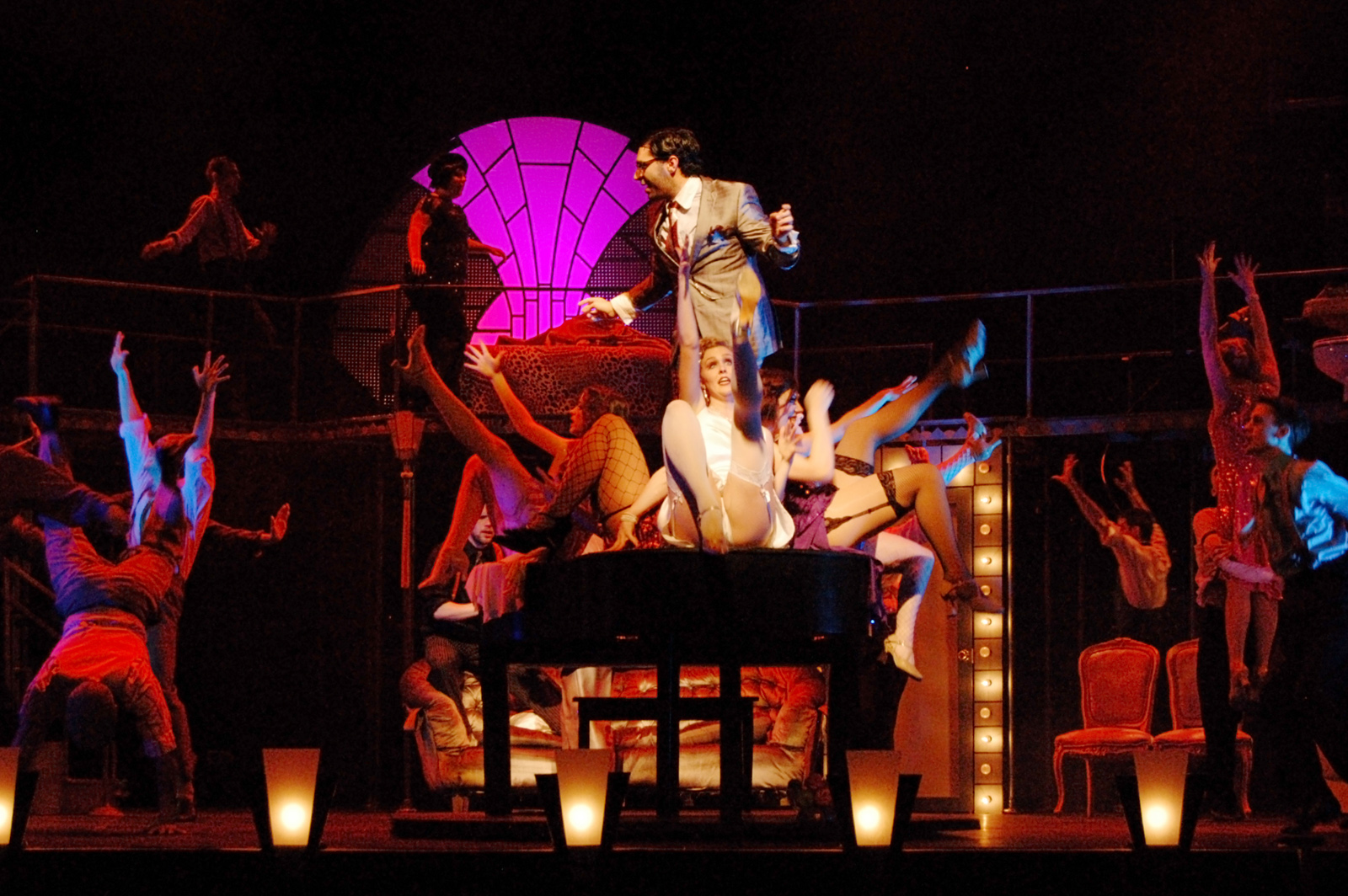
Every musical needs a piano, right? Of course, if you have a piano on stage and people are dancing, you’re going to want the people to dance on the piano as well. Such is the prop master’s life. I had to build a dance-able piano for Elon University’s production of The Wild Party, which closed a few weeks ago.
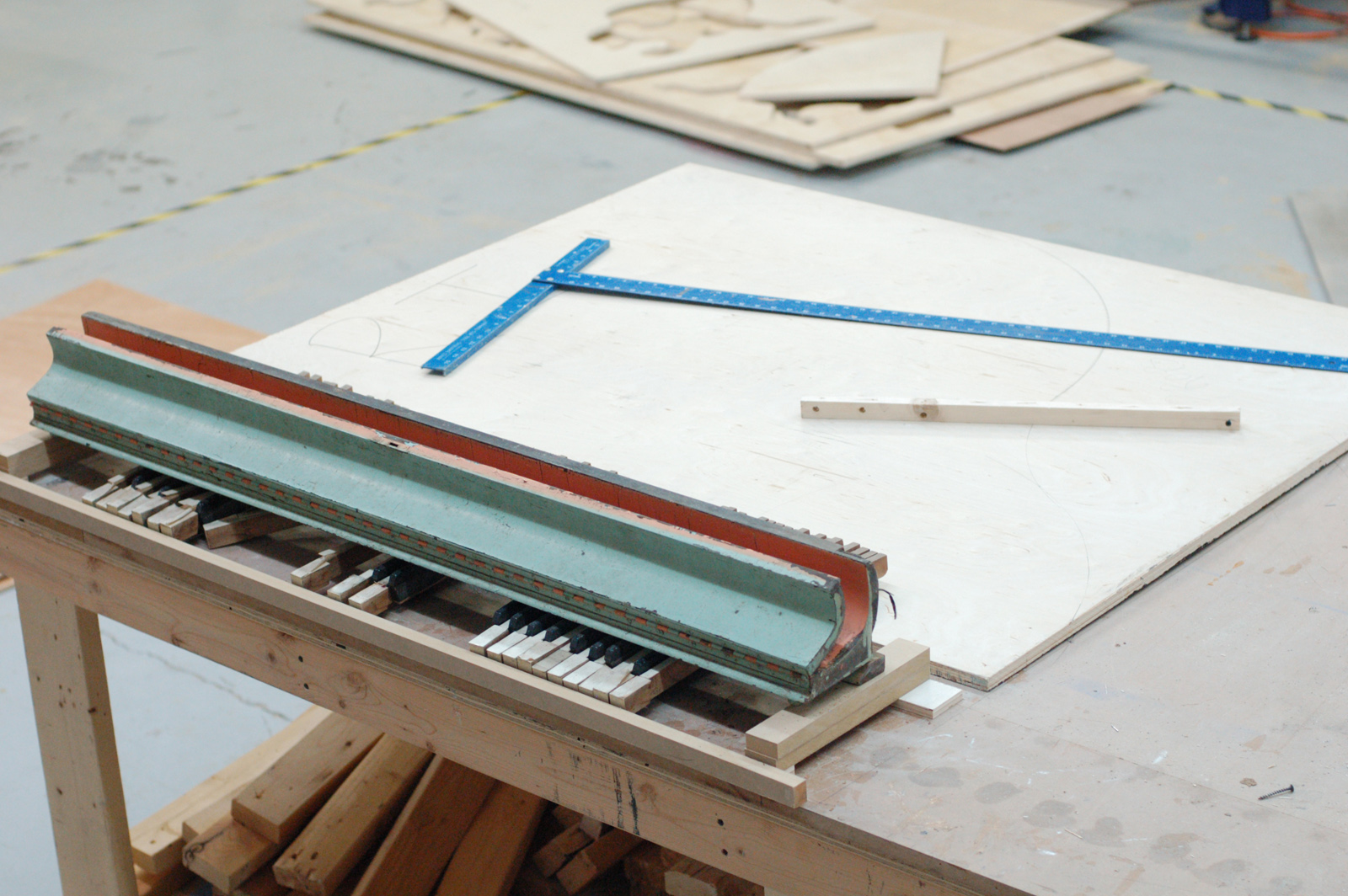
Appropriated Piano Parts
As it turns out, my father has taken apart a piano or two and kept the pieces in his barn. When I was visiting over Christmas, I picked up some of these parts, including the keyboard lid and a partial keyboard. While I probably could have faked the keys, the lid was a real find; it’s two pieces of solid oak cupped along the entire length. This shape would be hard to fake on my own, and it would be nowhere near as sturdy as the piece I found, which could support a person’s weight in the center without bending.
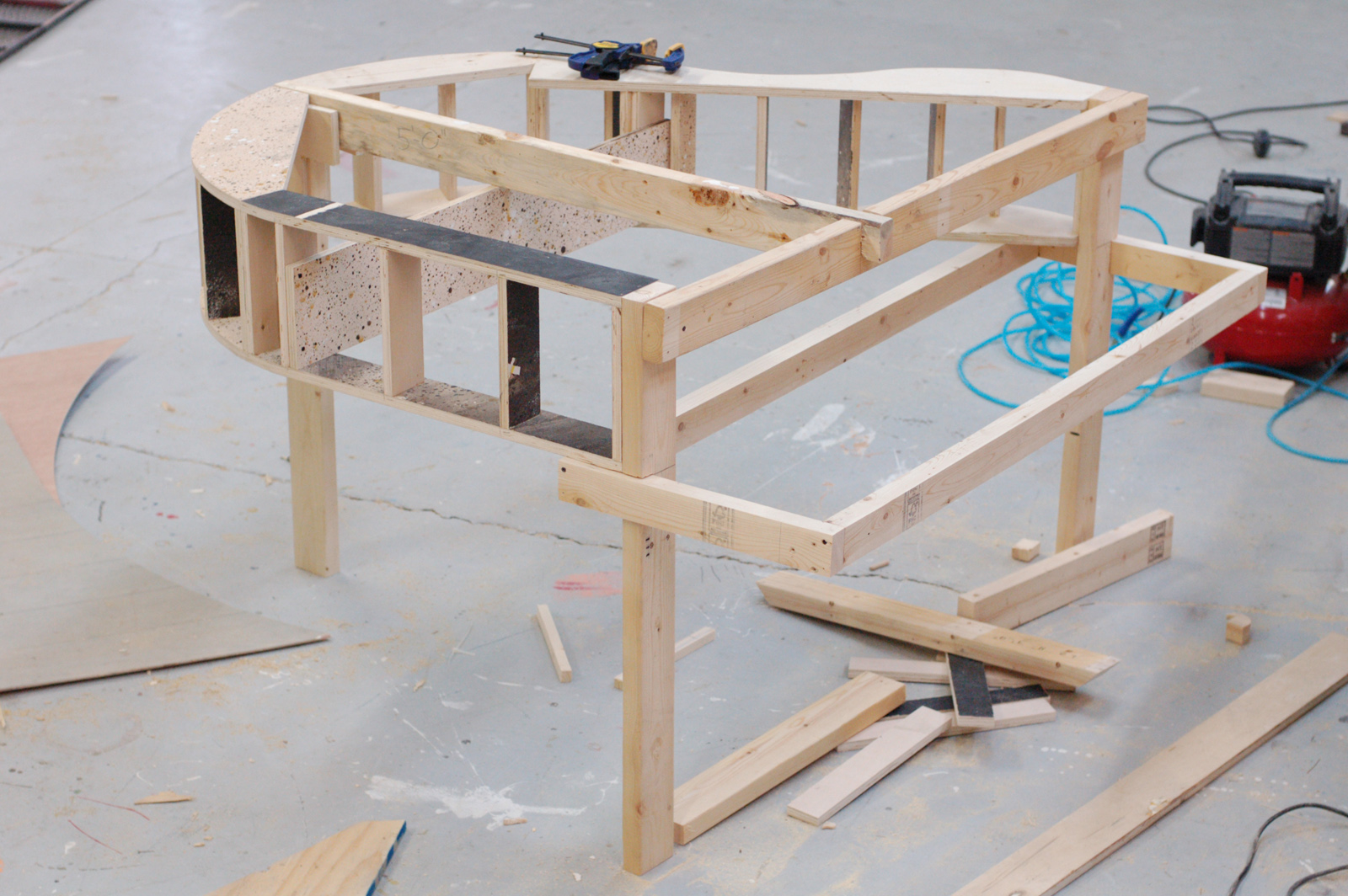
Shape and Structure
It needed to be strong and sturdy, but lightweight enough that it could be quickly turned and moved throughout the musical by the actors. The photograph above shows the beginning stages. I had to make the shape also serve as the structure, because there was not a lot of room to hide cross bracing or reinforcements.
Unpainted Piano
The two-by-four in the center of the piano hides a pipe that leads down into the platform itself. This gave a pivot point to the piano so when the actors spun it around on the wagon, it would rotate on a fixed point.
Painted Piano
The piano received a coat of black paint followed by a few coats of Sculptural Arts’ Plastic Varnish Gloss (one of my wife’s favorite products). You can see in the photo above that I added more facing to the front legs to make them appear like more traditional piano legs. On a real piano, these would be cut from solid wood, but on my prop piano, they are pieces of quarter-inch plywood and wiggle wood over top a leg made from two two-by-fours.
Wild, Wild Party
There are six people dancing on the piano in the photograph above. It featured throughout the musical, with people dancing on top, jumping up and off of it, and generally subjecting it to all sorts of abuse. I’m happy to say it sat there like a rock, never sagging or shaking no matter how hard they tapped or how much shimmy was in their shake.
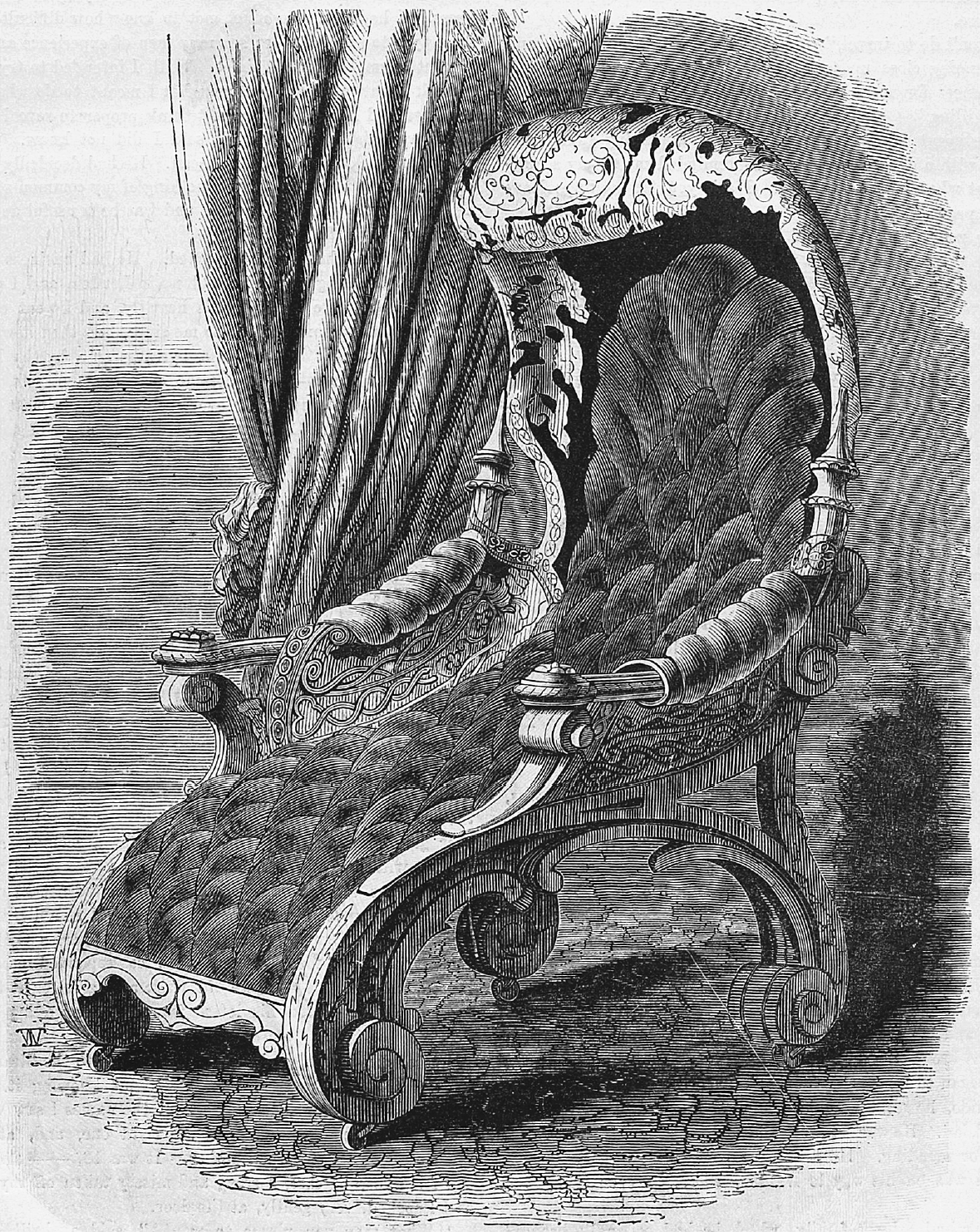
—The paper for use is gray in colour, but similar in texture to ordinary blotting paper. Prior to using it, the paper is well saturated with flour and glue mixed with water, in about equal proportions, and is then laid on the mould of the article intended to be produced. These moulds are of iron, brass, or copper. The mould, coated with the first layer of paper, is then dried for twelve hours. A careful smoothing by a file follows, after which another deposit of paper is made. The processes of drying and smoothing are successively repeated with each additional layer of paper, until the article assumes the required strength and thickness. When the newly-formed article is taken from the mould, the several parts are planed, filed, and trimmed, so as to be quite correct and level. The process of stoving then follows; after which the varnish is laid on, and brought to a smooth, hard, brilliant surface. The article is then coated with several layers of shell-lac varnish, coloured, which, after being hardened, are scraped quite level. The different varnishings and smoothings are carried on for a period varying from twelve to eighteen days, according to the purpose for which the article is required. The exquisite surface is produced by manual polishing with rotten stone and oil; but the finish is obtained by the process of handling alone.
It’s the end of the week, but the beginning of a new month. This is conference month for those of us in technical theatre. First is SETC, happening next week (March 5-9) in Louisville, KY. Shortly after is USITT, taking place March 19-23 in Milwaukee, WI. I will be at both if you wanted a chance to catch up or introduce yourself. At USITT, Stage Directions will be hosting a book signing for my book at their booth on Friday, March 22nd, at 12:30 PM. More info to come. For now, enjoy these links:
My latest magazine article in Stage Directions is now online; I profile the Milwaukee Rep props shop, home of props master Jim Guy. Milwaukee also happens to be the location of this year’s USITT conference. Coincidence?… actually, no, we chose to write about Milwaukee Rep for this issue precisely because of USITT.
When the Vancouver Playhouse Theatre shut its doors in March 2012, its production facilities and prop storage were abandoned and surrendered to the landlords who owned the building. Jim Buckshon was subleasing part of that building at the time for his company, Renegade Productions, and decided to lease the entire building and save the props. Read the whole story to see how Buckshon took on one of Vancouver’s largest prop collections and kept it intact for future productions.
Weta Workshop — the design/production/creature/FX shop behind films such as The Lord of the Rings, King Kong and Avatar — recently solicited questions for their Mold Shop Supervisor, Michael Wallace.  Mike answers those questions about working in a mold shop, materials and techniques he uses, and his own background.
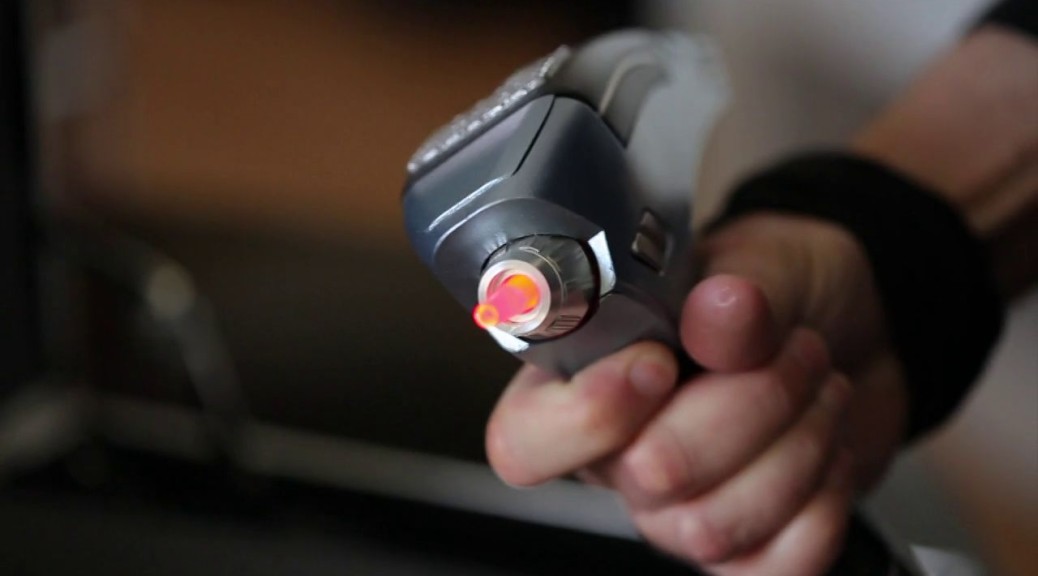
AJ Catalano is a sci-fi prop maker who has built items for films ranging from The Avengers and The Amazing Spiderman, to The Muppets. Check out this video where he talks about his background and the work he does:
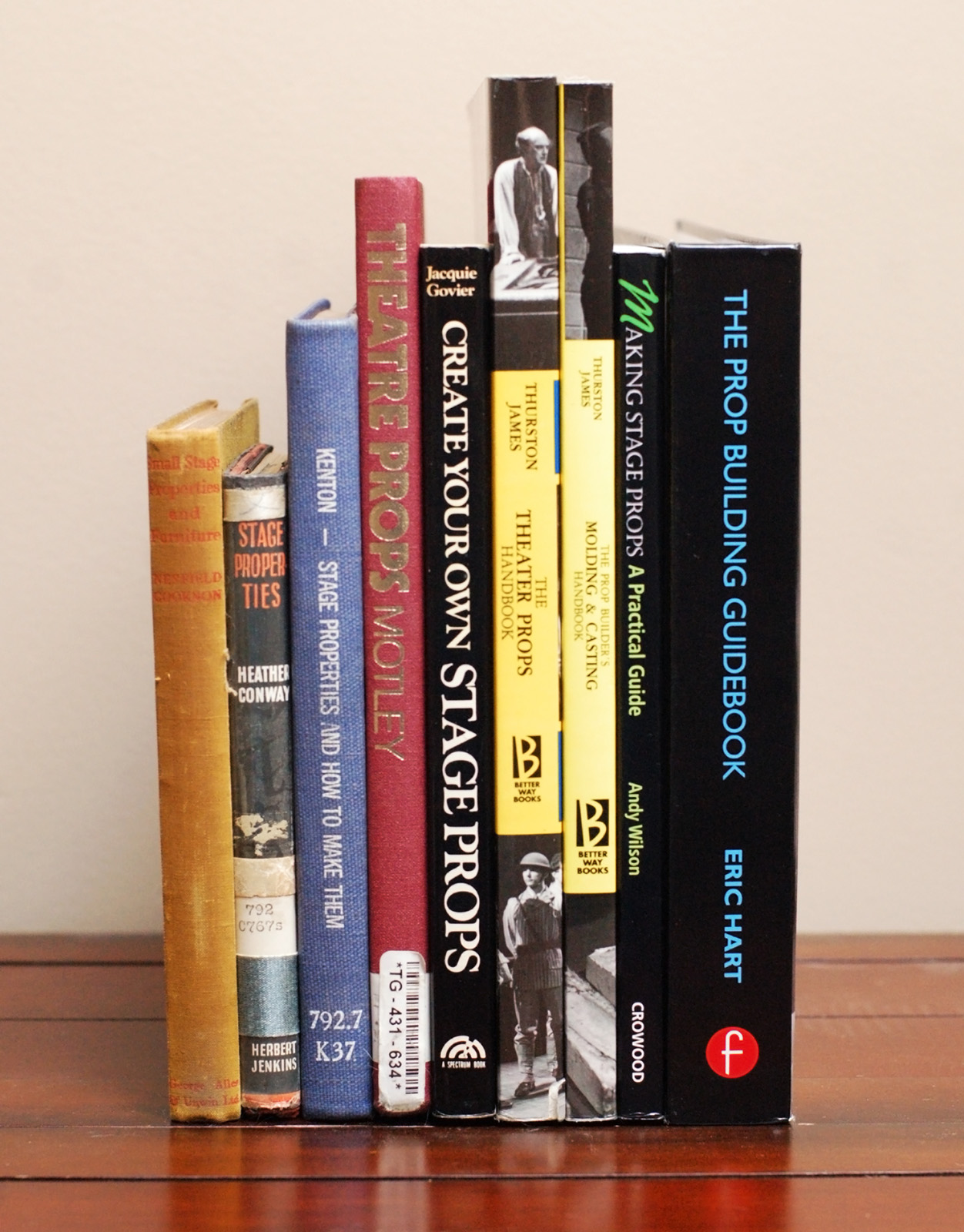
I wanted to make a “Top Ten” list of prop making books, but it turns out there aren’t enough to do that. As it is, I have to include one that’s nearly 80 years old. In other words, books dealing solely with how to make props are few and far between. Plenty of books exist for the various specialties of prop making, such as woodworking, sewing and sculpting, but these do not deal with the specifics of prop making, which often uses a more limited range of materials and has an emphasis on faster techniques rather than slow processes. In addition, making props for the stage or screen has its own considerations beyond just making an object look good.
So, with my own book coming out this week, I thought I would step through the prop making books which have come before. I am not including books such as Amy Mussman’s The Prop Master or Sandra Strawn’s The Properties Director’s Handbook. Though both of these have sections on making props, they are more geared toward the management of propping a show or running a prop shop. There are also plenty of books on set design or stagecraft which include a chapter on props, but these rarely delve into the subject with enough detail to be useful. If anyone knows of other prop making books, let me know in the comments; I think I found them all, though.
Books about making props
Small Stage Properties and Furniture, by Mrs. Nesfield Cookson (UK, 1934)
Stage Properties, and How to Make Them, by Warren Kenton (UK, 1964)
This book is an improvement in that the illustrations are shaded, thus imparting more detail. It is also the first in our list to mention plastics, but only so far as to say a) they exist, and b) they are too expensive for the prop maker to use. Still, I like the way this presents the more traditional aspects of prop making, giving a description on the left page and various illustrations on the right. The basic techniques it covers only last for about twenty pages. The rest of the book falls victim to what many prop making books succumb to; rather than trying to break down the craft into simpler components, or attempt to describe an approach to building props, it simply lists common props (candlesticks, masks, powder horns, etc.) and describes one way to make them. Nonetheless, it does so in a way that is clear and approachable.
Create Your Own Stage Props, by Jacquie Govier (UK, 1984)
This book is aimed at the amateur or school theatre, and as such, feels very “crafty”. It also takes a step back in time and uses only illustrations, rather than including photographs. As a craft book for amateurs, it is actually quite well; it covers a lot of the basics, and is the first book on our list to deal with foam carving, one of the staples of any prop shop. For the budding professional though, the techniques can seem a bit embarrassing, even when you forgive the book its age. Even at the time, professional theatres were vacuum forming and using fiberglass, not to mention welding steel and constructing real furniture. They certainly weren’t wrapping glue-soaked string around a balloon.
The Theater Props Handbook, by Thurston James (US, 1987)
The first US book on our list is also one of the most well-known. While it attempts to be a comprehensive guide to all manner of theatrical property construction, the layout and organization is quite strange. James puts the chapters in alphabetical order, meaning you go from reading about “eyeglasses” on one page to reading about “fire” on the next. The chapters also differ greatly in scope; one chapter is dedicated to “construction techniques”, while another deals simply with “confetti”. The chapter on “construction techniques” is broken down to a few different materials, though one of the sub-headings is “making a butter churn.” Later, he has a whole chapter titled “Gramophone.” Why gramophone gets its own chapter while butter churn is included in a larger chapter is beyond me. Basically, this book is a collection of props which James has built and tricks James has learned with no attempt to find the standards of our industry or organize any of the information. If you want to know how to construct wooden furniture, head to the “Rehearsal Furniture” chapter, but if you want to know how to cut wood on the jigsaw, it’s back to the section on making a butter churn. This book has a lot of great information and tricks—don’t get me wrong—but only if you can find it. And don’t even get me started with how the columns are laid out on the page! Every page has two columns of text. However, you switch from the left column to the right whenever you reach a new sub-chapter, rather than following each column all the way down the page.
The Prop Builder’s Molding & Casting Handbook, by Thurston James (US, 1989)
James is perhaps more well-known for this book, and it has probably done more to cement his legacy as a writer of props books. Unlike his first book, this one is laid out in a very organized manner, giving a general introduction and then stepping through each of the materials in turn. The introduction even has a photograph comparing the various materials covered in the book, which helps clue you into what will follow. Though the book is nearly a quarter of a century old, the techniques described still hold true. A few of the materials have better alternatives available, and a couple have become obsolete, but on the whole, we still use most of what is in the book. Materials like plaster, latex, silicone rubber, alginate and plastic resins are some of the workhorses of the props shop, and any advances have not made this book any less useful. Like the other James’ books, it has the same confusing column layout where you switch from the left column to the right and back again several times on a page.
Making Stage Props, by Andy Wilson (UK, 2003)
Wilson has written one of the most up-to-date and well-organized prop building books. This book covers a great deal of the materials and methods one might actually use in a professional theatre’s prop shop. While it has a great deal of information in it, it does not have everything; for example, it covers steel, but none of the other metals one might use, such as aluminum or brass. It covers upholstery, but nothing else about fabric. In fact, it skips over a lot of the craft and soft goods portions of prop making, and omits entirely any mention of plastic sheet goods such as plexiglass. It is also uneven in the amount of space it devotes to various topics. The section on turning, for instance, spends over nine pages discussing the setup of the lathe, the various tools used, and methods employed. This is not to say the lathe is not a useful tool for a props shop — it is — but a machine like the table saw is far more frequently used in props shops, and it gets only an off-handed mention in the middle of a sentence. Likewise, Wilson spends a few paragraphs and a photograph on “fire cement”, which is one of his specialties but practically unheard of in the majority of props shops. This would be fine if you had an infinite number of pages to cover everything, but not if your book neglects to include how to make a single stitch or seam in fabric. The photographs and illustrations are nice, though they are in black and white. None of the books on our list, in fact, use color photographs, nor do any talk about prop making in film or television.
The Prop Building Guidebook: For Theatre, Film, and TV, by Eric Hart (US, 2013)
Yes, this is my book. While writing it, I have attempted to pull all the good stuff from the aforementioned books while avoiding all the criticisms. I’ve looked at a variety of prop shops, both through interviewing various prop makers, visiting shops of all sizes, and through my own experience working around the country, to avoid prescribing one single way to build props. In the photograph above, you can see it is the largest and most comprehensive book, and it is also the first to feature color photographs and illustrations. I have geared the book to be useful to all levels of both amateur and professional, but I avoided making it “amateurish”; even if you have no budget, you can still work to high standards. My hope is that it will be a major leap in prop-making books to a new standard of professionalism that better reflects what our industry is like.
Making and finding props for theatre, film, and hobbies